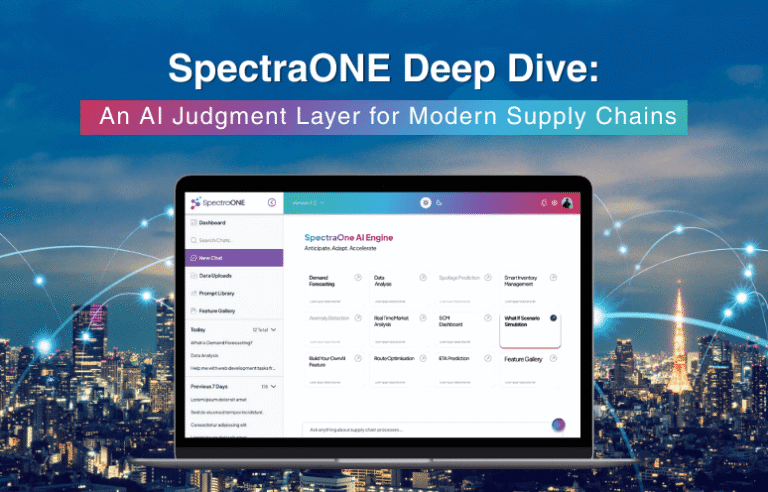
Why Better Forecasts Alone Won’t Fix FMCG Planning

For years, FMCG organizations have invested heavily in improving forecast accuracy. New forecasting models, more historical data, and increasingly sophisticated algorithms have all promised the same outcome: better demand predictions.
Yet many planning teams continue to struggle with stockouts, excess inventory, procurement delays, and constant firefighting.
Why?
Because the problem is often not the forecast itself. The problem is what happens after the forecast is generated.
The Hidden Gap in Demand Planning
Most demand planning processes are designed to answer a single question:
“What is likely to happen next?”
But planners are responsible for much more than predicting demand. They must also determine:
- Whether current inventory can support future demand
- Which suppliers can fulfill requirements
- When replenishment should occur
- How much to procure
- What risks exist across the supply chain
Unfortunately, these decisions are often managed across disconnected systems and processes. Forecasting happens in one place, inventory planning in another, and procurement decisions are frequently driven by manual analysis.
As a result, planners spend significant time translating forecasts into actions instead of focusing on strategic decisions.
Why Historical Data Is No Longer Enough
Traditional forecasting models primarily rely on historical sales data. While historical trends remain important, they only tell part of the story.
A forecast generated without visibility into current inventory, orders already in progress, supplier performance, or existing purchase commitments creates blind spots that can impact planning outcomes.
Consider a scenario where demand is expected to increase next month. The forecast may correctly predict the increase, but planners still need to answer critical questions:
- Do we have enough inventory?
- Are suppliers capable of meeting demand?
- Are there existing purchase orders already in motion?
- When should replenishment begin?
Without these answers, even an accurate forecast can result in delayed decisions and operational risk.
This is where organizations are rethinking demand planning. Rather than relying solely on historical sales data, they are combining demand, inventory, supplier, and procurement signals to create a more complete picture of future demand.
At SpectraONE, this philosophy is central to our approach. By bringing together multiple operational data sources, planners gain visibility into demand within the context of inventory availability, supplier constraints, and procurement requirements.
The Shift from Forecasting to Decision Intelligence

Many organizations continue to measure planning success through forecast accuracy alone.
But a highly accurate forecast does not automatically lead to better business outcomes.
A forecast may be correct, yet stockouts can still occur if inventory is unavailable. Procurement delays can still happen if supplier constraints are not considered. Excess inventory can still accumulate if replenishment decisions are made too late.
This is why leading FMCG organizations are moving beyond forecasting and embracing decision intelligence.
Instead of asking:
“What is likely to happen?”
They are asking:
“What should we do next?”
This shift requires planners to consider multiple real-time signals, including inventory levels, orders in progress, supplier performance, and existing purchase commitments.
SpectraONE supports this transition by helping organizations connect these signals and transform forecasts into actionable recommendations rather than static reports.
What High-Performing Planning Teams Do Differently
The most effective planning teams spend less time reviewing forecasts and more time managing exceptions.
Rather than manually monitoring thousands of SKUs, they focus on situations that require immediate attention, such as :
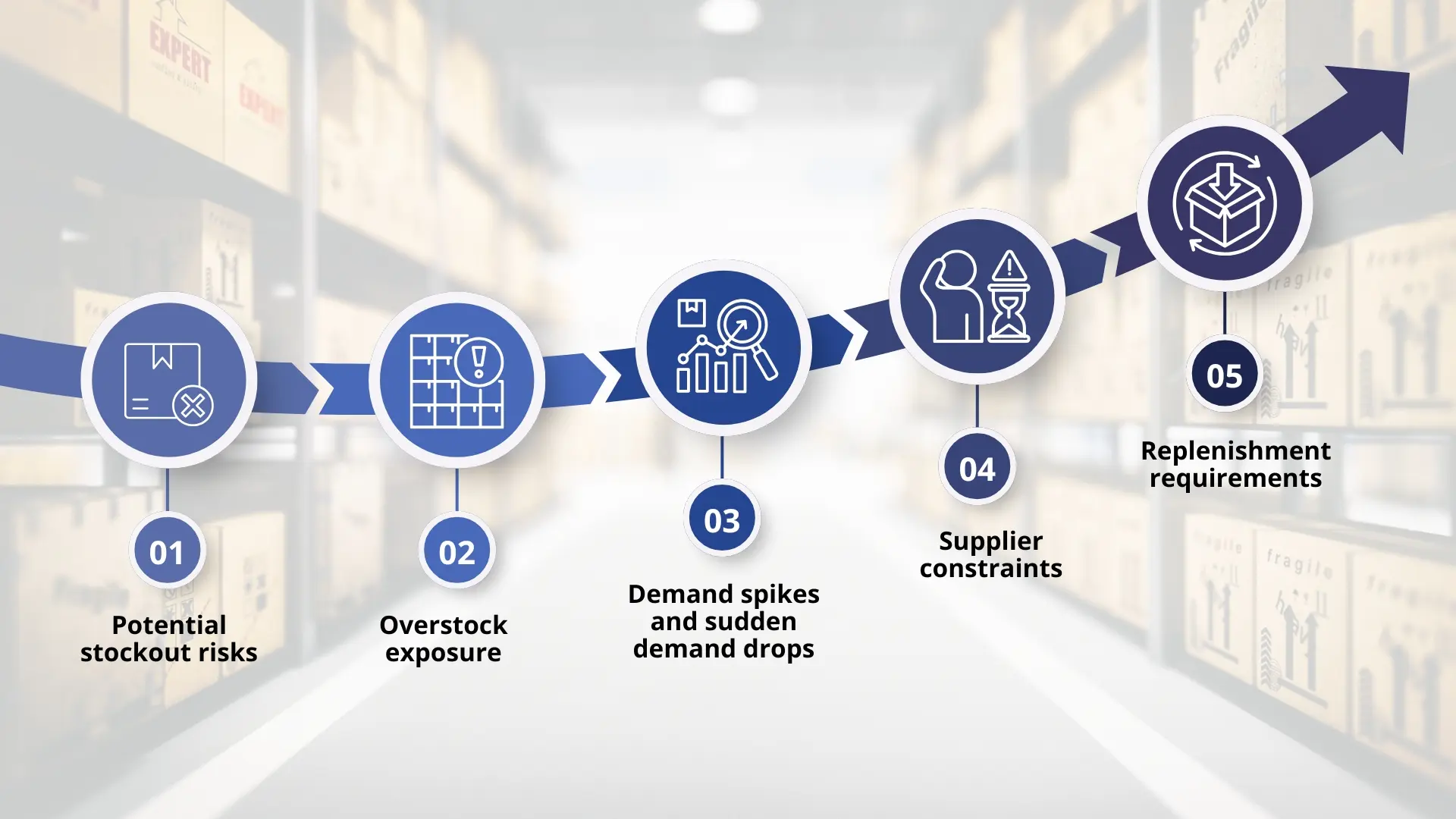
- Potential stockout risks
- Overstock exposure
- Demand spikes and sudden demand drops
- Supplier constraints
- Replenishment requirements
This approach enables planners to prioritize business-critical decisions instead of spending valuable time gathering and reconciling data.
With SpectraONE, planners can proactively identify these exceptions, receive explainable forecasting insights with confidence indicators, and focus on the actions that have the greatest business impact.
Connecting Forecasts to Procurement
One of the biggest gaps in FMCG planning exists between forecasting and procurement.
In many organizations, demand planners generate forecasts while procurement teams manually translate those forecasts into purchase decisions. This often creates delays, inconsistent responses, and unnecessary inventory costs.
A more effective approach connects forecasting directly with inventory policies, supplier constraints, lead times, and replenishment requirements.
This is where decision intelligence delivers measurable value.
SpectraONE helps bridge this gap by translating demand forecasts into procurement recommendations based on inventory policies, stock coverage, lead times, supplier reliability, and replenishment needs. Instead of manually calculating reorder quantities, planners receive actionable recommendations that support faster and more consistent decision-making.
The Future of FMCG Planning
The future of demand planning is not about generating more forecasts.
It is about creating a connected process that continuously predicts, evaluates, decides, acts, and learns.
Organizations are increasingly shifting their focus from forecast accuracy alone to broader business outcomes such as inventory optimization, faster response to demand changes, reduced manual effort, and improved collaboration between planning and procurement teams.
The planners who create the greatest value will not be those with the most sophisticated forecasts.
They will be the ones who can turn demand signals into timely, confident decisions.
Because in today’s FMCG environment, the real challenge is not predicting demand.
It’s knowing what to do next, and having the visibility and intelligence to act before small issues become major disruptions.
That’s why forward-looking FMCG organizations are moving beyond forecasting and adopting connected planning approaches that unify demand, inventory, and procurement decisions. SpectraONE is designed to support exactly that journey.