
From Reacting to Deciding: How FMCG Planners Can Escape Excel Firefighting in APAC

If you speak to most FMCG planners today, one phrase comes up again and again—“We’re constantly firefighting.”

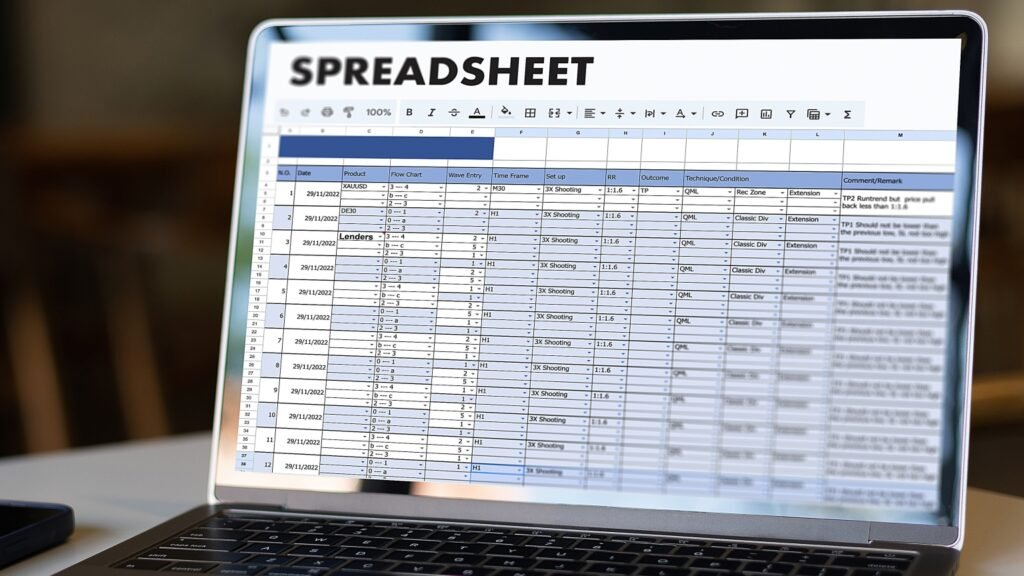
A sudden spike in demand, a promotion that didn’t go as planned, or a stockout that no one saw coming. And more often than not, the root cause traces back to one thing: spreadsheets.

Across APAC, where markets are fast-moving and unpredictable, relying on Excel for planning is becoming a serious limitation. According to industry reports, companies relying on manual planning methods experience 20–30% higher forecast errors.To stay ahead, companies need to rethink how they approach demand forecasting in FMCG.

The Reality of FMCG Planning in APAC

a (4)

APAC contributes to nearly 40% of global FMCG growth, driven by rapid urbanization, e-commerce expansion, and changing consumer behavior.

For planners, this means:

  • Managing hundreds (sometimes thousands) of SKUs
  • Handling demand across multiple channels
  • Planning around frequent promotions
  • Reacting to sudden demand changes

Accurate demand forecasting in FMCG becomes critical in such environments.

Why Excel Is No Longer Enough

a (1)

Spreadsheets have been the backbone of planning for years. They’re familiar, flexible, and easy to start with. But they weren’t built for today’s supply chains.

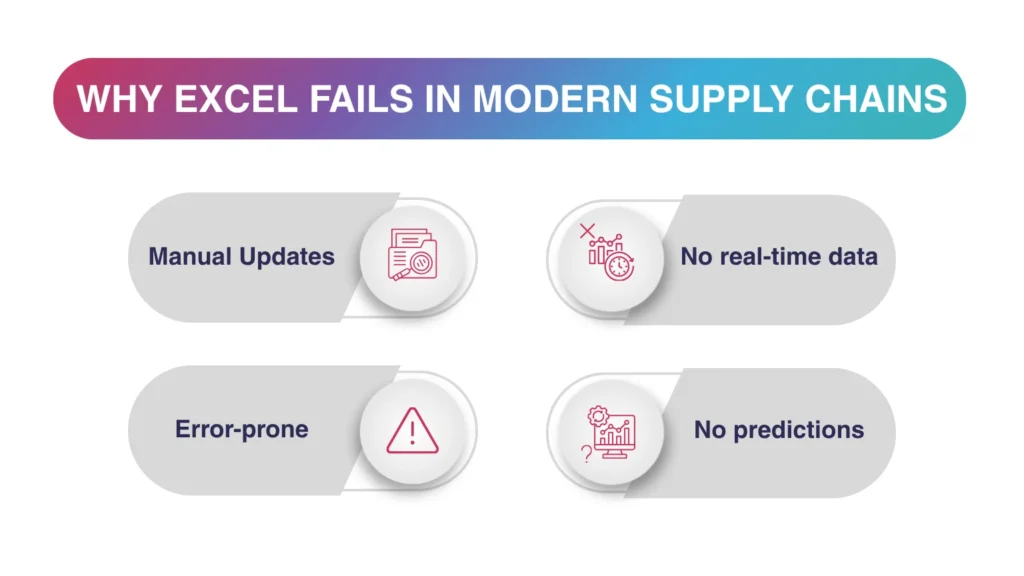
The limitations of Excel in supply chain planning are becoming harder to ignore:

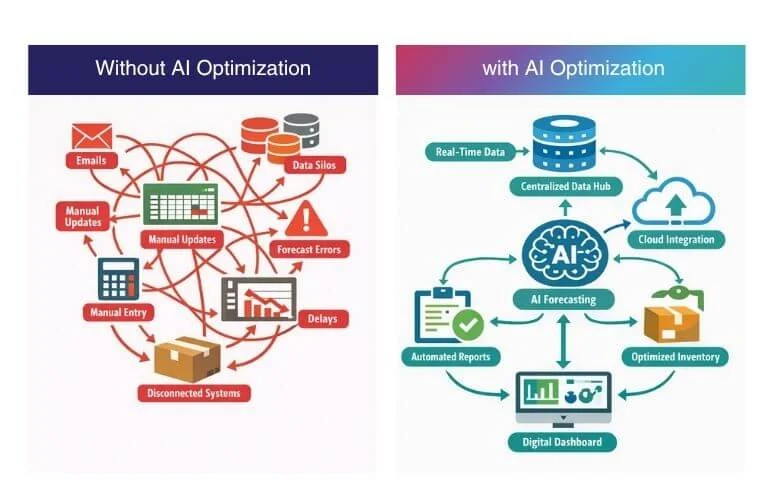
  • Data is scattered across systems and manually updated
  • Version control becomes messy with multiple stakeholders
  • Errors creep in without visibility
  • There’s no real way to predict what’s coming next

These manual demand forecasting issues force teams into reactive workflows and limit the effectiveness of demand forecasting in FMCG.

The Hidden Cost of Firefighting

Firefighting might feel like part of the job, but it comes at a cost.

Studies show that poor forecasting can increase inventory costs by up to 25%, while stockouts can lead to 5–10% lost sales annually.

  • Stockouts during high-demand periods
  • Excess inventory sitting in warehouses
  • Increased logistics and operational expenses
  • Lost sales and unhappy customers

These are common supply chain inefficiencies across FMCG operations.

Moving Toward Smarter Forecasting

a (3)

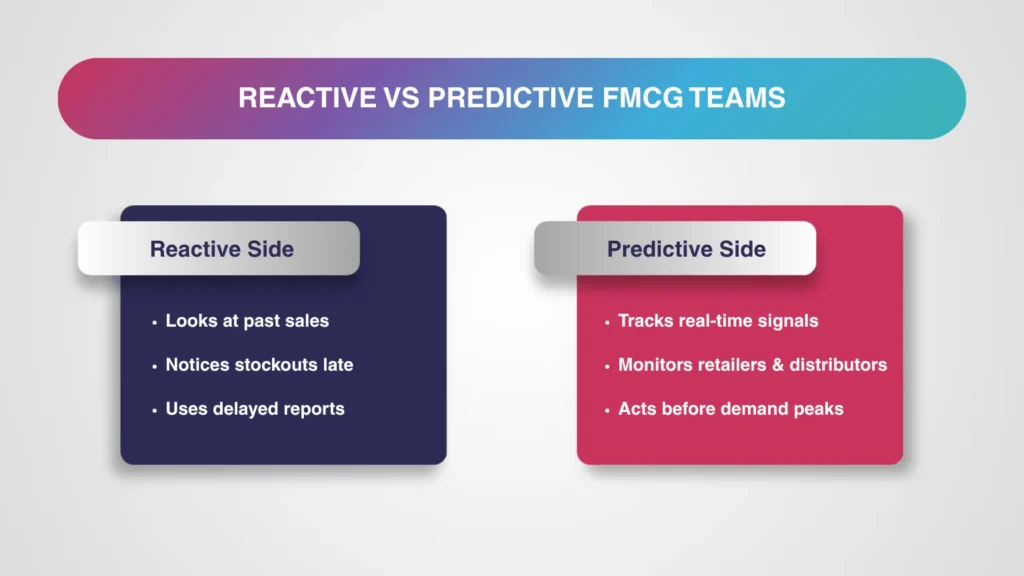
To break this cycle, FMCG companies need to move from reactive planning to proactive decision-making.
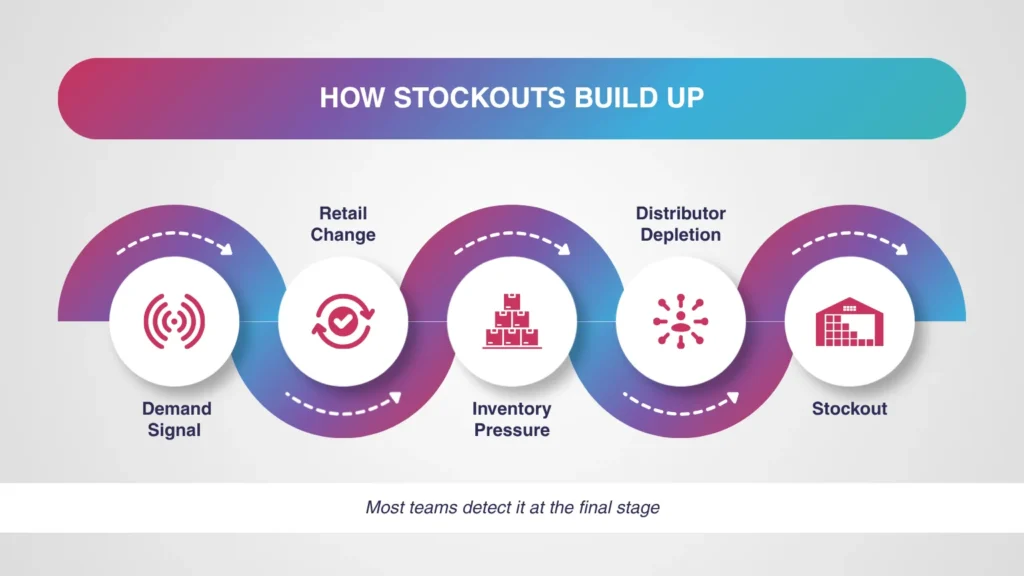
Organizations adopting AI-driven planning report 15–30% improvement in forecast accuracy and up to 20% reduction in inventory levels.

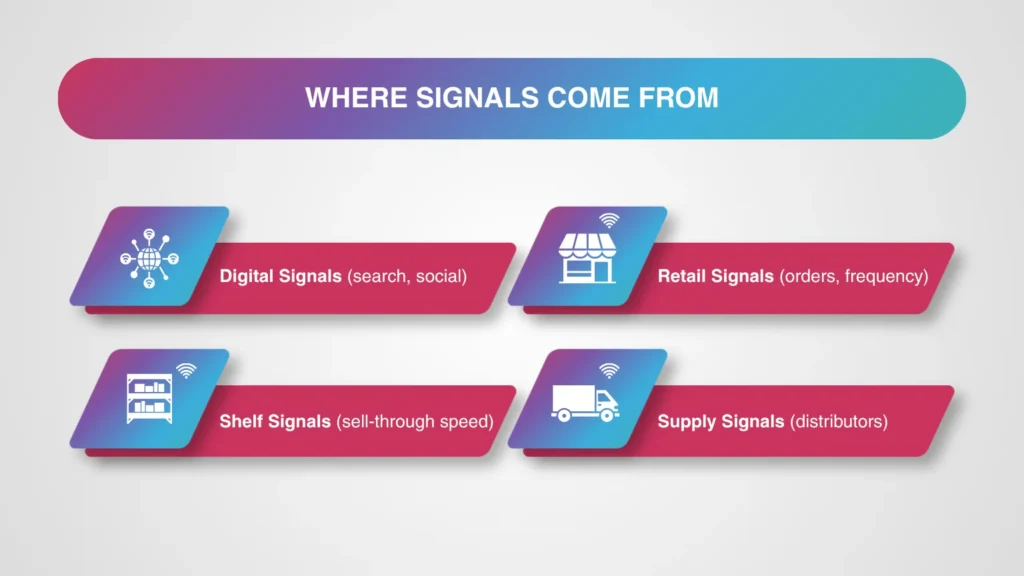
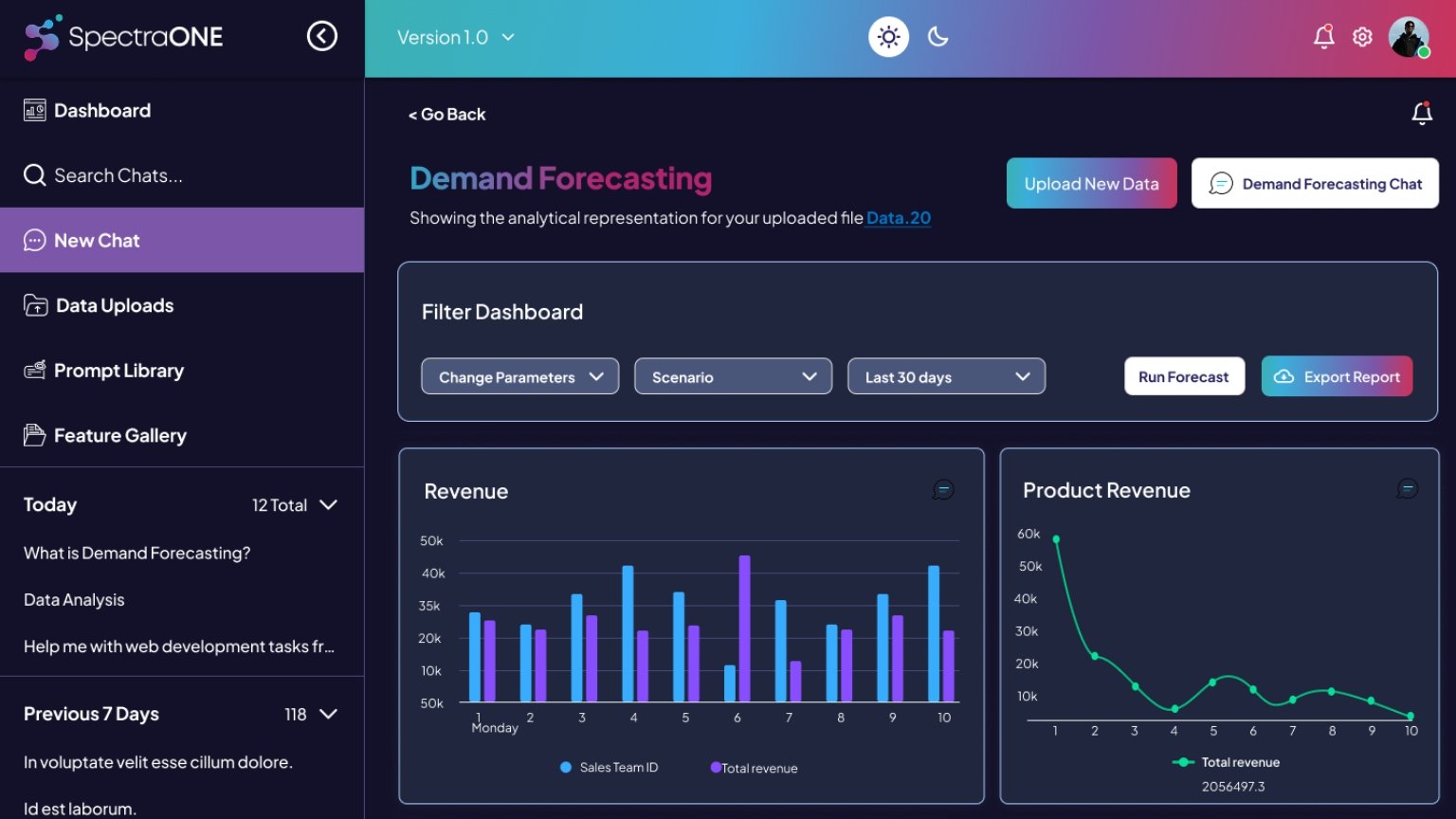
This is where modern demand forecasting software starts to make a real difference. Instead of relying only on historical data, these tools continuously analyze patterns, demand signals, and operational data.

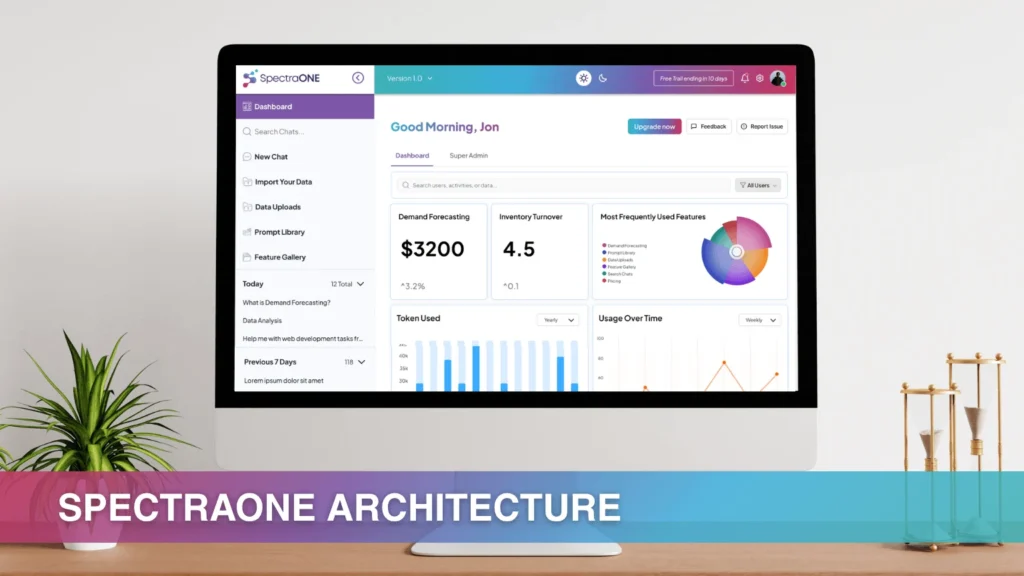
Platforms like SpectraOne act as an intelligence layer across the supply chain by connecting data from sales, inventory, and operations. This enables real-time visibility, early demand signal detection, and more accurate demand forecasting in FMCG.

How to Improve Demand Forecasting Accuracy

Improving accuracy doesn’t happen overnight, but a few changes can make a big impact.

  • Use more than just historical data
  • Reduce manual work and address manual demand forecasting issues
  • Focus on real-time visibility
  • Continuously refine forecasts

Adopting the right demand forecasting software helps strengthen demand forecasting in FMCG and improve responsiveness.

From Firefighting to Decision-Making

With intelligent demand forecasting software, planners can:

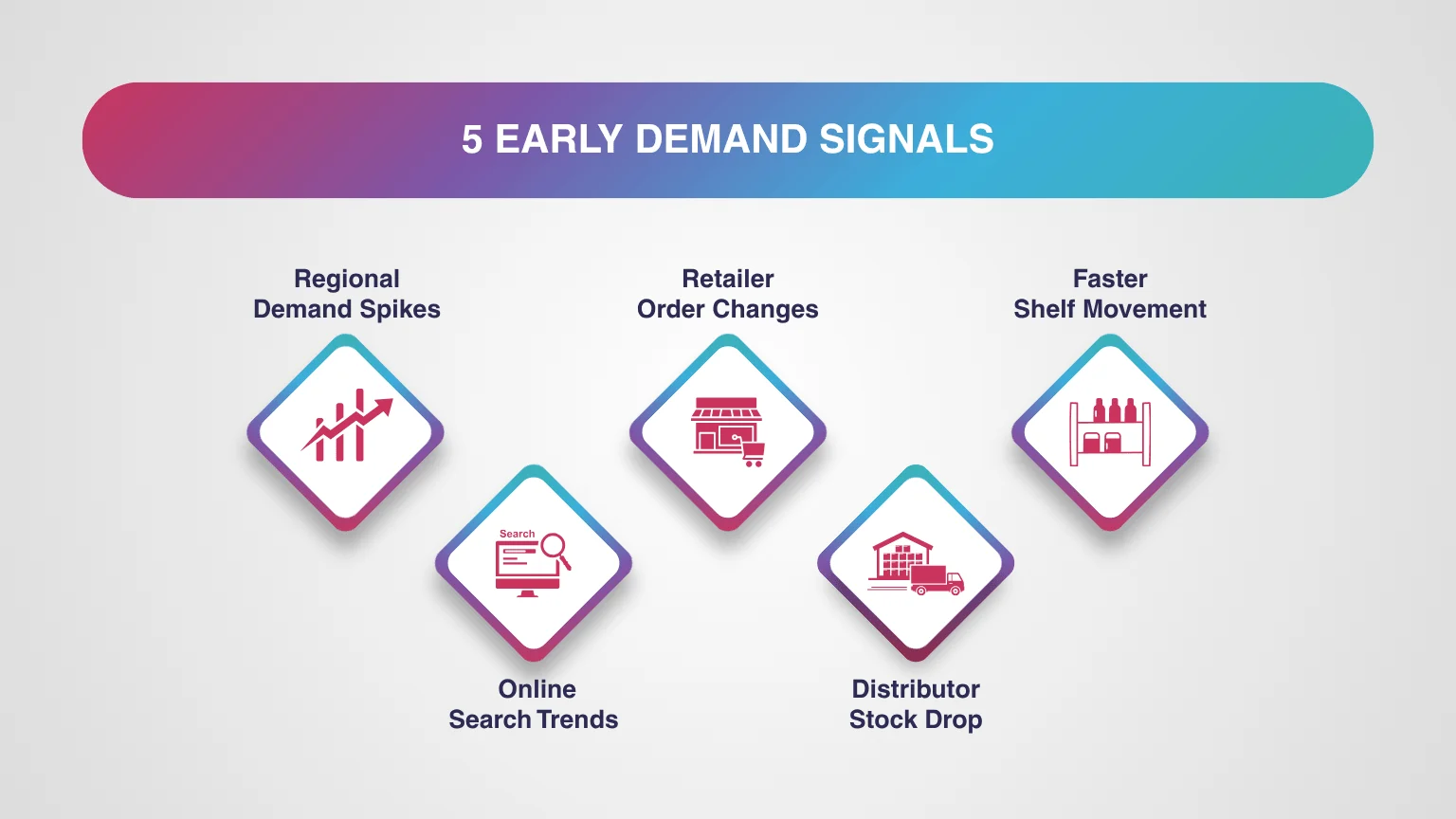
  • Spot demand changes early
  • Reduce stockouts and excess inventory
  • Plan promotions more effectively
  • Improve overall supply chain efficiency

Real-World Example

A mid-sized FMCG company in Southeast Asia was managing planning through spreadsheets across multiple markets.

  • Frequent stockouts during promotions
  • Excess inventory in low-performing regions
  • Limited visibility across channels

After moving away from spreadsheet-based planning:

  • Forecast accuracy improved by ~25%
  • Stockouts reduced during peak demand
  • Inventory holding costs decreased

How SpectraOne Helps FMCG Teams

a (2)

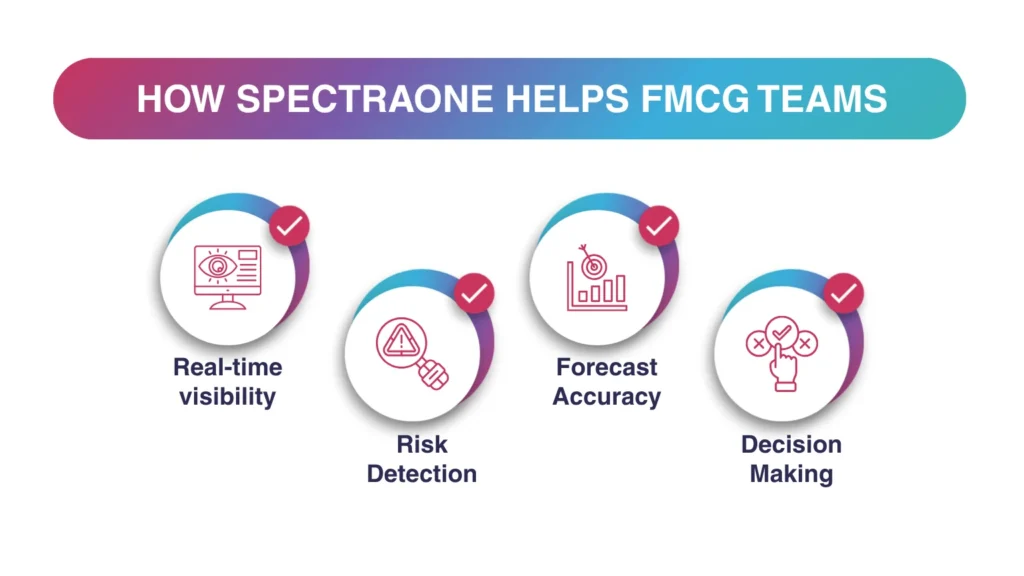
SpectraOne helps FMCG companies move beyond reactive planning by enabling:

  • Real-time visibility across demand, inventory, and supply
  • Early detection of demand fluctuations and risks
  • Continuous improvement in forecast accuracy
  • Faster, data-driven decision-making

Take the Next Step

If you’re still relying on spreadsheets, it’s worth evaluating the impact on your planning process.

  •  Use the ROI Calculator to estimate how much value you can unlock with platforms like SpectraOne

Final Thoughts

FMCG planning in APAC requires a shift toward smarter, data-driven approaches.By addressing the limitations of Excel in the supply chain, reducing manual demand forecasting issues, and minimizing supply chain inefficiencies, organizations can improve demand forecasting in FMCG and make better decisions.

AI Supply Chain APAC: Turning Regional Complexity into Predictable Performance

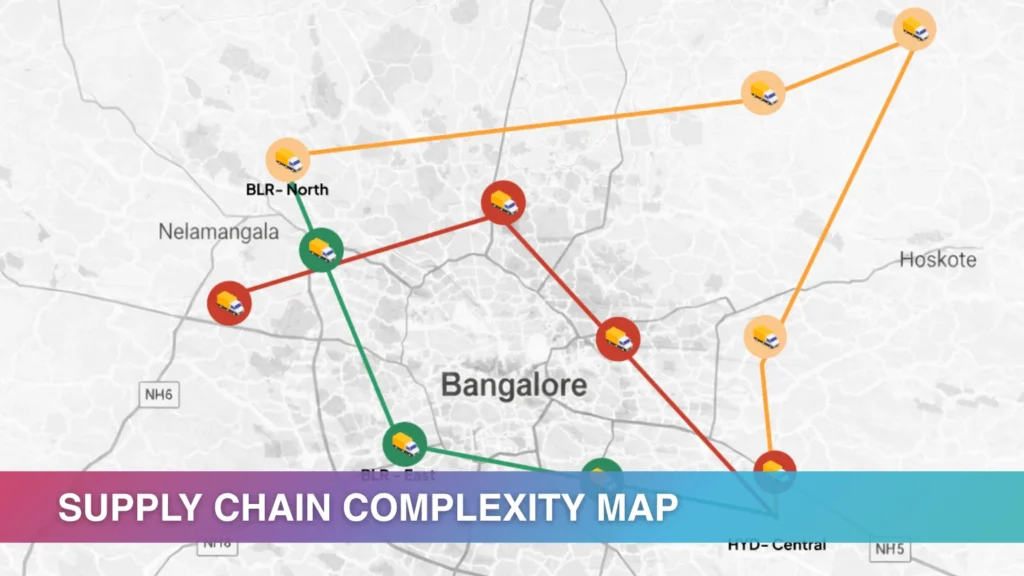
The Asia-Pacific region is one of the most complex supply chain environments in the world. Production may sit in one country, suppliers in another, and demand scattered across several fast-moving markets. Add currency shifts, port congestion, regulatory variation, and promotional volatility, and even well-run networks can feel fragile.

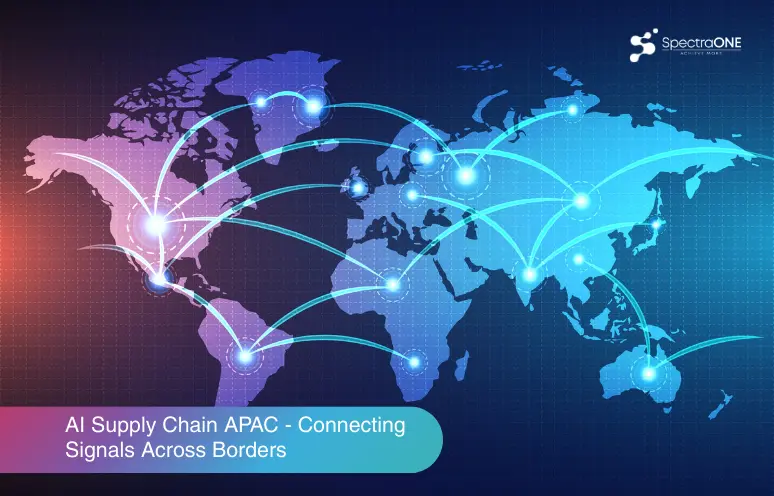
This is why conversations around AI supply chain APAC adoption are becoming more practical and less theoretical.

Leaders aren’t asking whether AI sounds innovative. They’re asking whether it helps them avoid the next disruption.

The Reality of APAC Supply Networks

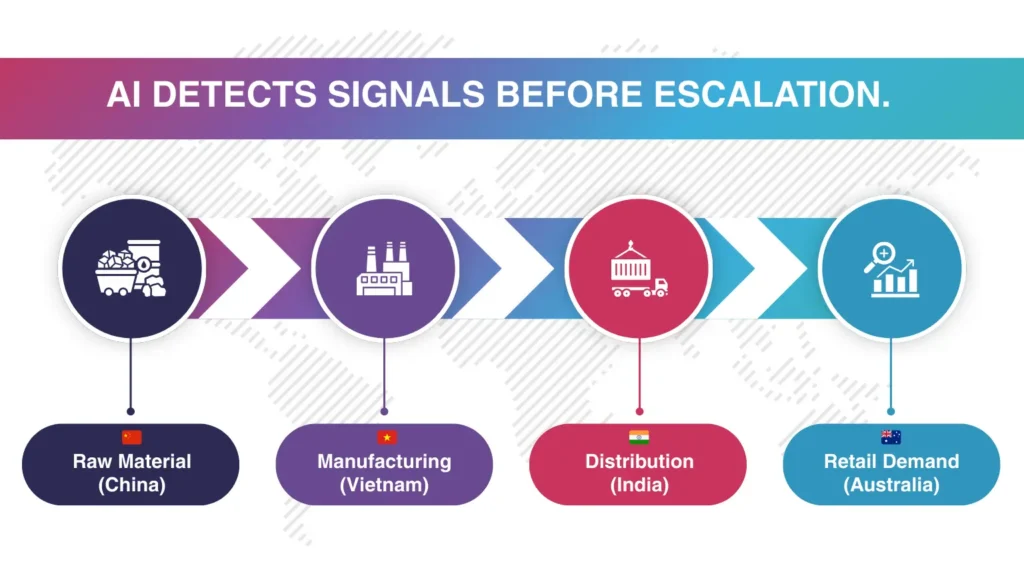
AI detects signals

APAC supply chains are deeply interconnected. A raw material delay in China can quietly affect manufacturing in Vietnam. A demand spike in India can distort regional inventory planning. Often, the signals appear small at first — a slight increase in order frequency, a minor lead-time stretch, a subtle shift in channel mix.

Traditional systems capture the data. They just don’t always connect it early enough.

Most enterprises already have ERP systems, reporting dashboards, and planning tools. The issue isn’t visibility. It’s an interpretation. By the time risks are obvious in reports, they’ve usually already impacted service levels or working capital.

AI supply chain APAC strategies focus on identifying these early patterns — before they become operational emergencies.

Why Forecasting Alone Isn’t Enough

Static vs Predictive Intelligence

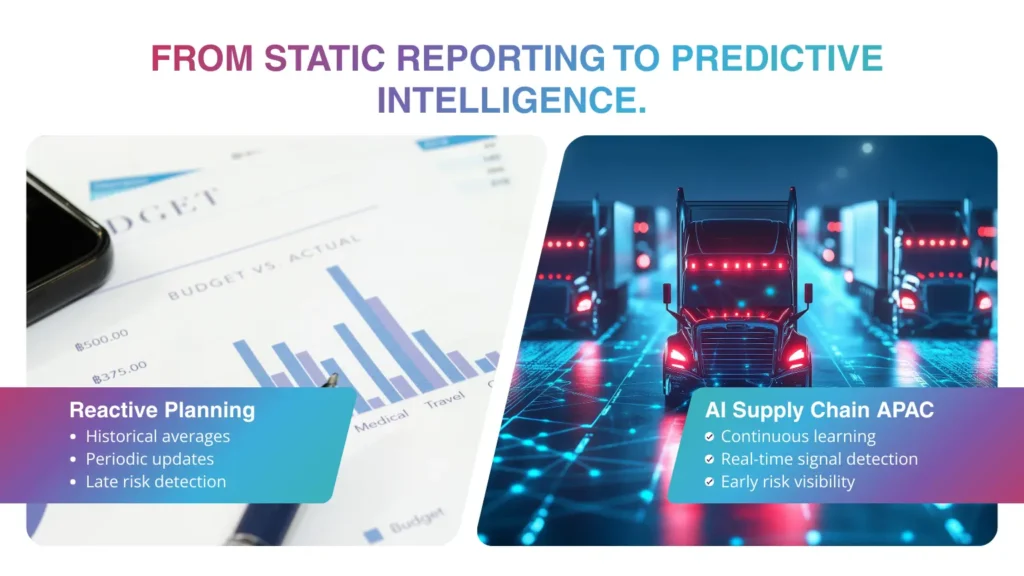
Forecasting is often where improvement begins. In many APAC markets, demand patterns don’t behave consistently year over year. Growth can be sharp but uneven. Promotions distort baseline trends. Urban consumption shifts quickly. Relying purely on historical averages creates instability.

AI-driven forecasting models learn continuously. They adjust as patterns shift instead of waiting for the next planning cycle. Over time, this reduces the gap between planned and actual demand. But forecasting is only one part of the equation.

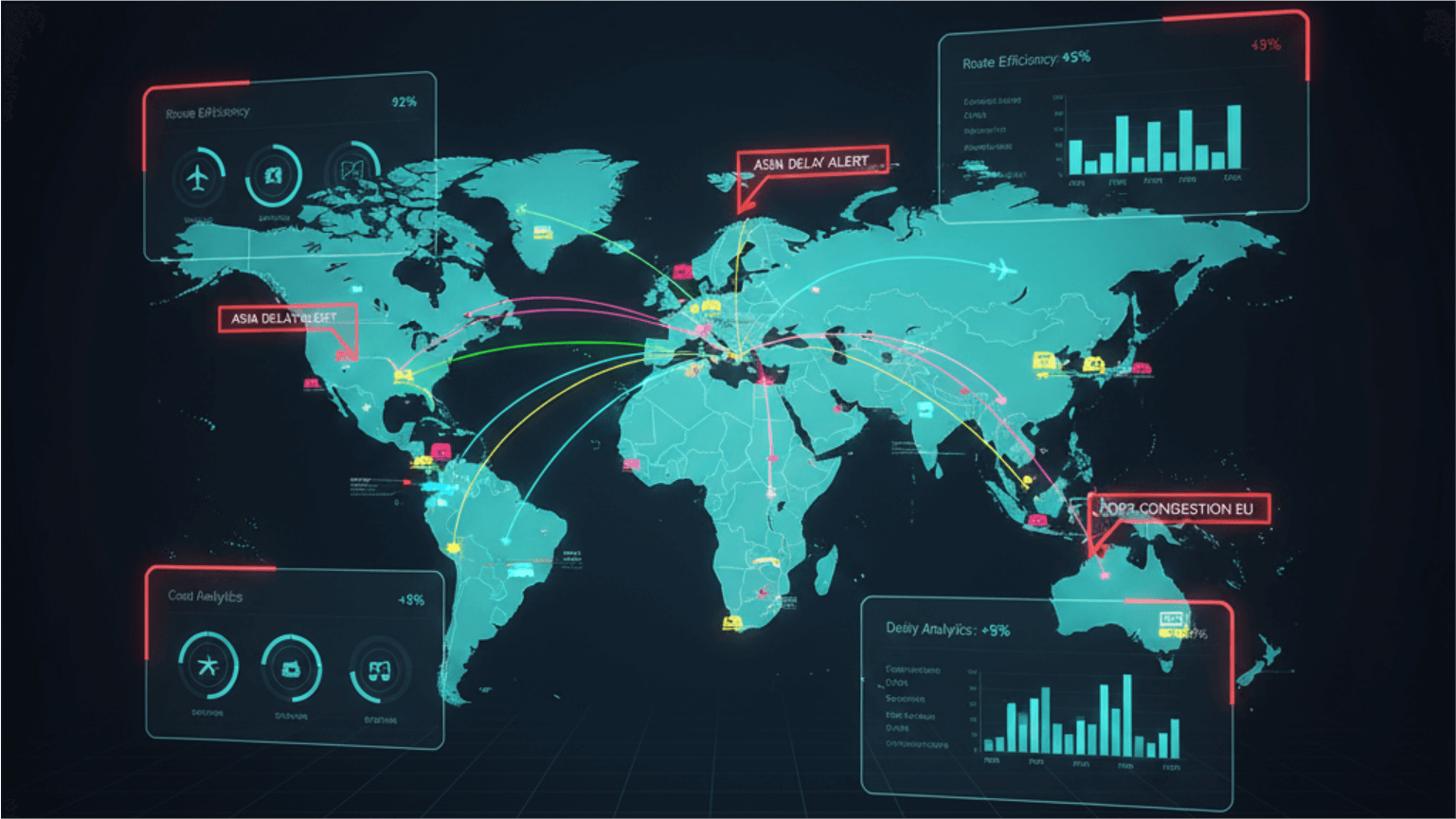
AI supply chain APAC platforms extend beyond demand numbers. They correlate supply variability, production constraints, and logistics performance. When signals move in different parts of the network, AI can surface connections that manual reviews might miss.

This changes how teams respond. Instead of reacting to shortages, they anticipate them. Instead of expediting shipments, they rebalance earlier.

Cross-Border Complexity Requires Connected Intelligence

One defining characteristic of APAC operations is geographic spread. Few enterprises operate within a single national boundary. Most manage multi-country networks, each with its own regulatory requirements and infrastructure reliability.

Without connected intelligence, planning becomes siloed. Regional teams optimize locally, sometimes at the expense of the broader network.

AI supply chain APAC solutions create a unified analytical layer. They help organizations see how decisions in one country influence performance in another. This improves coordination and reduces unintended ripple effects.

For enterprises managing multiple markets simultaneously, this broader perspective is critical.

Trust and Explainability Matter

Adopting AI in enterprise environments is not just about model accuracy. It is about trust.

Planners and operations leaders need to understand why a system is recommending a change. If the logic is opaque, resistance follows.

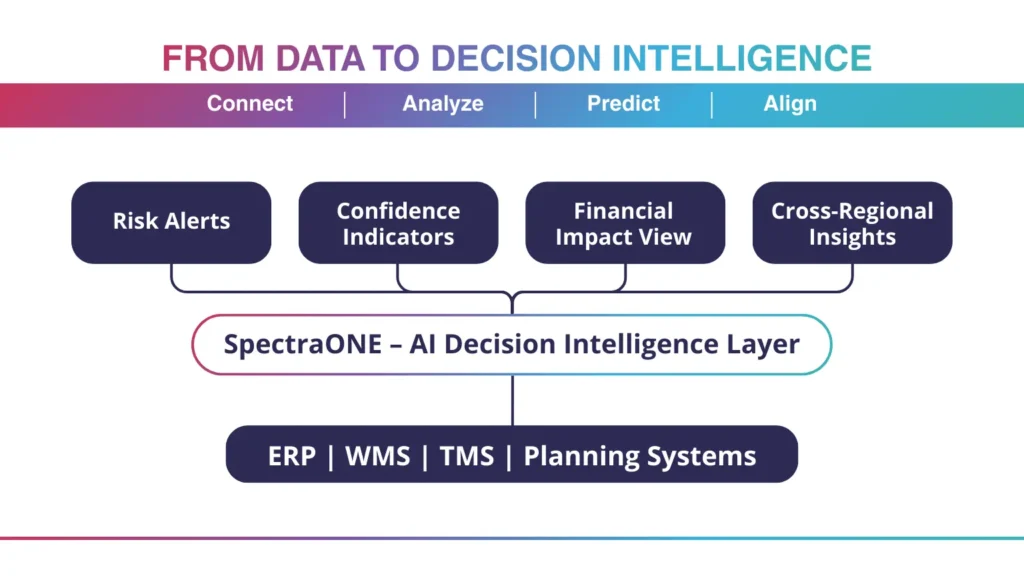
Explainable AI addresses this directly. When a forecast shifts, the system should indicate what’s driving it, whether it’s order frequency, supply delays, or channel variation. Confidence indicators help teams judge how aggressively to respond.

In APAC organizations, where decisions often involve multiple stakeholders, clarity speeds alignment.

AI supply chain APAC transformation works best when it supports human judgment rather than attempting to replace it.

Where SpectraONE Comes In

AI Decision Intelligence Layer

SpectraONE supports enterprises pursuing AI supply chain APAC initiatives by acting as a decision intelligence layer across existing systems.

Instead of replacing ERP or planning tools, SpectraONE connects demand, supply, inventory, production, and logistics signals into one continuous analytical view. It monitors patterns, flags emerging risks, and provides contextual insight into potential operational and financial impact.

For companies operating across multiple APAC markets, this reduces blind spots and shortens response time.

The objective isn’t to generate more data, but to bring clarity to it.

The Competitive Shift

APAC will likely remain one of the most dynamic supply chain environments globally. Growth will continue, but so will volatility.

Enterprises that depend solely on historical reporting will find themselves reacting more often than planning. Those investing in AI supply chain APAC capabilities gain a structural advantage: earlier detection, stronger coordination, and more confident execution.

In a region where small disruptions can cascade quickly, foresight becomes more valuable than hindsight.

Frequently Asked Questions

What does AI supply chain APAC mean?

It refers to the use of artificial intelligence to improve forecasting, risk detection, and operational decision-making across supply chains operating in the Asia-Pacific region.

How does AI improve supply chain resilience in APAC?

AI analyzes real-time demand and supply signals to detect emerging risks early, enabling proactive adjustments before disruptions escalate.

The objective isn’t to generate more data, but to bring clarity to it.

Yes. While large enterprises benefit significantly, mid-sized companies operating across multiple countries can also improve forecasting and inventory efficiency through AI-driven planning.

Explainable AI in Demand Forecasting: Building Trust When Stakes Are High

Demand forecasting has always been a tightrope walk. Planners are working with imperfect data, changing customer behavior, promotions that distort demand, supply constraints, and constant pressure to protect service levels without tying up too much cash in inventory. Over time, Advanced analytics and AI have helped teams forecast more accurately, respond faster, and make decisions at scale.

But as forecasting models get more sophisticated, a new problem shows up: the forecast might be “right,” yet still hard to trust operationally.When the numbers suddenly shift or the system recommends a meaningful change in production or inventory – teams naturally ask why before they act. And when service, revenue, compliance, and customer commitments are on the line, trust matters just as much as accuracy.

Why Accuracy Alone Isn’t Enough Anymore

1-2

Traditional forecasting often leaned on straightforward logic: historical averages, simple seasonality, rules of thumb, and planner experience. Those methods weren’t perfect, but they were easy to explain. You could usually point to a reason: a seasonal lift, a recent sales trend, a known customer event.

Modern AI can look at hundreds of signals at once. It finds patterns humans might miss, connects data across channels, and adapts continuously as conditions change. This is powerful, but it can also feel opaque to business users.

So when the model raises demand by 12% for a specific SKU, planners start asking practical questions:

  • Is this increase because sales are accelerating or because of a promo?
  • Is this a stable pattern, or will it swing back next week?
  • How confident should we be before we commit inventory, capacity, or spend?

If the system can’t answer those questions clearly, people hesitate. They override the forecast manually, delay decisions, or rebuild the plan in spreadsheets “just to be safe.” Over time, this erodes confidence in the system, even if the model itself is statistically sound. The core issue often isn’t performance. It’s interpretability and trust.

Why Accuracy Alone Isn’t Enough Anymore

1-3

Explainable AI doesn’t mean showing planners algorithms or math formulas. In a business setting, explainability means the forecast is understandable, actionable, and defensible.

In demand planning, that usually looks like:

  • Visibility into the key drivers behind a forecast change
  • Clear flags when a forecast deviates from normal patterns
  • Confidence signals that indicate how aggressively to act
  • Traceability from the forecast back to the underlying data signals

Instead of getting a number with no context, planners see what’s influencing it—demand acceleration, channel shifts, changing seasonality, customer behavior, or external disruptions. That makes it easier to apply professional judgment in the right way, without blindly trusting the system or rejecting it outright.

Explainability also improves collaboration across functions. Finance teams want to understand revenue implications. Operations teams need confidence before committing capacity. Leadership needs clarity when making strategic decisions. A transparent forecasting system aligns these conversations around a shared view of what is happening and why. 

How Explainability Changes Day-to-Day Planning

When forecasting is explainable, the daily conversation changes.

Teams spend less time debating whose number is “correct” and more time discussing what the signals mean and what to do next. Instead of “Do we trust this forecast?” the question becomes: “What’s changing—and how should we respond?”

Planners can validate shifts faster, prioritize exceptions more effectively, and act earlier rather than firefighting later. Over time, that builds confidence not just in the model, but in the entire planning process.

A Simple Real-World Example

Imagine demand for a critical SKU starts creeping up in a specific region. It’s gradual enough that traditional weekly reporting doesn’t make it look urgent. Everything still appears “within range.”

An AI model, however, detects a consistent shift across order frequency, channel mix, and customer behavior. It increases the forecast and assigns a moderate confidence level.

With explainability built in, the planner can see the rise is being driven mostly by repeat orders from a specific customer segment, and not a one-time spike. The confidence signal shows the pattern has held across multiple cycles.

That context makes the decision easier: adjust replenishment early, coordinate with sales, and prevent shortages without overreacting. The action feels informed, not speculative.

Why Trust Matters Even More When the Stakes Are High

In industries like pharma, FMCG, manufacturing, and regulated supply chains, the downside of getting it wrong is significant.

  • Overproduction ties up working capital.
  • Underproduction risks service failures and lost revenue.
  • Compliance requirements demand auditability and consistency.

In these environments, explainability isn’t a “nice to have.” It’s often the difference between AI being adopted at scale, or being used cautiously by a small group while everyone else works around it.

When AI systems are transparent and traceable, leaders can defend decisions internally and externally. And the organization can expand usage confidently across cycles, regions, and product lines.

How SpectraONE Approaches Explainable Forecasting

1-4


SpectraONE is built to make explainability part of the workflow, not an add-on.

It connects demand, supply, inventory, production, and logistics into a unified intelligence layer. Forecast outputs come with driver context, confidence indicators, and early signal detection – so teams can see what’s changing, what’s driving it, and how reliable it appears.

The goal isn’t just “better numbers.” It’s better decisions: faster alignment, clearer financial visibility, and more confident execution under uncertainty.

Looking Ahead

As AI reshapes supply chain planning, the big question will increasingly shift from:

  • “Can the model predict accurately?”
    to
  • “Can we trust it—and operationalize it at scale?”

Explainable AI is what bridges that gap. It helps planners and leaders understand the “why” behind the forecast, apply judgment with confidence, and build resilience into daily decisions.

The real value of AI in forecasting isn’t only better predictions, it’s clearer reasoning, better alignment, and more confidence when it matters most.

Why the Next 12 Months Will Redefine Supply Chain Competitiveness

A Data-Backed Look at Why Becoming AI-Ready Can’t Wait

If you work in supply chain or operations, you already know the truth:
The last few years rewrote the playbook. Businesses faced more disruption in three years than in the previous thirty, and the ripple effects are still here.

But underneath all that volatility, something much bigger is happening:

AI-ready supply chains are starting to pull ahead of everyone else, quickly and in measurable ways.

The performance gap is already visible in real numbers across accuracy, inventory, logistics stability, cost efficiency, and decision speed.

Below is the clearest picture of that shift, grounded entirely in published research, and why the next 12 months will determine who moves ahead and who falls behind.

1. Forecast Accuracy: Where Most Companies Win or Lose Margin:

3

If there’s one metric that shapes almost every other cost in the supply chain, it’s forecast accuracy.

Research shows:

  • Every 1% improvement in forecast accuracy reduces inventory by ~0.6–1% (Gartner).
  • Companies in the top quartile of forecast accuracy enjoy up to 15% higher profit margins than competitors (McKinsey).
  • 61% of companies say demand volatility is their #1 risk (Accenture).

And the consequences of poor forecasting are massive:

  • Inventory levels increased 30–40% across industries since 2020 (BCG).
  • $1.1 trillion in global working capital is tied up in excess inventory (The Hackett Group).

Retailers lose $1 trillion every year to stockouts — with 30–40% caused by preventable planning issues (NielsenIQ).

2. Inventory & Working Capital: The Price of Staying “Traditional”

1

Across FMCG, pharma, automotive, CPG, retail and distribution, AI-enabled supply chains consistently outperform on working capital.

Industry transformation benchmarks show:These ranges line up with published benchmarks from McKinsey, Bain, Gartner, and BCG.

Impact AreaTypical ROI
Inventory Reduction 8–15%
Lost-sales reduction5–10%
Forecast accuracy improvement20–40%
Planner time saved 40–60%
Logistics/overtime cost reduction10–20%
Vendor fill rate improvement3–7%
Revenue uplift2–5%

3. Logistics & Execution: Where Hidden Margin Leakage Lives

5


Even the best plan collapses if execution is unstable.

The data is clear:

  • Average ETA deviation: 20–40% across mid-to-large fleets (FourKites, project44).
  • Up to 50% of expedited shipments are preventable with better visibility (McKinsey).
  • Real-time visibility leaders achieve:
    • 10–20% lower logistics costs
    • 30–50% faster reaction time
    • 5–15% OTIF improvement

60–70% of disruptions escalate because exception handling is still manual (Gartner).

4. Decision Automation: The New Productivity Divide

The biggest differentiator emerging today isn’t software — it’s how companies make decisions.

Here’s the reality:

  • Planners still spend 30–40% of their time gathering and cleaning data (Gartner).
  • 70% of organizations still rely on spreadsheets for critical decisions (EY).
  • Only 7% of supply chain leaders say they have end-to-end real-time visibility (McKinsey).

Companies pulling ahead are the ones that:

  • Clean and unify operational data
  • Automate repetitive decisions
  • Use AI to flag risks earlier
  • Create a closed loop between planning → execution → financial outcomes Within 12–24 months, these changes create permanent cost and agility advantages.

5. Why Timing Matters: The 12-Month Window

Every major consulting firm now agrees on one core trend:

Early adopters of AI-ready supply chains gain exponentially more benefit than late adopters.

Why?

  • Data advantages compound over time
  • Operational stability frees up teams from firefighting
  • Financial visibility improves capital allocation
  • AI models learn and widen the gap each quarter

In simple terms:

The next 12–18 months will create the cost leaders of the next decade.
Those who delay will be at risk.

The Shift Has Already Begun

The evidence is clear: supply chains that invest in data quality, automation, and AI are separating from those that continue to rely on manual, reactive processes. This divide isn’t forming years from now, it is forming quarter by quarter, in accuracy, cost, agility, and resilience.

The organizations moving today are not chasing trends. They are building the foundations that every competitive supply chain will need: clean data, connected systems, faster decisions, and real-time visibility. Those who wait will face a growing gap in performance, cost competitiveness, and customer service that becomes harder to close with every cycle.

The next 12 months represent a rare window — a chance to step ahead while the industry is still transitioning.

Where SpectraONE Fits 

4

If your organization is exploring this shift, SpectraONE helps teams build AI-ready forecasting and execution through:

  • Unifying and preparing operational data
  • Improving forecast quality with AI-assisted planning
  • Enabling predictive visibility across logistics
  • Measuring financial impact at every stage

Teams can start with a low-risk pilot that benchmarks your current performance and quantifies the financial impact across planning, logistics, and working capital.

The goal isn’t technology adoption; it’s building the capabilities required for how tomorrow’s supply chains will function.

Written by Sravya Priya – Digital & Content Specialist working on AI-led supply chain ideas and turning complex data into practical insights for operations teams.

From Data Chaos to Clarity: Preparing Supply Chain Data for AI with SpectraOne

Messy spreadsheets. Incomplete ERP logs. IoT sensors streaming raw numbers you can’t use. For most supply chains, the issue isn’t whether data exists-it’s whether that data can be trusted, standardized, and prepared for AI to act on. That’s where SpectraOne’s data engineering workflow makes the difference: transforming chaos into clarity.

This is where SpectraOne – the SCM Expert AI Engine steps in. It doesn’t just apply AI to your supply chain, it transforms your scattered data into a reliable, structured foundation for intelligent decision-making.
At its core, SpectraOne provides a domain-aware data engineering workflow that standardizes, secures, and operationalizes your supply chain data so AI can deliver business-ready insights in real time.

Step 1: Standardizing Inputs Across Sources

Supply chain data comes in many shapes – CSV files from vendors, ERP records, warehouse logs, transport feeds, and IoT sensor readings. Traditional systems force IT teams to build custom connectors and pipelines for each source.

SpectraOne simplifies this. Its modular ingestion framework:

  • Normalizes formats (CSV, JSON, XML, API, SQL).
  • Applies schema mapping aligned to supply chain entities (SKUs, batches, routes, invoices).
  • Supports both real-time streaming (sensor data, logistics events) and batch loads (ERP, procurement systems).

This ensures every data point, whether it’s a stock level in SAP or a GPS ping from a truck – enters the system in a consistent, AI-ready format.

Step 2: Intelligent Feature Extraction

Artboard 22

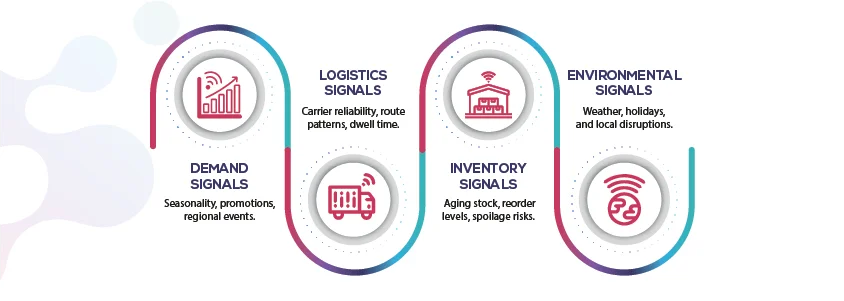
Raw data alone doesn’t fuel predictions – features do. SpectraOne automates this process with a library of pre-built, domain-specific feature extractors.

For example:

  • Demand signals: seasonality, promotions, regional events.
  • Logistics signals: carrier reliability, route patterns, dwell time.
  • Inventory signals: aging stock, reorder levels, spoilage risks.
  • Environmental signals: weather, holidays, and local disruptions.

Step 3: Unified Model Management

AI in supply chains isn’t one-size-fits-all. A factory needs different models than a retailer; perishable goods behave differently from spare parts.

SpectraOne provides a modular model management system that:

  • Supports multiple algorithms (Prophet, LSTM, XGBoost, custom ML).
  • Chooses the right model for each use case (forecasting, anomaly detection, routing).
  • Continuously retrains with fresh data to avoid model drift.
  • Deploys seamlessly in batch mode (for weekly planning) or real-time mode (for live tracking).

Step 4: Security, Privacy, and Compliance by Design

Supply chain data often includes sensitive business and customer information. SpectraOne ensures that AI workflows respect security and compliance requirements from the ground up:

  • Local processing: Models run inside client infrastructure (AWS EC2, SageMaker, On-Prem GPU).
  • Data sovereignty: No data leaves your environment without authorization.
  • PII protection: Tokenization safeguards sensitive information.
  • Credential security: AWS IAM & Secrets Manager protect keys and tokens.
  • API independence: No reliance on public APIs unless explicitly approved.

Step 5: Business-Ready Insights

Artboard 22 copy

Once data is prepped and models are live, SpectraOne delivers actionable insights:

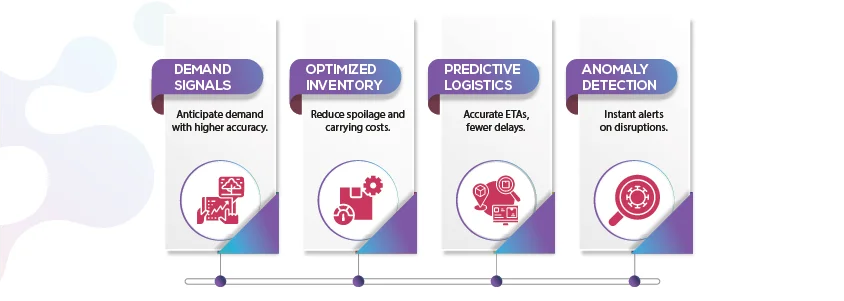
  • Smarter forecasts → anticipate demand with higher accuracy.
  • Optimized inventory → reduce spoilage and carrying costs.
  • Predictive logistics → accurate ETAs, fewer delays.
  • Anomaly detection → instant alerts on disruptions.

Why This Matters

Most AI initiatives in supply chains stall long before models even run – not because the algorithms fail, but because the data foundation isn’t ready. Disconnected spreadsheets, inconsistent ERP entries, and raw IoT streams leave teams stuck in endless cycles of cleansing, mapping, and integration.SpectraOne changes this equation. By providing a modular, domain-aware data engineering workflow, it reduces preparation time from months to hours. Instead of wrestling with pipelines, your teams can focus on what truly matters: generating forecasts, optimizing inventory, and predicting logistics outcomes with confidence.

Wrapping Up

From data chaos to clarity, SpectraOne is the bridge between messy supply chain data and real business value. It’s not just another AI tool, it’s the data backbone that makes AI practical, scalable, and trustworthy for global supply chains.

With SpectraOne, you don’t just get predictions – you get the confidence to move from firefighting to forecasting, from inefficiency to intelligence, and from scattered data to seamless decisions.

Next Step Once your data foundation is in place, the real value comes from scaling AI across workflows. Explore how SpectraOne’s modular AI architecture enables repeatable, enterprise-wide decision-making in our blog: From Data to Decisions

From Data to Decisions: How SpectraOne’s Modular AI Works

Most AI projects struggle not because models don’t work, but because the workflow around them isn’t built to scale. In fact, according to Gartner, nearly 85% of AI projects fail to deliver business outcomes at scale. Businesses spend months stitching together pipelines for every new use case-only to end up with fragile, one-off solutions.

SpectraOne was designed differently. It’s a modular, domain-aware AI platform that helps enterprises move from fragmented experiments to a repeatable, scalable AI workflow-without reinventing the wheel each time.

The Modular Architecture Advantage

2nd (3)

Instead of building custom pipelines for forecasting, inventory, or logistics separately, SpectraOne standardizes the core layers of the AI stack:

  • Input Transformation: Cleans and structures raw data from ERP, IoT, or spreadsheets.
  • Feature Extraction: Converts business signals into machine-ready inputs.
  • Model Management: Hosts, versions, and scales models across domains.
  • Orchestration Layer: Connects insights back into planning and operations.

This modular design means one consistent workflow supports multiple use cases-demand forecasting, inventory optimization, delivery planning-without duplicating effort.

How the Workflow Runs

2nd (1)

SpectraOne supports both real-time and batch operations, depending on business needs:

  1. Ingestion → Data flows in from enterprise systems or sensors.
  2. Transformation → Standard pipelines handle cleansing, enrichment, and validation.
  3. Feature Layer → Domain-aware feature libraries accelerate model readiness.
  4. AI Models → Multiple models can run in parallel for different scenarios.
  5. Decision Outputs → Results are fed into dashboards, APIs, or enterprise systems.

Workflow Adaptability in Action

2nd (5)

Business conditions change. Forecast models need updates. A new logistics provider comes on board. With SpectraOne’s modular AI, workflows don’t break:

  • Plug-and-Play Models: Swap models in or out without disrupting the pipeline.
  • Parallel Scenarios: Run “what-if” simulations (e.g., demand spike + supplier delay) in real time.
  • Business Alignment: Non-technical users see AI’s impact through transparent orchestration.

Business Value Delivered

2nd (4)

With SpectraOne, enterprises see measurable improvements across supply chain functions:

  • Forecasting: Higher accuracy, reduced overstock/stockouts.
  • Inventory: Real-time visibility, fewer manual errors.
  • Logistics: Faster, optimized delivery planning.
  • Operations: Teams shift from firefighting to proactive decisions.

Conclusion

SpectraOne turns the messy reality of enterprise data into a structured AI workflow that delivers decisions at scale. Its modular design ensures adaptability, speed, and business alignment-helping organizations adopt AI not as a project, but as a core operating capability.

Ready to eliminate supply chain blind spots?

Discover how SpectraOne’s modular AI can transform your data into real-time decisions that drive measurable impact.

Related Read

AI at scale starts with clean, reliable inputs. Learn how SpectraOne transforms messy supply chain data into AI-ready insights in our blog: From Data Chaos to Clarity