5 Early Demand Signals FMCG Teams Miss Before Stockouts Hit
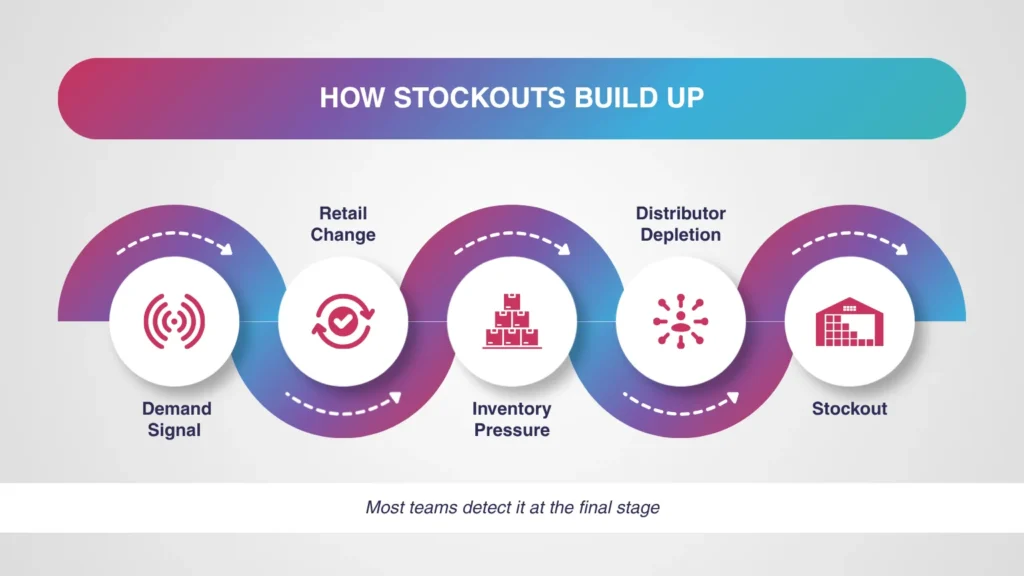
Stockouts rarely happen overnight. They build up quietly hidden in patterns most teams don’t notice until it’s too late. By the time shelves are empty, the damage is already done. Customers switch brands, and in many cases, they don’t come back. In fact, more than 70% of shoppers are likely to choose an alternative when their preferred product is unavailable.
What separates high-performing FMCG teams isn’t how they react to stockouts, but how early they detect demand shifts. Strong stockout prevention starts with identifying these subtle signals before they escalate.
1. Regional demand spikes that get lost in averages
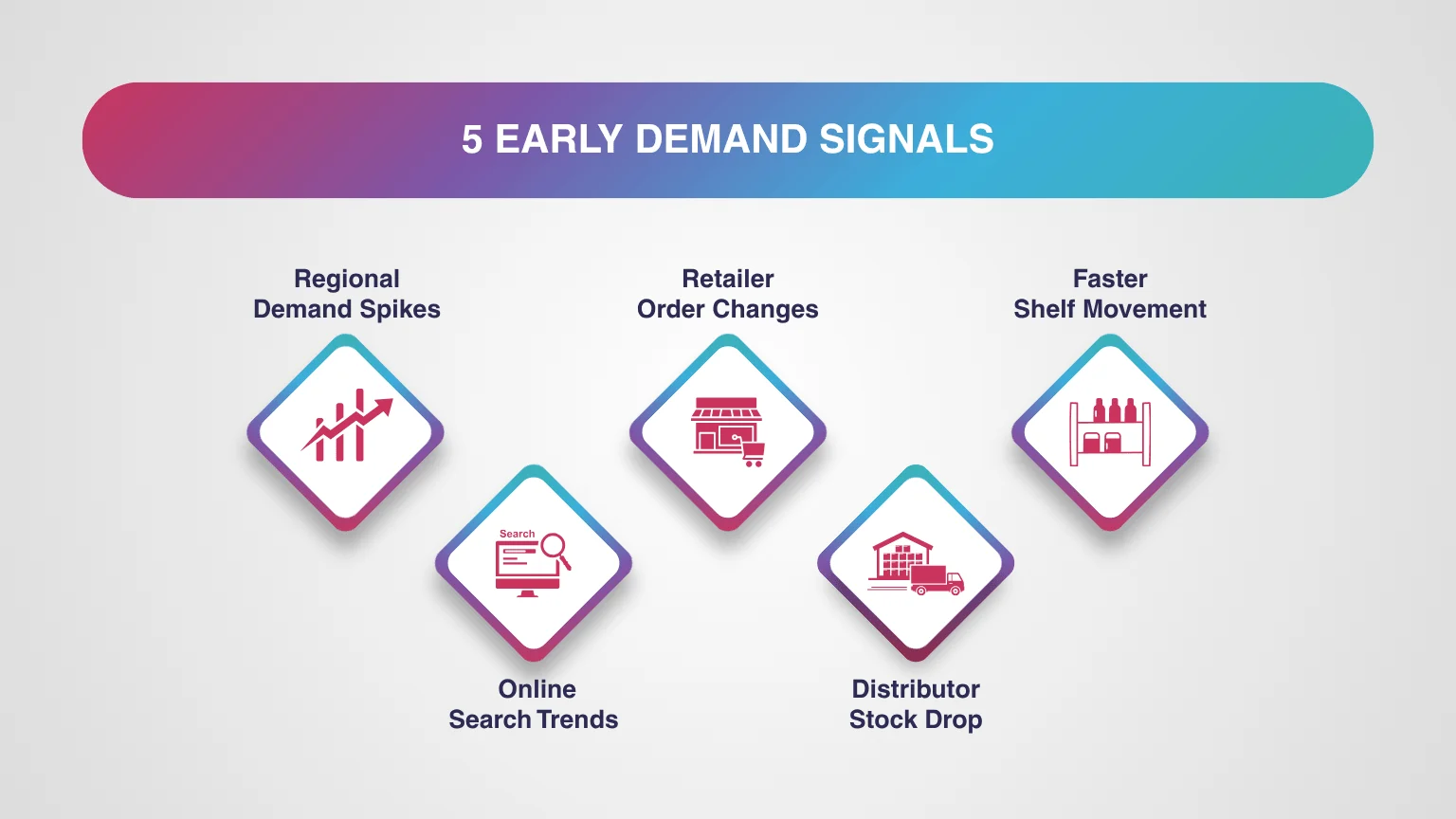
Demand rarely grows evenly across markets. A sudden spike in one city driven by weather, local events, or even a competitor running out of stock can quietly build into a larger supply issue. The problem is that most reporting systems average demand at a national level, which hides these early shifts.
Companies that break demand down regionally often see a noticeable improvement in forecast accuracy, sometimes by as much as 20%. That difference can be the line between staying in stock and missing sales opportunities.
When teams start paying closer attention to these localized patterns, stockout prevention becomes less about reacting late and more about acting early.
2. Subtle changes in how retailers place orders
Retailers are often the first to sense demand changes because they are closest to the end customer. When demand begins to rise, it doesn’t always show up as larger orders. Instead, it appears as more frequent orders, smaller quantities placed repeatedly, or even urgent replenishment requests.
These shifts are easy to miss if the focus stays on total order volume rather than ordering behavior. Businesses that invest in better inventory management systems tend to catch these patterns earlier and, as a result, significantly reduce stockouts – sometimes by around 30%.
Over time, it becomes clear that retailers are constantly signaling what’s happening on the ground. The real challenge is building systems that actually listen.
3. Faster movement of products at the shelf
One of the clearest indicators of rising demand is how quickly products move off the shelf. When inventory starts turning faster than usual, the number of days a product stays available drops—and that’s often where early warnings begin.
Many teams still rely heavily on warehouse-level data, which doesn’t always reflect what’s happening at the point of sale. Strong demand planning shifts the focus toward sell-through rates and real-time movement.
Organizations that refine their demand planning processes not only reduce excess inventory but also improve product availability, often lowering overall inventory costs by a meaningful margin while maintaining better service levels.
Watching how fast products sell, rather than how much stock exists, changes the way teams respond to demand.
4. Online behavior that signals demand before it happens
Consumer intent often shows up online before it translates into actual purchases. Search trends, product page visits, and social media engagement can all indicate that demand is about to increase.
For example, a sudden rise in searches for healthier snack options or energy drinks can quickly translate into higher store demand. What’s interesting is that these digital signals often appear weeks in advance, giving teams a valuable window to act.
Modern FMCG demand forecasting is evolving to include these signals, moving beyond traditional historical models. When digital behavior is integrated into FMCG demand forecasting, teams gain a much clearer view of what’s coming next rather than what has already happened.
5. Distributor stock that starts depleting faster
Distributors sit at a critical point in the supply chain, yet their data is often underutilized. When their stock begins to deplete faster than usual, it’s usually because retail demand has already picked up.
By the time this information reaches central systems, it’s often delayed or diluted. However, companies that actively monitor distributor-level movement are better positioned to respond quickly and reduce stockouts before they escalate.
In many cases, improving visibility at this level has helped organizations strengthen their stockout prevention efforts significantly, simply because they are no longer reacting too late.
Why these signals are still missed
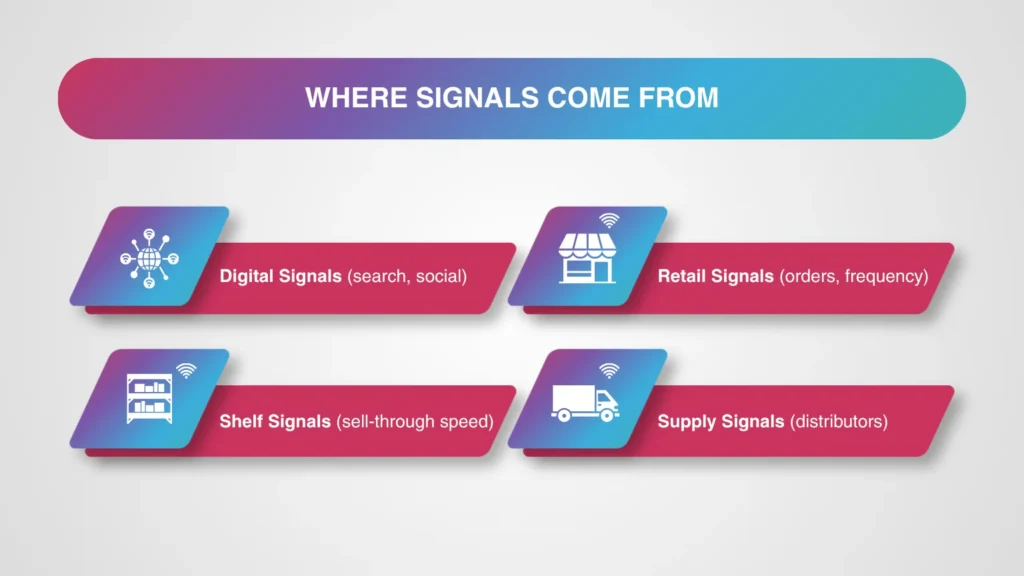
Even with access to large amounts of data, many FMCG teams remain reactive. Information is often spread across systems, reporting cycles are slow, and decision-making still leans heavily on historical trends.
Without strong supply chain visibility, it becomes difficult to connect these signals into a clear picture. This lack of visibility is a major reason why stockouts continue to happen, even in well-established organizations.
Moving from reactive to predictive
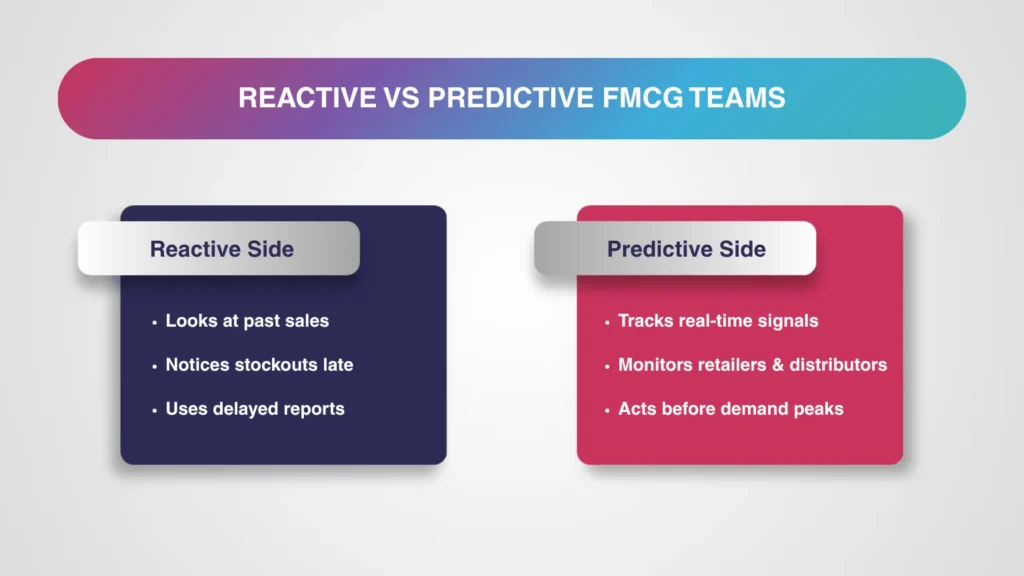
The shift toward better stockout prevention doesn’t require completely new data—it requires using existing data differently.
When teams improve supply chain visibility, strengthen demand planning, and align their inventory management with real-time signals, they start to anticipate demand rather than chase it.
At the same time, integrating smarter FMCG demand forecasting models allows businesses to respond faster to changes that would have previously gone unnoticed.
Turning Demand Signals into Action with SpectraONE
Recognizing early demand signals is only part of the equation. The real challenge is connecting these signals across systems and acting on them quickly enough to prevent stockouts.
This is where platforms like SpectraONE come into play.
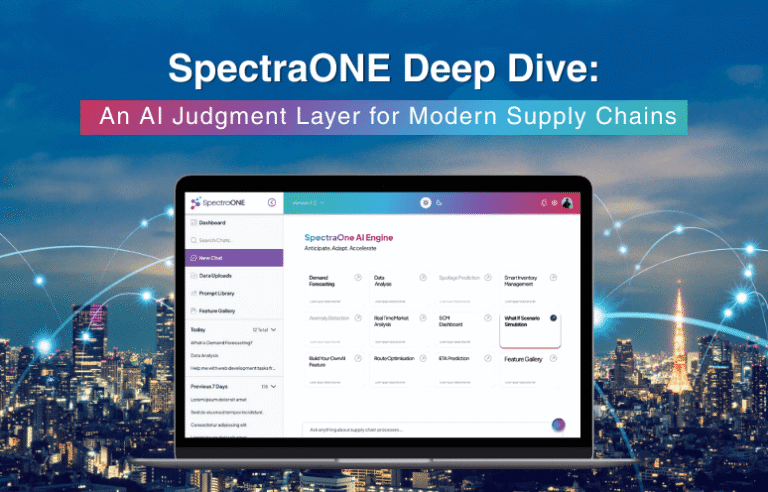
Instead of relying on disconnected reports, it brings together data from distributors, retailers, and digital channels into a single view. This allows FMCG teams to detect shifts in demand as they happen, rather than weeks later.
For example, if a regional spike in sales begins to emerge, the system can flag it early—helping teams adjust supply before shelves start going empty. Similarly, changes in retailer ordering patterns or faster inventory movement can be tracked in real time, making stockout prevention more proactive than reactive.
By strengthening supply chain visibility and improving demand planning, tools like SpectraONE help teams move from simply tracking performance to actually predicting it.
Final thought
Stockouts are rarely unpredictable. They are often the result of signals that were present but overlooked.
The brands that consistently stay ahead are the ones that recognize these patterns early and act before the problem becomes visible to everyone else.