
Demand Forecasting for Omnichannel Retail: Why One Model Doesn’t Work

Imagine a retailer forecasting demand for a bestselling sneaker. The forecast predicts sales of 20,000 units next month, and by the end of the month, that’s exactly how many pairs customers buy. On paper, the forecast is perfect. Yet the retailer still faces cancelled online orders, empty shelves in some stores, and excess inventory sitting in regional warehouses. How is that possible. The answer lies in one of the biggest misconceptions in omnichannel demand forecasting: assuming that one demand forecast can serve every sales channel equally.
Today’s customers don’t shop the way they did a decade ago. They browse products on social media, compare prices on marketplaces, check stock availability online, reserve products for in-store pickup, and switch between digital and physical channels throughout their buying journey. While customers experience retail as one connected journey, many businesses continue to plan inventory using a single consolidated forecast.
That approach is becoming increasingly difficult to sustain.
Modern retail isn’t struggling because organizations lack forecasting capabilities. The challenge is that omnichannel demand forecasting requires retailers to understand how demand behaves differently across every sales channel.
Why Omnichannel Demand Forecasting Is More Complex Than Ever
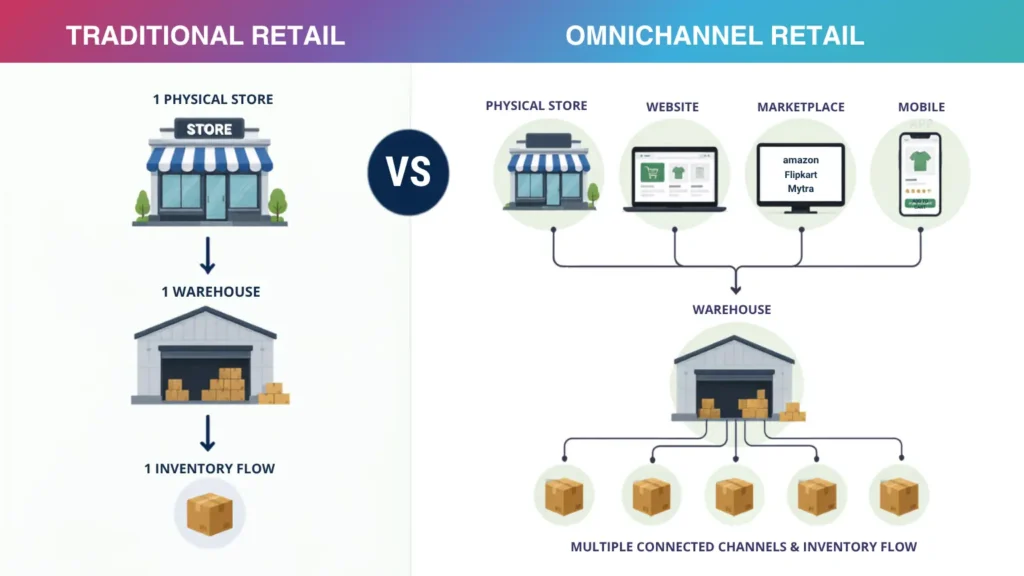
Traditional retail forecasting was designed for a world where stores generated most sales and customer behavior followed relatively stable seasonal patterns.
Today, retailers operate across physical stores, brand websites, marketplaces, mobile apps, social commerce, and click-and-collect services. Each channel attracts different customers, responds to different marketing activities, and follows different purchasing patterns.
For example, an online promotion can generate thousands of orders within hours, while physical stores may experience a gradual increase in footfall over several days. A marketplace listing may suddenly gain visibility because of platform algorithms, whereas a nearby store sees increased demand because of a local event or weather conditions.
Although the product remains the same, the demand drivers are completely different.
This is why forecasting total demand alone is no longer enough. Retailers must understand where demand is likely to emerge, how quickly it may shift, and which channels require inventory first.
The Real Problem Isn’t Forecast Accuracy – It’s Demand Allocation

One of the biggest misconceptions in retail planning is that improving forecast accuracy automatically improves inventory performance.
In reality, many inventory problems are allocation problems.
Imagine a retailer launching a new electronics accessory.
The overall monthly forecast is accurate, but an influencer review unexpectedly drives online demand far beyond expectations. Inventory, however, has already been distributed primarily to physical stores based on historical sales.
Within days, the e-commerce channel experiences stockouts, while stores continue holding inventory that customers aren’t purchasing. From a planning perspective, the business never ran out of stock. It simply had inventory in the wrong place.
This is becoming one of the defining challenges of omnichannel retail. Inventory exists across the network, but it isn’t positioned where customers are ready to buy.
Effective omnichannel demand forecasting goes beyond predicting total sales, it helps retailers position inventory where demand is most likely to occur.
Why Every Retail Channel Needs Its Own Demand Signals
Another reason omnichannel demand forecasting often fails is that each retail channel responds to unique demand signals.
Physical stores depend on location, local events, weather conditions, and foot traffic. E-commerce demand changes rapidly based on digital campaigns, search trends, and customer reviews. Marketplaces introduce another layer of complexity, where pricing, competitor activity, ratings, and platform algorithms significantly influence purchasing behaviour.
Click-and-collect adds yet another demand pattern, blending online convenience with local store fulfilment.
When retailers aggregate all these behaviours into one forecast, they risk overlooking the unique characteristics that drive demand in each channel.
This doesn’t mean every channel should operate independently. Instead, planners need forecasting approaches that recognise these differences while maintaining a unified view of inventory across the business.
Why Traditional Planning Metrics Are No Longer Enough
Forecast accuracy remains one of the most widely used performance indicators in retail planning.
While it remains important, it tells only part of the story. A forecast can achieve impressive accuracy and still fail operationally if it doesn’t support timely inventory allocation and replenishment decisions.
Today’s retail planners are increasingly expected to answer questions that extend beyond “How much will we sell?”
They must determine where inventory should be positioned, which channels should receive replenishment first, how promotions might influence individual sales channels, and how quickly inventory can be reallocated when customer demand changes.
Success is therefore measured not only by forecasting demand correctly but by responding to changing demand quickly and efficiently.
Moving Towards Channel-Aware Demand Planning
Leading retailers are shifting away from one-size-fits-all planning models and adopting omnichannel demand forecasting to better anticipate demand across stores, e-commerce, marketplaces, and fulfillment channels.
Instead of relying solely on enterprise-level forecasts, they combine overall demand forecasting with channel-specific insights, allowing them to identify where inventory should be positioned before demand materialises.
This approach enables retailers to anticipate changes in customer behaviour across channels while maintaining a connected view of inventory throughout the network.
Rather than asking, “How many units will we sell next month?” they begin asking more strategic questions:
- Which channel is likely to experience the highest demand?
- Can existing inventory support expected demand across every channel?
- How will promotions influence customer purchasing behaviour?
- What happens if customers switch channels during the buying journey?
These questions help transform forecasting into a broader planning capability that supports better operational decisions.
Conclusion
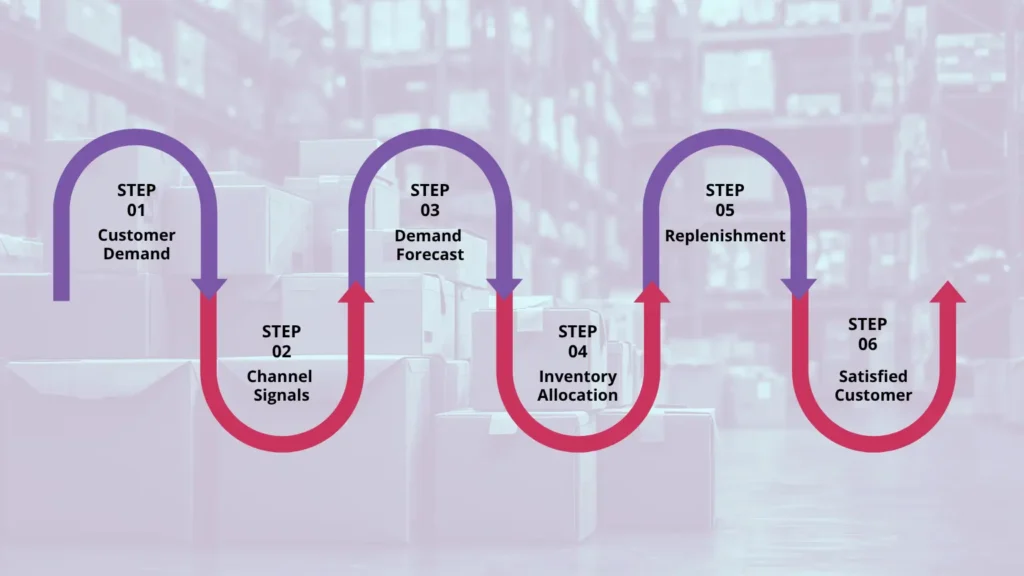
The evolution of omnichannel retail has fundamentally changed omnichannel demand forecasting and demand planning. A single forecast can no longer capture the complexity of customer behavior across physical stores, e-commerce platforms, marketplaces, and fulfilment models.
Retailers that continue treating demand as one aggregated number risk stockouts in high-demand channels, excess inventory in slower-moving locations, and rising operational costs. The retailers that succeed will be those that recognize an important shift in planning. The objective is no longer simply to predict how much customers will buy.
It is to understand where, when, and through which channel demand will emerge and ensure inventory is positioned to meet it.Because in today’s retail landscape, the most valuable forecast isn’t the one that’s closest to reality. It’s the one that helps businesses make the right inventory decisions before customers notice the difference.