Scaling to 10-Minute Delivery: How to Maintain Elite SLAs Without Drowning in Dead Inventory
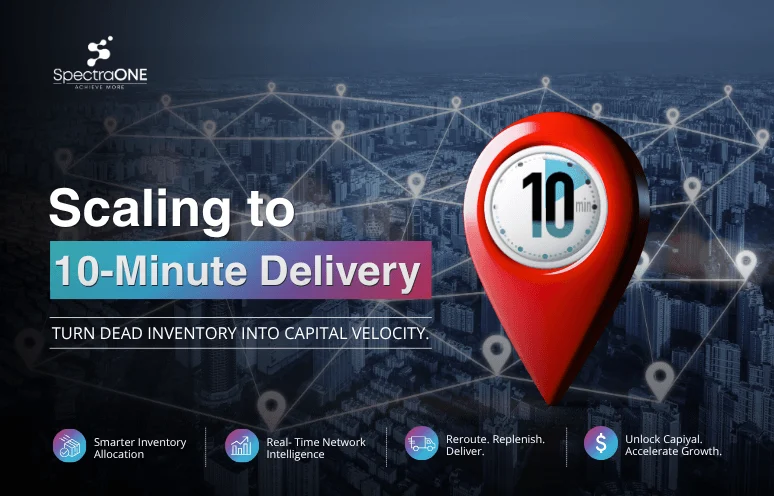
This narrative is for you if you are planning or currently expanding into Quick Commerce (Q-commerce) or if you are struggling to maintain Same-Day/10-Minute delivery promises.
This is a deep dive into why traditional safety stock models fail in high-velocity environments and a step-by-step breakdown of how a “Continuous Intelligence Layer” transforms stagnant inventory into capital velocity without requiring an expensive ERP overhaul.
A 5:30 PM Logistics Meltdown
The air in the “Command Center” was thick with the silent vibration of server fans and the bitter smell of over-extracted espresso. Outside, a flash thunderstorm had just turned the city streets into a gridlocked nightmare.
In 2026, a storm isn’t just weather; it’s a high-stakes logistics catastrophe for any brand promising speed.
Let’s get real about who’s on the front lines, no more hiding behind job titles.
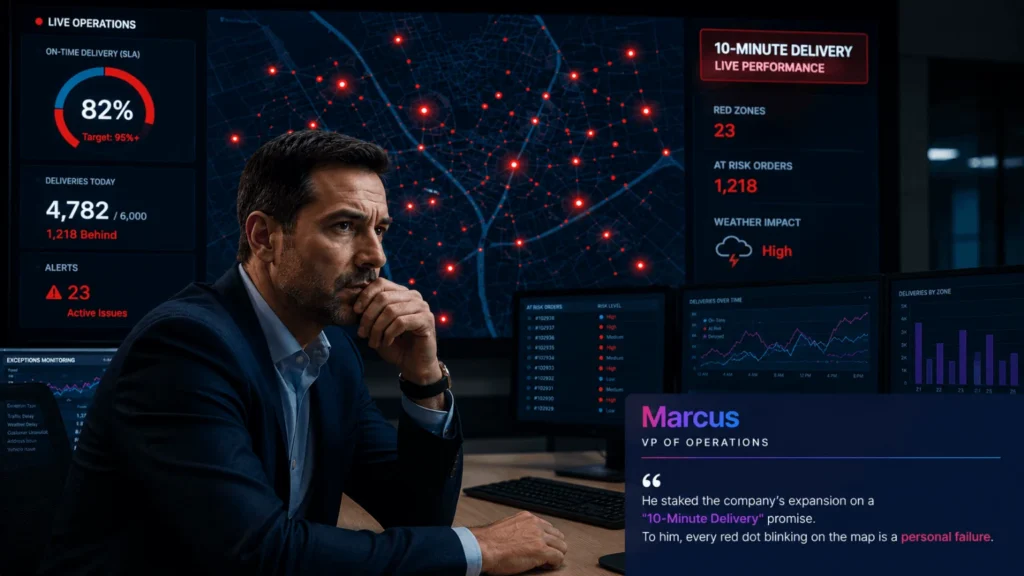

The tension peaked as the monitors began to pulse red. “Linda, report,” Marcus barked.
“Demand for waterproof gear just spiked 500% downtown,” Linda replied, her voice tight. “But the system is showing ‘Zero’ on-hand at Leo’s store. We have the stock, it’s just stuck in the suburbs where it’s not even raining yet.”
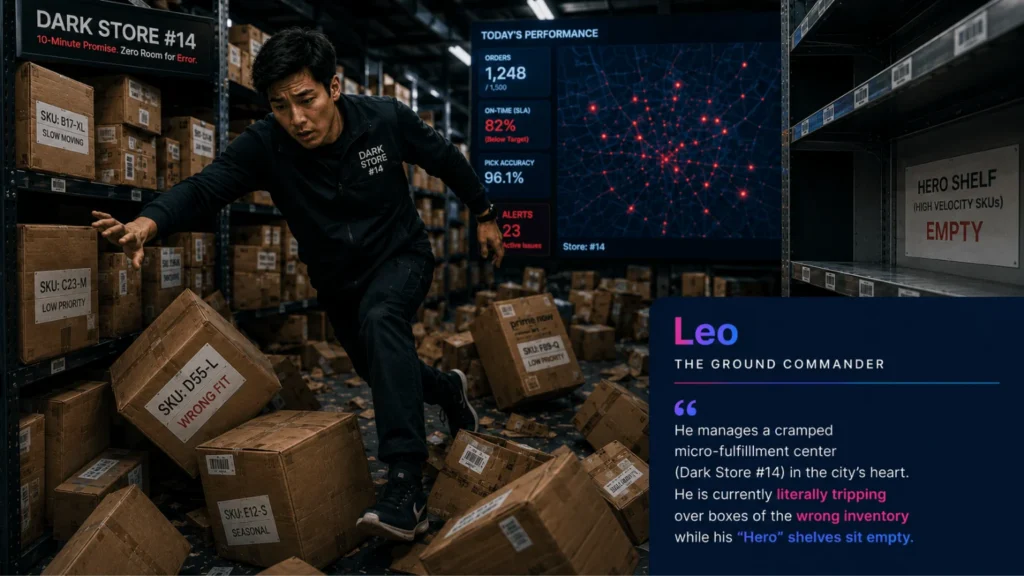
Leo appeared on the video link, frazzled. “Marcus, I’ve got enough laundry detergent here to wash the whole city, but I haven’t seen an umbrella in days. I’m out of shelf space, and my riders are sitting idle because I have nothing for them to deliver.”
Why “Buffer Stock” is a 2015 Solution for a 2026 Problem
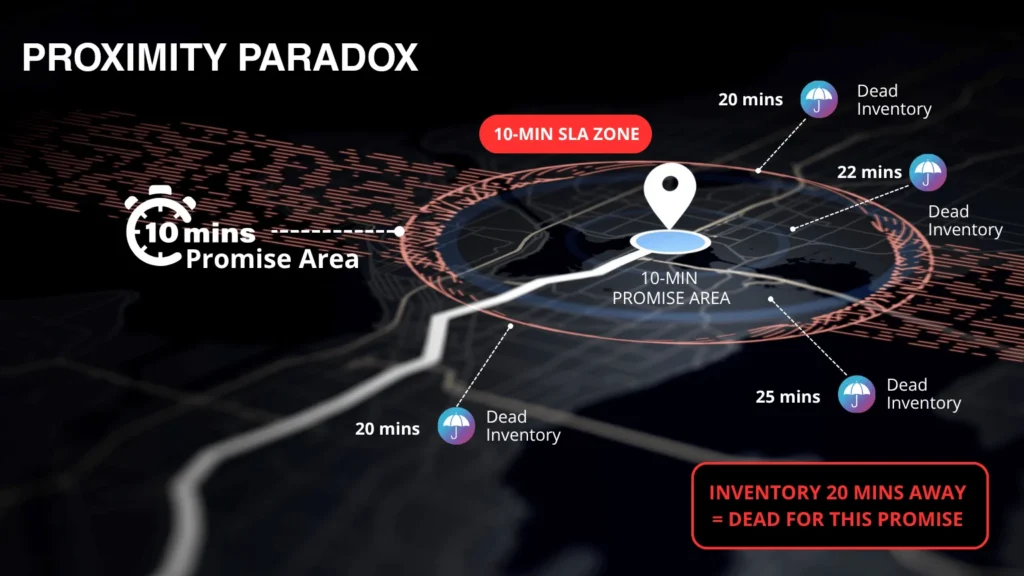
In this scenario, the brand is suffering from the Proximity Paradox. They have plenty of inventory, but it is “dead” because it is 20 minutes away from a 10-minute promise. Most brands try to solve this by increasing “Safety Stock”, stuffing every local hub to the gills just to survive the next hour.
But what if, instead of adding more “weight” to the shelves, they added a layer of intelligence?
It’s Not Magic, It’s Math: The SKU-Location Pulse
If an intelligence layer like SpectraONE were introduced into this “War Room,” the first change wouldn’t be a new warehouse; it would be a shift in the mathematics of replenishment. Traditional tools use “Averages” to calculate what a region needs over a month. But 10-minute delivery requires SKU-Location Demand Elasticity. This is the math of understanding how demand “bends” based on hyper-local signals.
The engine doesn’t ask, “How much do we need in the city?”
SpectraONE asks, “What is the probability of a sale at Node #14 specifically between 5:00 PM and 7:00 PM on a rainy Tuesday?“
Turning “Signals” into Flow
By ingesting Multi-Source Transactional Signals, real-time weather fronts, local traffic patterns, and even social sentiment, the engine identifies “Trapped Capital.” It would see the umbrellas in the suburbs and the laundry detergent downtown as “misallocated assets.” It doesn’t wait for a human to notice; it calculates the “Pulse” and triggers a Pre-emptive Rebalance hours before the storm hits.
Improving Workflow Without Disturbance

The biggest fear in the supply chain is the “Total System Transplant.” Leaders stay away from AI because they assume it will break their daily operations.
However, a true intelligence layer like SpectraONE works through a “Digital Handshake.” It doesn’t replace the existing ERP; it plugs into the data streams (POS, WMS, ERP) via API.
How it changes the daily routine:
- No Manual Entry, the engine learns quietly in the background.
- Recommendation vs. Reaction, instead of Linda spending six hours in Excel trying to find out where the stock is, she arrives at her desk to find three “Recommended Actions.” She clicks “Approve,” and the mid-mile transfers are triggered automatically.
- The 48-Hour Diagnostic means onboarding doesn’t take months. Within two days, the engine can map every “Invisible Leak” in the current network, showing the team exactly where their cash is stuck.
The Long-Term AI Benefit
Why is this needed now? Because in 2026, the “Bullwhip Effect” (where small changes in demand cause massive inventory swings) is moving faster than human spreadsheets can follow. AI doesn’t replace the team; it promotes them.
- Reclaiming Time
When the engine handles 80% of routine replenishment, Linda and Marcus stop being “firefighters.” They finally have time to focus on vendor negotiations, new product launches, and strategic expansion.
- Long-Term Predictability
Over time, the AI learns the “DNA” of the brand’s demand. It predicts seasonal shifts months ahead, so capital is never “frozen” in safety stock that won’t move.
Why Brands Wait (and Why They Shouldn’t)
Many companies stay away from these shifts because they are waiting for a “Magic Update” from their legacy systems. They believe that their 2015-era ERP or other tools will eventually “add AI” that fixes everything. You have to accept:
Legacy systems are built for “Recording,” not “Deciding.” Adding AI to an old ERP is like putting a jet engine on a horse-drawn carriage. It wasn’t built for the “Continuous Intelligence” required for 10-minute SLAs.
“Perfect Data” is a myth. Brands wait to “clean their data” before trying AI. But advanced engines like SpectraONE are designed to find patterns within the mess. They are the filter that cleans the data.
A few Truths for the Decisive Leader
- Your safety stock is not a “Security Blanket”; it is a graveyard for your cash flow.
- A 99% fulfillment rate is a failure if it requires 20% excess inventory to achieve it.
- Visibility is just “looking at the fire.” Decision Intelligence is “preventing the spark.”
The “Ghost” in the dark store, that dead inventory that kills your GMROI, isn’t a mystery; It’s just bad math. The question is no longer whether the technology exists to fix it; the question is how much longer you can afford to pay the “Invisible Tax” of staying static.