
Why Your Forecasts Break Down During Promotions

Have you noticed how unpredictable consumer behavior can be? Even when you think you’ve planned everything ideally weeks ahead of time, people can surprise you with what they decide to buy.

Why Your Forecasts Break Down During Promotions (2)

And how often have you had to pivot mid-promotion to adjust your offerings? This uncertainty can be a real headache. That’s why it’s so important to have effective forecasting strategies in place. Think in this way, if you could predict trends more accurately and align your inventory with actual demand, wouldn’t it take some of that stress off your shoulders?

4


By focusing on smarter planning, you can be ready to meet your customers’ needs without the last-minute rush.

The Challenge: Promo Weeks Derail Your Sales Forecast

What happens if your forecasting system confidently predicts that last month’s best-selling SKU, let’s say a trendy water bottle, will sell around 100 units again this month? It’s a solid assumption until your big promotion hits. 

The Challenge_ Promo Weeks Derail Your Sales Forecast

Those 100 units? You sell out in three days, leaving customers frustrated. Or, on the flip side, you predict a spike and order five times more, only to watch them sit untouched while they wait for markdowns to clear them out.

Why Traditional Tools Fall Short During Promotions

Your system relies on last month’s data, forgetting that promos like “20% off everything” can unpredictably spike demand. Let’s take a holiday weekend sale. Your traditional tool won’t capture that rush effectively, treating your promotional days like any regular day.

Consider two different brands: Brand A may sell out quickly during promotions,
while Brand B struggles to gain traction.

But your forecasting doesn’t differentiate, risking stockouts on the top seller.

Do you know your seasonality? But a sudden trend can unexpectedly surge sales. If you’re not adaptable, you’ll find yourself caught flat-footed. Every promotion is unique. A weekend flash sale is worlds apart from a month-long national campaign, yet traditional tools can’t distinguish between the two, leading to missed opportunities.

Let’s take an example to better understand it: Ice cream sales usually have a predictable uptick in summer. But when you run a “Buy Two, Get One Free” campaign, do you really know which flavors will fly off the shelves?

Why Traditional Tools Fall Short During Promotions

Promotions are a double-edged sword. If your forecasting tool isn’t equipped to handle the complexities, you risk missing the mark and either losing sales or drowning in excess inventory. It’s time to rethink how you forecast during promo weeks!

Use Case: Promo-Aware Forecasting with SpectraONE

SpectraONE’s AI forecasting model approaches promotions differently because it’s designed to be context-aware. Here’s how it works in the real world:

Step 1: Ingest Promotion Metadata

SpectraONE integrates upstream with marketing, pricing, and planning tools or uses adapters to pull structured promo metadata (e.g., type, channel, duration, target uplift).

Step 2: Model Expected Impact

The engine uses promo-aware ML models that factor in:

  • Historical promo lift by SKU/category
  • Timing effects (weekend vs weekday)
  • Channel behavior (in-store vs online)
  • Elasticity curves and discount impact

Step 3: Adjust Forecast in Real Time

The system adjusts baseline forecasts before the promotion begins and continues to fine-tune based on live demand signals. That means if a campaign over- or under-performs, your replenishment plan reacts dynamically.

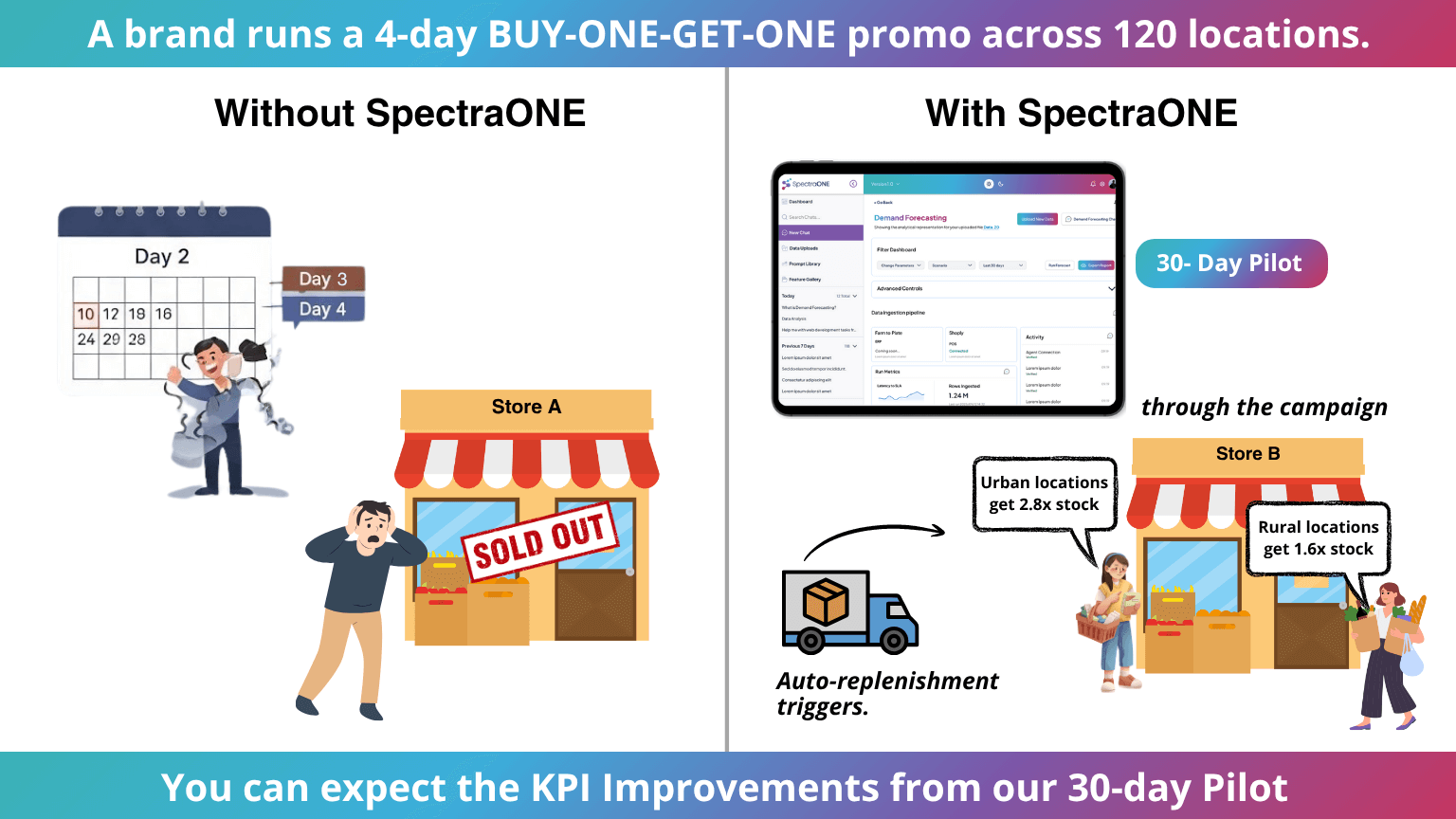
Let’s take an example, a national beverage brand runs a 4-day buy-one-get-one promo across 120 locations.

Without SpectraONE, each store receives 2x the average daily volume. Some sell out in 2 days. Others have 30% leftover.

With SpectraONE, the forecast will adjust per store based on past promo performance. Urban locations get 2.8x stock and Rural locations get 1.6x stock

Midway through the campaign, the system detects a higher uplift in certain areas and triggers auto-replenishment.
2

Built on Smart Tech That Understands Context

A combination of powers in SpectraONE’s forecasting engine:

  • Transformer-based models that recognize event-driven demand spikes
  • Adapter-first ingestion for flexible data mapping from promo calendars
  • Composable agents that respond in near real-time

And it’s not just for retail. Promo-aware models can be applied across industries:

  • Food & Bev: seasonal promos, shelf life, surge planning
  • Pharma: launch demand, generic competition
  • Electronics: channel-specific promotions, flash sales
1

From Data Chaos to Clarity: Preparing Supply Chain Data for AI with SpectraOne

Messy spreadsheets. Incomplete ERP logs. IoT sensors streaming raw numbers you can’t use. For most supply chains, the issue isn’t whether data exists-it’s whether that data can be trusted, standardized, and prepared for AI to act on. That’s where SpectraOne’s data engineering workflow makes the difference: transforming chaos into clarity.

This is where SpectraOne – the SCM Expert AI Engine steps in. It doesn’t just apply AI to your supply chain, it transforms your scattered data into a reliable, structured foundation for intelligent decision-making.

At its core, SpectraOne provides a domain-aware data engineering workflow that standardizes, secures, and operationalizes your supply chain data so AI can deliver business-ready insights in real time.

Step 1: Standardizing Inputs Across Sources

Supply chain data comes in many shapes – CSV files from vendors, ERP records, warehouse logs, transport feeds, and IoT sensor readings. Traditional systems force IT teams to build custom connectors and pipelines for each source.

SpectraOne simplifies this. Its modular ingestion framework:

  • Normalizes formats (CSV, JSON, XML, API, SQL).
  • Applies schema mapping aligned to supply chain entities (SKUs, batches, routes, invoices).
  • Supports both real-time streaming (sensor data, logistics events) and batch loads (ERP, procurement systems).

This ensures every data point, whether it’s a stock level in SAP or a GPS ping from a truck – enters the system in a consistent, AI-ready format.

Step 2: Intelligent Feature Extraction

Artboard 22

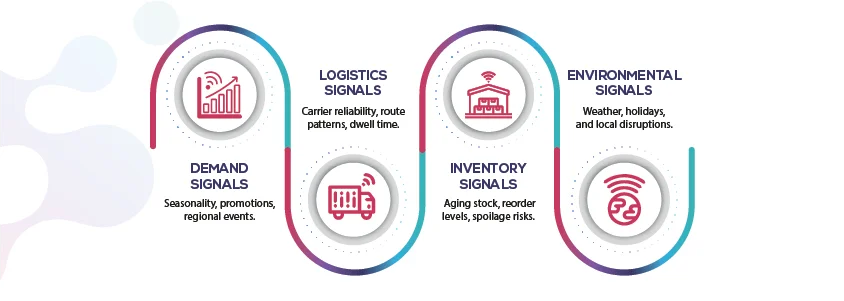
Raw data alone doesn’t fuel predictions – features do. SpectraOne automates this process with a library of pre-built, domain-specific feature extractors.

For example:

  • Demand signals: seasonality, promotions, regional events.
  • Logistics signals: carrier reliability, route patterns, dwell time.
  • Inventory signals: aging stock, reorder levels, spoilage risks.
  • Environmental signals: weather, holidays, and local disruptions.

Step 3: Unified Model Management

AI in supply chains isn’t one-size-fits-all. A factory needs different models than a retailer; perishable goods behave differently from spare parts.

SpectraOne provides a modular model management system that:

  • Supports multiple algorithms (Prophet, LSTM, XGBoost, custom ML).
  • Chooses the right model for each use case (forecasting, anomaly detection, routing).
  • Continuously retrains with fresh data to avoid model drift.
  • Deploys seamlessly in batch mode (for weekly planning) or real-time mode (for live tracking).

Step 4: Security, Privacy, and Compliance by Design

Supply chain data often includes sensitive business and customer information. SpectraOne ensures that AI workflows respect security and compliance requirements from the ground up:

  • Local processing: Models run inside client infrastructure (AWS EC2, SageMaker, On-Prem GPU).
  • Data sovereignty: No data leaves your environment without authorization.
  • PII protection: Tokenization safeguards sensitive information.
  • Credential security: AWS IAM & Secrets Manager protect keys and tokens.
  • API independence: No reliance on public APIs unless explicitly approved.

Step 5: Business-Ready Insights

Artboard 22 copy

Once data is prepped and models are live, SpectraOne delivers actionable insights:

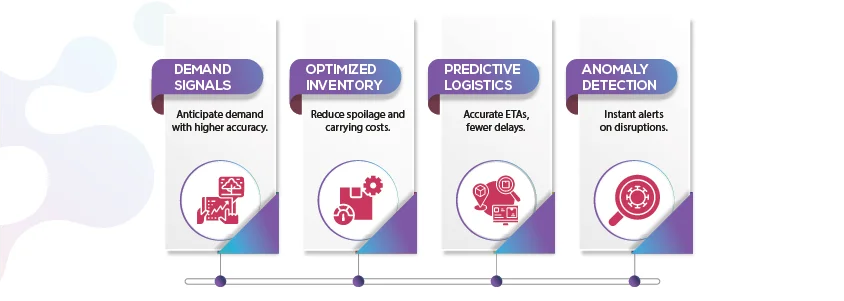
  • Smarter forecasts → anticipate demand with higher accuracy.
  • Optimized inventory → reduce spoilage and carrying costs.
  • Predictive logistics → accurate ETAs, fewer delays.
  • Anomaly detection → instant alerts on disruptions.

Why This Matters

Most AI initiatives in supply chains stall long before models even run – not because the algorithms fail, but because the data foundation isn’t ready. Disconnected spreadsheets, inconsistent ERP entries, and raw IoT streams leave teams stuck in endless cycles of cleansing, mapping, and integration.SpectraOne changes this equation. By providing a modular, domain-aware data engineering workflow, it reduces preparation time from months to hours. Instead of wrestling with pipelines, your teams can focus on what truly matters: generating forecasts, optimizing inventory, and predicting logistics outcomes with confidence.

Wrapping Up

From data chaos to clarity, SpectraOne is the bridge between messy supply chain data and real business value. It’s not just another AI tool, it’s the data backbone that makes AI practical, scalable, and trustworthy for global supply chains.

With SpectraOne, you don’t just get predictions – you get the confidence to move from firefighting to forecasting, from inefficiency to intelligence, and from scattered data to seamless decisions.

Next Step Once your data foundation is in place, the real value comes from scaling AI across workflows. Explore how SpectraOne’s modular AI architecture enables repeatable, enterprise-wide decision-making in our blog: From Data to Decisions

The Reality of AI in Supply Chains: Why So Many Tools Fall Short

Over the last few years, AI has been positioned as the future of supply chain transformation. Many organizations have explored AI-powered platforms, some through internal innovation teams, others through vendor-led pilots.

But despite the investment, real outcomes remain rare.

  • Demand forecasts remain inconsistent
  • Replenishment decisions are still reactive
  • Teams continue to rely on spreadsheets, fragmented systems, and manual workarounds
  • And the so-called “intelligent platforms” fail to deliver measurable improvements
hard_truth

The issue isn’t a lack of effort. It’s that most AI solutions aren’t built for real-world complexity, where priorities shift daily, data isn’t perfect, and operations are under constant pressure.

SpectraONE takes a different approach. Not another experimental tool nor a black-box solution. It is a purpose-built platform designed to help operational teams make smarter decisions with clarity, speed, and confidence.

What do we learn from others’ mistakes?

After working with teams in retail, F&B, pharma, manufacturing, logistics, and tech, we’ve seen the same patterns over and over.

Image 3

1. They’re built for perfect data, not real supply chains.

The tool demo looks great. The model’s smart. But once it hits your live environment?

  • Data’s messy
  • Sources don’t match
  • One DC uses a different SKU code format.
  • Forecasts fall apart because the tool assumes your world is clean and orderly

Most platforms struggle to cope with the chaos that real supply chains experience daily.

2. The learning curve is steep, and the value takes too long.

Some tools expect your team to think like data scientists. Others promise results but ask for months of prep work before you can see anything useful.

By the time it’s ready to go live, the problem you set out to solve has already cost you another quarter of margin erosion. And worse? Your team has lost trust in the whole thing.

3. It’s all flash. No follow-through.

You’ve seen the dashboards. They’re sleek but:

  • What do they actually help you decide?
  • Can they catch the shelf-level stockout that’s about to happen next week?
  • Can they help you course-correct a lane that’s slipping out of SLA right now?
  • Or are you stuck exporting charts just to take action?

For many teams, the answer is: “It looked great, but we still had to chase answers.”

How Is SpectraONE Different from Everything Else You’ve Tried?

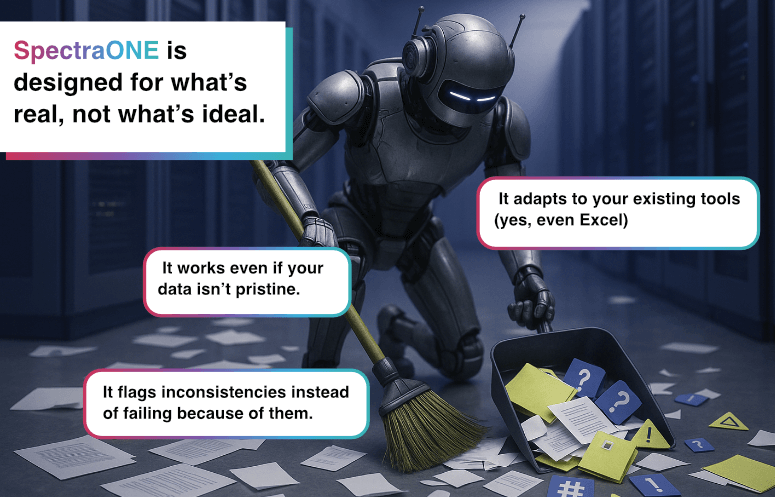
Image 5

Most supply chain tools are built with the assumption that everything is already organized, that your data is clean, your team is aligned, and you’ve got time to train everyone on a new platform.

But that’s not how it works on the ground. If you’re like most teams we talk to, you’re juggling:

  • Forecast updates late in the day because the promo team made last-minute changes
  • Emergency supplier calls because you’re short on a critical SKU
  • Manually chasing ETAs because your TMS isn’t telling the full story
  • Piecing together insights from dashboards, spreadsheets, and email threads

SpectraONE fits into that world, not the ideal one. It helps you:

  • See issues early, before they show up in your KPIs
  • Know exactly why they’re happening.
  • Take action, without leaving your workflow or waiting on another tool.

And it does it without requiring a massive reset of your systems, processes, or people.

You don’t have to “adopt the platform.” It fits into what you already do.

SpectraONE doesn’t ask you to throw away your process. It enhances it.

  • Forecasts update with promo input, so no rework.
  • ETAs adjust based on live signals, so no ticket ping-pong.
  • Reorder points adapt across nodes, not just one warehouse.

No code. No playbook rewrite-just smarter decisions, in the flow of work.

You start seeing value fast and build from there.

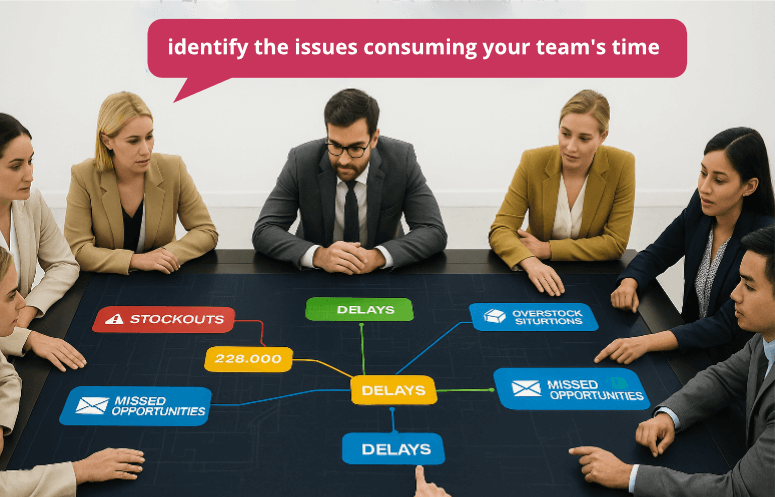
We do not adhere to lengthy 12-month roadmaps or require extensive IT transformations. Instead, we encourage you to identify the issue that is currently consuming your team’s time, such as stockouts, delays, overstock situations, or missed promotional opportunities.

Image 6

Our objective is to assist you in addressing these challenges effectively and efficiently. Our modular and agent-based architecture enables a rapid deployment of new features within days. Subsequently, you have the flexibility to scale your solutions as necessary, without being constrained by a vendor’s predefined roadmap.

How SpectraONE’s AI Actually Works: Step by Step

SpectraONE isn’t a black box. It’s a collection of smart, battle-tested AI technologies working together to remove guesswork and delays from your supply chain in real time.

Image 7

Let’s break down what happens behind the scenes:

1st: It understands unstructured chaos (Natural Language Processing (NLP))

A supplier sends an update buried in a free-text note: “Shipment might be late, container stuck at port, expecting release by Tuesday.”

Instead of someone having to read and manually log this, SpectraONE reads the message, flags the delay, links it to the right PO, and updates risk scores all automatically. No more surprises from emails buried in inboxes.

2nd: It summarizes what’s happening and why (Large Language Models (LLMs))

If your boss asks, “What happened to the Q3 stock levels in Region North?”

SpectraONE instantly analyzes forecast changes, late shipments, and demand surges, summarizing the cause in plain English, such as: “Stock depletion was driven by unplanned promo uplift and late inbound from Supplier B.” This eliminates the need to spend 3 hours building an answer from five dashboards.

3rd: It sees what humans miss ( Computer Vision)

For instance, your team may receive images of damaged goods that require inspection, documentation, and tagging.

SpectraONE analyzes the image, identifies the type of damage, and logs this information along with the purchase order, thereby triggering an automatic notification to the supplier. This process results in reduced inspection time, expedited claims, and enhanced record-keeping efficiency.

4th: It connects everything, instantly ( Knowledge Graphs)

Suppose a delay in a shipment of microchips from Vendor X isn’t just a late delivery, it’s connected to:

  • A potential production bottleneck next week
  • Three outbound orders that now face a shortage
  • A penalty risk for one high-priority client

SpectraONE maps these connections instantly and surfaces them in your workflow before you even ask. It help you to stop reacting, and start rerouting ahead of the curve. Together, these technologies form a single intelligent layer over your existing systems without needing a rip-and-replace.

What if you’ve never touched AI before?

Image 8

You are not at a disadvantage; you simply have not yet encountered the appropriate entry point. SpectraONE is designed not specifically for “advanced” teams but rather for those that are busy and seeking efficiency.

  • Whether you run on spreadsheets or SAP
  • Whether your team is on the floor or remote
  • Whether your forecasts are manual or auto-generated

We work with all of it. And we don’t expect perfection. AI isn’t useful unless it helps you make a better decision faster. That’s what SpectraONE is built for helping your team:

  • Spot what’s going wrong
  • Know why it’s happening
  • Get clear options to fix it
  • And act without five email threads and another spreadsheet
Image 9

From Data to Decisions: How SpectraOne’s Modular AI Works

Most AI projects struggle not because models don’t work, but because the workflow around them isn’t built to scale. In fact, according to Gartner, nearly 85% of AI projects fail to deliver business outcomes at scale. Businesses spend months stitching together pipelines for every new use case-only to end up with fragile, one-off solutions.

SpectraOne was designed differently. It’s a modular, domain-aware AI platform that helps enterprises move from fragmented experiments to a repeatable, scalable AI workflow-without reinventing the wheel each time.

The Modular Architecture Advantage

2nd (3)

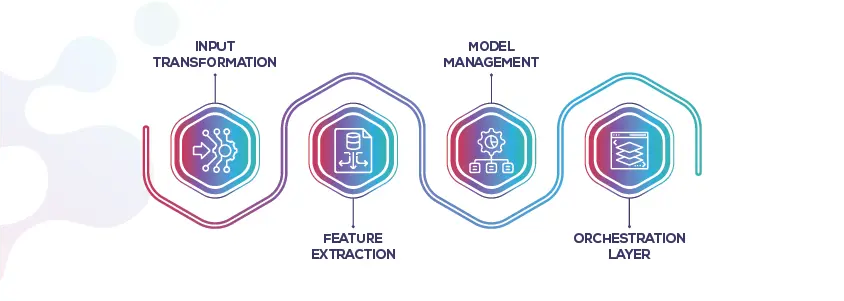
Instead of building custom pipelines for forecasting, inventory, or logistics separately, SpectraOne standardizes the core layers of the AI stack:

  • Input Transformation: Cleans and structures raw data from ERP, IoT, or spreadsheets.
  • Feature Extraction: Converts business signals into machine-ready inputs.
  • Model Management: Hosts, versions, and scales models across domains.
  • Orchestration Layer: Connects insights back into planning and operations.

This modular design means one consistent workflow supports multiple use cases-demand forecasting, inventory optimization, delivery planning-without duplicating effort.

How the Workflow Runs

2nd (1)

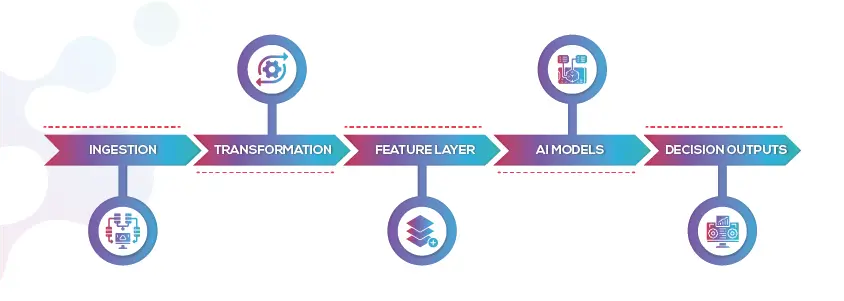
SpectraOne supports both real-time and batch operations, depending on business needs:

  1. Ingestion → Data flows in from enterprise systems or sensors.
  2. Transformation → Standard pipelines handle cleansing, enrichment, and validation.
  3. Feature Layer → Domain-aware feature libraries accelerate model readiness.
  4. AI Models → Multiple models can run in parallel for different scenarios.
  5. Decision Outputs → Results are fed into dashboards, APIs, or enterprise systems.

Workflow Adaptability in Action

2nd (5)

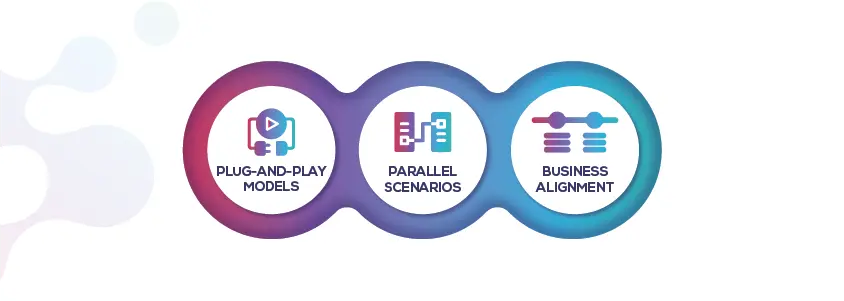
Business conditions change. Forecast models need updates. A new logistics provider comes on board. With SpectraOne’s modular AI, workflows don’t break:

  • Plug-and-Play Models: Swap models in or out without disrupting the pipeline.
  • Parallel Scenarios: Run “what-if” simulations (e.g., demand spike + supplier delay) in real time.
  • Business Alignment: Non-technical users see AI’s impact through transparent orchestration.

Business Value Delivered

2nd (4)

With SpectraOne, enterprises see measurable improvements across supply chain functions:

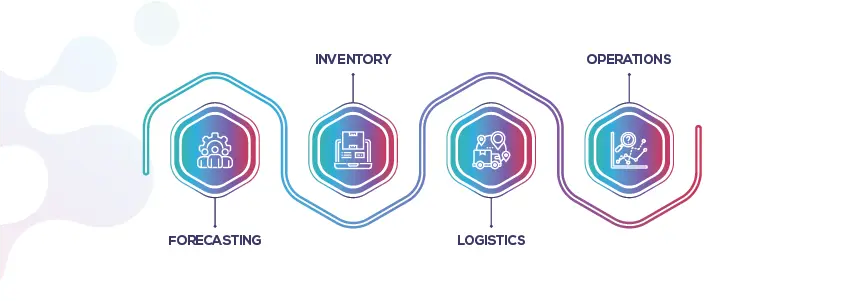
  • Forecasting: Higher accuracy, reduced overstock/stockouts.
  • Inventory: Real-time visibility, fewer manual errors.
  • Logistics: Faster, optimized delivery planning.
  • Operations: Teams shift from firefighting to proactive decisions.

Conclusion

SpectraOne turns the messy reality of enterprise data into a structured AI workflow that delivers decisions at scale. Its modular design ensures adaptability, speed, and business alignment-helping organizations adopt AI not as a project, but as a core operating capability.

Ready to eliminate supply chain blind spots?

Discover how SpectraOne’s modular AI can transform your data into real-time decisions that drive measurable impact.

Related Read

AI at scale starts with clean, reliable inputs. Learn how SpectraOne transforms messy supply chain data into AI-ready insights in our blog: From Data Chaos to Clarity