
At the Austin, Texas headquarters of a rapidly growing functional beverage brand, three distinct worlds were about to collide over one Memorial Day promotion.
Meet Chloe, the company’s Demand Planning Manager.

Chloe was the engine room of the supply chain. She was responsible for keeping roughly 800 SKUs moving smoothly across regional grocery chains, Amazon, and their booming direct-to-consumer (D2C) subscription website.
Next, meet Tom, the Director of Sales.

Tom was a high-energy growth driver whose primary metric was revenue. To Tom, if a product wasn’t on the shelf or available online, it was a lost opportunity.
And now meet Sarah, the VP of Operations.

Sarah held the company’s checkbook. Her job was to protect profitability and cash flow, ensuring the company didn’t tie up precious working capital in piles of unsold inventory.
Preparation for a major holiday promotion
On a Tuesday morning in April, with Memorial Day weekend fast approaching, the unofficial start of summer and a massive sales driver for the beverage industry, the annual cross-functional tension at the company reached its peak.
Tom walked into Chloe’s office, riding a wave of excitement. “Chloe, I just locked in a massive promotional end-cap display with a major regional grocer for the holiday weekend, plus a targeted influencer campaign for our D2C site. I need you to bump the forecast up by at least 35% across all SKUs for that region. We cannot leave revenue on the table!”
Chloe pulled up her historical data, sighing as her laptop’s processor struggled to load the massive file. “Tom, increasing the forecast by a blanket 35% is exactly how we ended up with $150,000 in dead stock sitting in our Dallas warehouse last quarter.”

Sarah, overhearing the conversation, stepped in. “Tom is right that we need to capture the revenue, but Chloe is right about the risk,” Sarah noted. “Our cost of capital is at a multi-decade high. If we just blindly flood our distribution nodes with inventory to satisfy a gut-feeling forecast, we are freezing cash that we desperately need for marketing next quarter. We need precision, not guesses.”
The Expectation vs. The Reality
Chloe was caught directly in the middle. Tom wanted zero stockouts; Sarah wanted lean working capital.
A quick question for you: How do you handle these high-stakes promotional requests in your own business? Do you rely on gut feelings, or do you have a hard formula you stick to?
Let’s go back to the story:
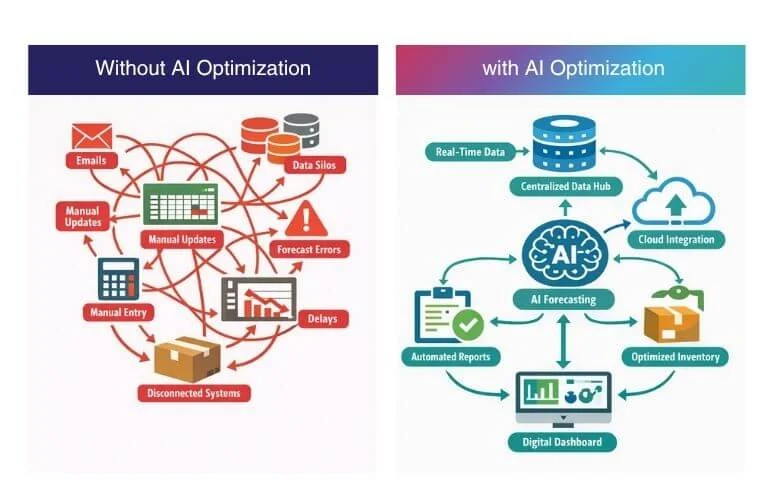
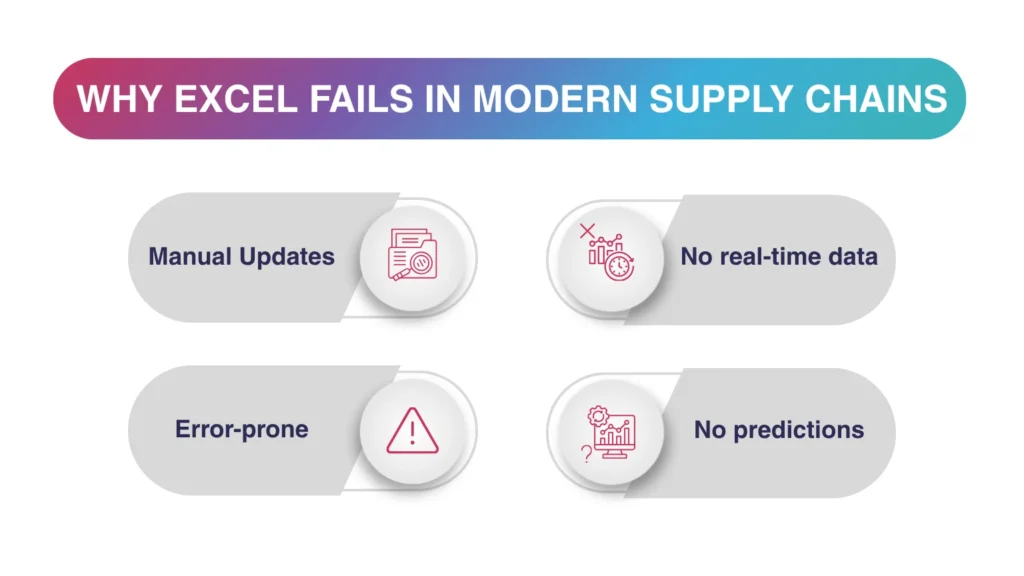
Because Chloe’s only tool for bridging these two demands was a massive Excel file layered on top of a basic ERP system. Her workflow wasn’t actually planning; it was reacting. She spent her days reacting to Tom’s sales targets, reacting to missing data from the ERP, and manually typing in overrides to make the numbers look realistic.
Let’s be honest about the classic gridlock that mid-sized consumer goods brands face every day.
| The Expectation | The Reality |
| If we study past spreadsheets and manually add a growth factor, we are making a sound inventory decision. | Planners spend up to 80% of their time cleaning data and responding to manual errors, rather than making decisions. Spreadsheets simply cannot isolate true incremental demand from anomalies. |
What is your plan for this year to move away from static spreadsheets? Are you planning to stick with Excel for another cycle, or are you looking for a cleaner way to operate? To understand more about the specific math failures behind why manual plans break down, you can read our breakdown on Why Your Forecasts Break Down During Promotions.
In fact, supply chain benchmarks show that planners relying on manual spreadsheet overrides are forced into a state of continuous crisis management. Have you noticed your team spending more time putting out daily fires than looking at long-term strategy?
Shifting from Reacting to Deciding
Later that afternoon, the trio sat down to look at the numbers again.

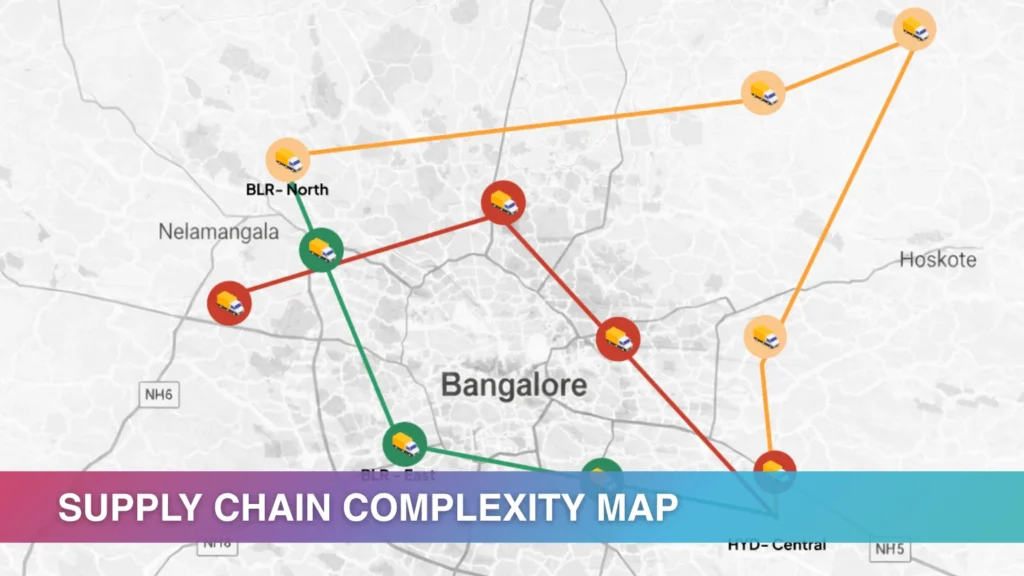
Chloe pointed out that trying to predict demand for 800 SKUs across multiple channels and locations on a monthly or even bi-weekly cycle was physically impossible for a single planner using manual tools.
To solve the tug-of-war between Sales and Operations, Chloe knew they needed to stop acting like historians and start acting like executives. They didn’t need a bigger spreadsheet; they needed a system that allowed them to decide on strategy, rather than react to data.
What do you think? What if you didn’t have to guess?
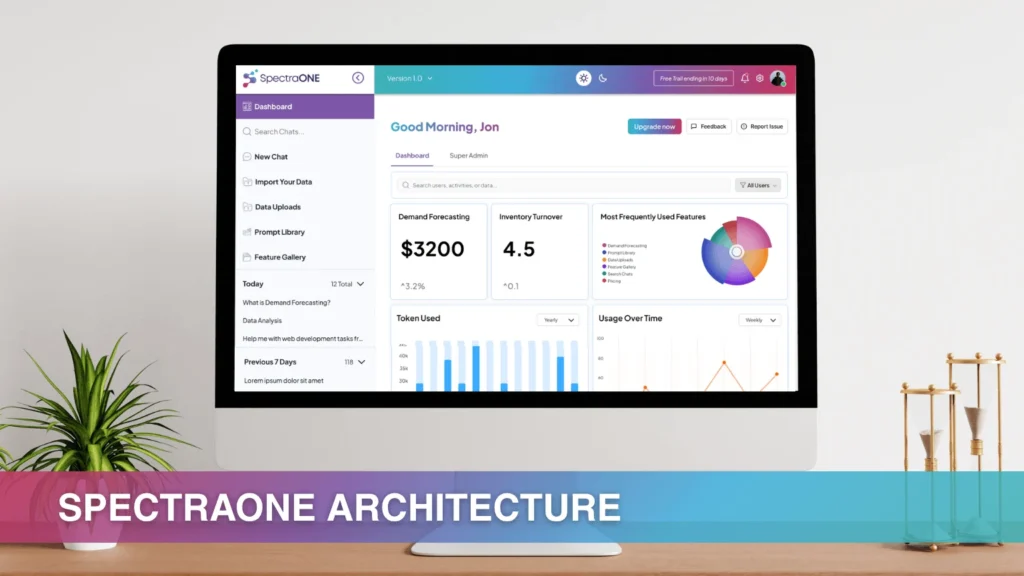
Now, imagine a different scenario for Chloe’s team. Instead of spending 15 hours a week manually overriding cells, a dedicated system steps in to do the heavy lifting. Imagine an intelligent layer like SpectraONE connecting directly to your basic ERP and historical sales data.
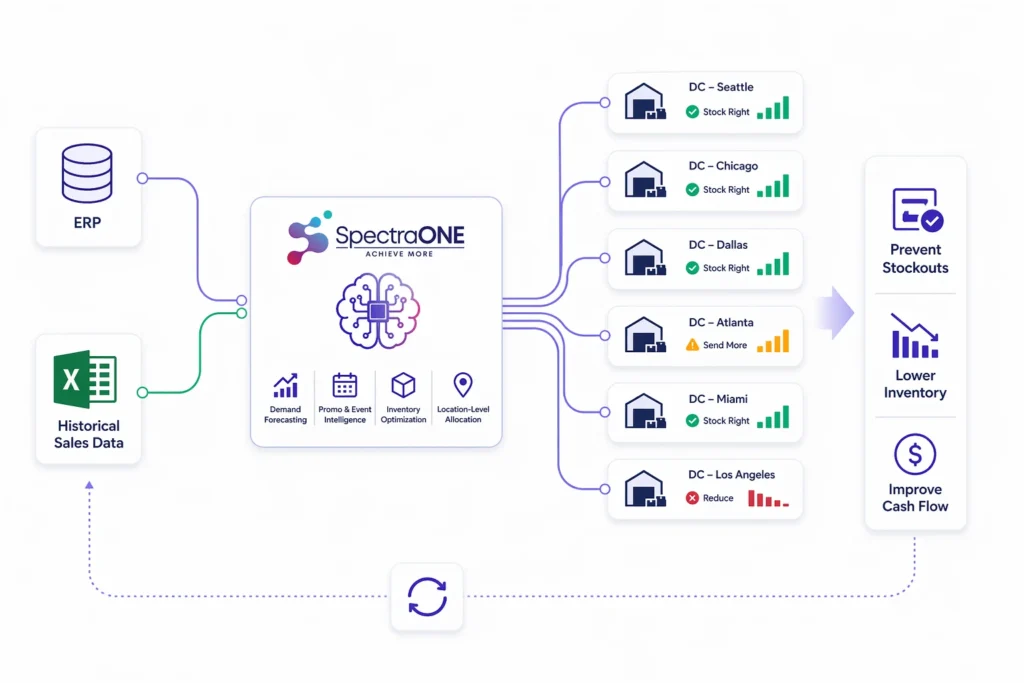
Instead of your team guessing the promotional lift, a transformer-based Demand Forecasting engine automatically ingests the promotional calendar. It calculates the expected lift at the specific SKU and location level, isolating baseline demand from true incremental growth.
It knows exactly which distribution centers need the stock and which don’t, mapping demand precisely to prevent localized stockouts without bloating your company’s total inventory footprint. To see why this level of detail is critical for your multi-channel network, read our breakdown on Why SKU-Location Forecasting Matters.
Simultaneously, a Smart Inventory module automatically adjusts safety stock levels based on real-time lead times and volatility. It doesn’t use a blanket rule; it uses math.
The New Normal for Planners
In this new reality, Chloe doesn’t spend her Tuesday morning panicking over broken spreadsheet formulas. Instead, she opens a dashboard that presents her with system-generated replenishment suggestions.
The system says: “To support the Memorial Day promotion and maintain a 98% service level without violating working capital constraints, approve this purchase order for 12,000 units.” Chloe reviews the logic, clicks “Approve,” and spends the rest of her day reviewing the long-term network strategy. Tom gets his product on the shelves, Sarah keeps her capital free, and Chloe transitions from a reactive data-handler to a proactive decision-maker.
By moving away from static, reactive planning, mid-sized brands don’t just survive peak seasons; they master them. Let’s be honest, how long does it take your team to prep for a major holiday promotion? If your team is stuck in the middle of the growth vs. cost tug-of-war, it might be time to move away from the spreadsheets.
To see exactly how a continuous intelligence layer can transform your planning process, you can explore what a risk-free evaluation looks like by reading about our 14-Day Assisted Trial. If you have any questions about how this would look with your specific SKU setup, please reach out to our team.
The SpectraONE 14-Day KPI Challenge enables you to select one KPI (Inventory Turns, Forecast Accuracy, Stockout Rate), run a structured 14-day signal analysis, and measure whether earlier visibility reduces buffer dependence.
No system replacement | No integration risk | No workflow disruption. Book a Live Demo and let’s map out a solution together. |