Why Your Forecasts Break Down During Promotions
Have you noticed how unpredictable consumer behavior can be? Even when you think you’ve planned everything ideally weeks ahead of time, people can surprise you with what they decide to buy.

And how often have you had to pivot mid-promotion to adjust your offerings? This uncertainty can be a real headache. That’s why it’s so important to have effective forecasting strategies in place. Think in this way, if you could predict trends more accurately and align your inventory with actual demand, wouldn’t it take some of that stress off your shoulders?

By focusing on smarter planning, you can be ready to meet your customers’ needs without the last-minute rush.
The Challenge: Promo Weeks Derail Your Sales Forecast
What happens if your forecasting system confidently predicts that last month’s best-selling SKU, let’s say a trendy water bottle, will sell around 100 units again this month? It’s a solid assumption until your big promotion hits.

Those 100 units? You sell out in three days, leaving customers frustrated. Or, on the flip side, you predict a spike and order five times more, only to watch them sit untouched while they wait for markdowns to clear them out.
Why Traditional Tools Fall Short During Promotions
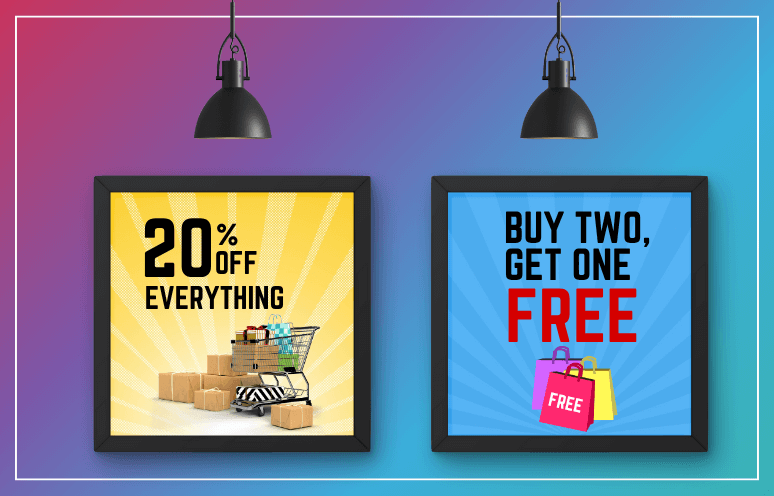
Your system relies on last month’s data, forgetting that promos like “20% off everything” can unpredictably spike demand. Let’s take a holiday weekend sale. Your traditional tool won’t capture that rush effectively, treating your promotional days like any regular day.
while Brand B struggles to gain traction.
But your forecasting doesn’t differentiate, risking stockouts on the top seller.
Do you know your seasonality? But a sudden trend can unexpectedly surge sales. If you’re not adaptable, you’ll find yourself caught flat-footed. Every promotion is unique. A weekend flash sale is worlds apart from a month-long national campaign, yet traditional tools can’t distinguish between the two, leading to missed opportunities.
Let’s take an example to better understand it: Ice cream sales usually have a predictable uptick in summer. But when you run a “Buy Two, Get One Free” campaign, do you really know which flavors will fly off the shelves?
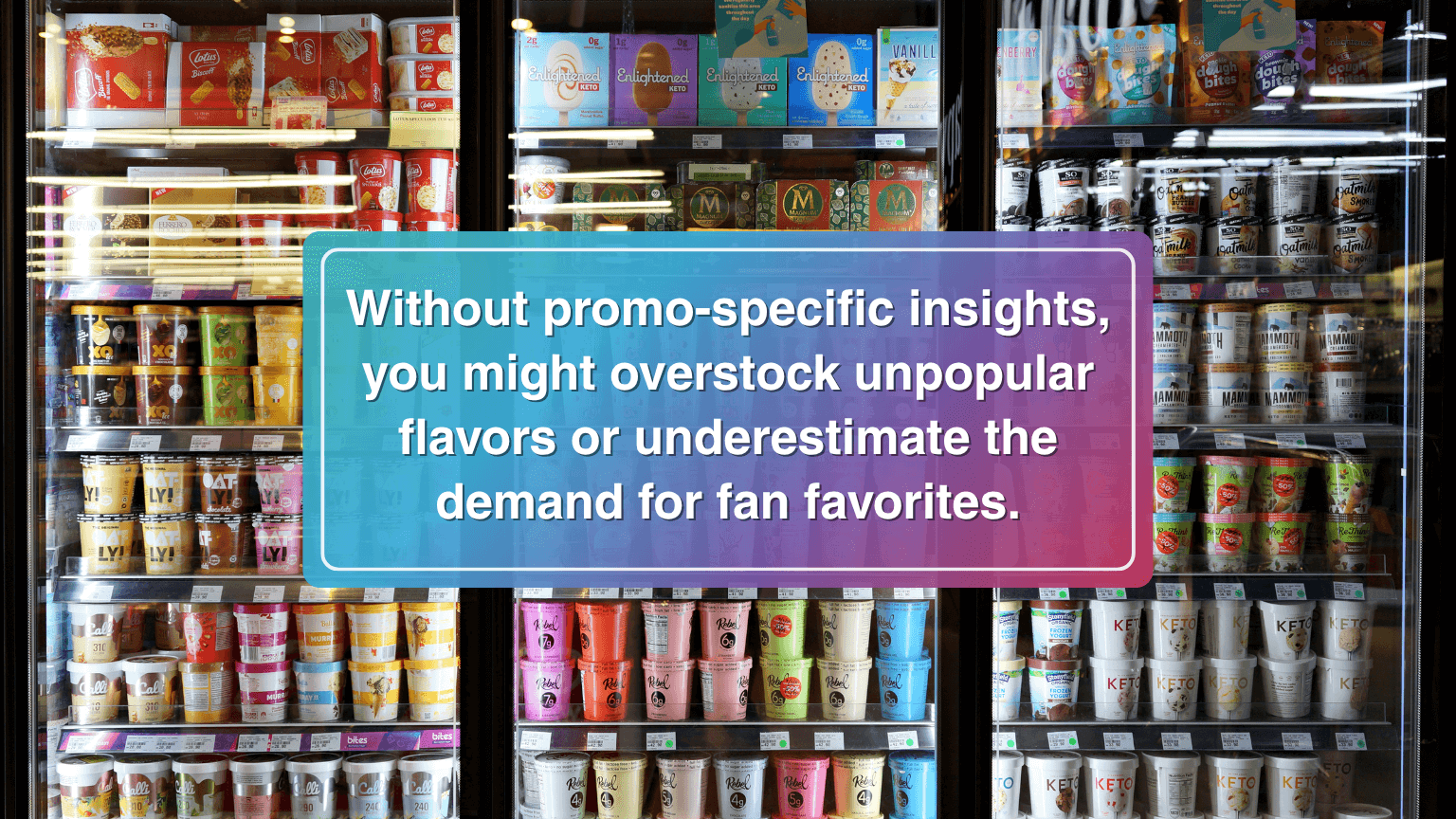
Promotions are a double-edged sword. If your forecasting tool isn’t equipped to handle the complexities, you risk missing the mark and either losing sales or drowning in excess inventory. It’s time to rethink how you forecast during promo weeks!
Use Case: Promo-Aware Forecasting with SpectraONE
SpectraONE’s AI forecasting model approaches promotions differently because it’s designed to be context-aware. Here’s how it works in the real world:
Step 1: Ingest Promotion Metadata
SpectraONE integrates upstream with marketing, pricing, and planning tools or uses adapters to pull structured promo metadata (e.g., type, channel, duration, target uplift).
Step 2: Model Expected Impact
The engine uses promo-aware ML models that factor in:
- Historical promo lift by SKU/category
- Timing effects (weekend vs weekday)
- Channel behavior (in-store vs online)
- Elasticity curves and discount impact
Step 3: Adjust Forecast in Real Time
The system adjusts baseline forecasts before the promotion begins and continues to fine-tune based on live demand signals. That means if a campaign over- or under-performs, your replenishment plan reacts dynamically.
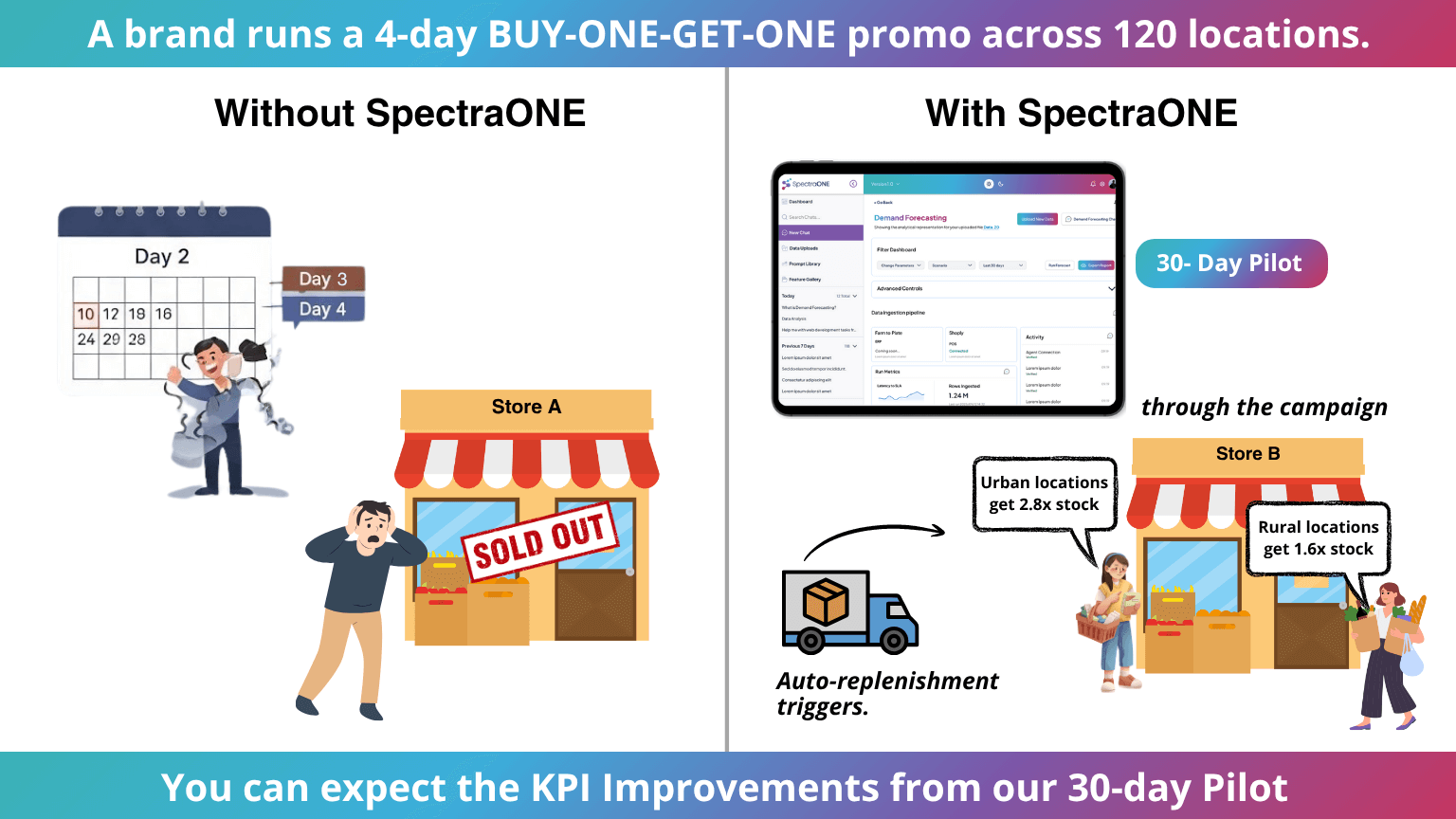
Let’s take an example, a national beverage brand runs a 4-day buy-one-get-one promo across 120 locations.
Without SpectraONE, each store receives 2x the average daily volume. Some sell out in 2 days. Others have 30% leftover.
With SpectraONE, the forecast will adjust per store based on past promo performance. Urban locations get 2.8x stock and Rural locations get 1.6x stock
Midway through the campaign, the system detects a higher uplift in certain areas and triggers auto-replenishment.
Built on Smart Tech That Understands Context
A combination of powers in SpectraONE’s forecasting engine:
- Transformer-based models that recognize event-driven demand spikes
- Adapter-first ingestion for flexible data mapping from promo calendars
- Composable agents that respond in near real-time
And it’s not just for retail. Promo-aware models can be applied across industries:
- Food & Bev: seasonal promos, shelf life, surge planning
- Pharma: launch demand, generic competition
- Electronics: channel-specific promotions, flash sales