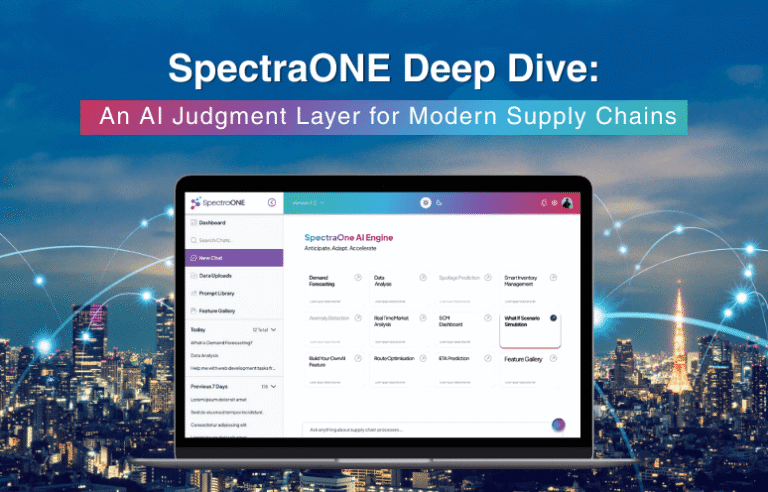
Why the Next 12 Months Will Redefine Supply Chain Competitiveness
A Data-Backed Look at Why Becoming AI-Ready Can’t Wait
If you work in supply chain or operations, you already know the truth:
The last few years rewrote the playbook. Businesses faced more disruption in three years than in the previous thirty, and the ripple effects are still here.
But underneath all that volatility, something much bigger is happening:
AI-ready supply chains are starting to pull ahead of everyone else, quickly and in measurable ways.
The performance gap is already visible in real numbers across accuracy, inventory, logistics stability, cost efficiency, and decision speed.
Below is the clearest picture of that shift, grounded entirely in published research, and why the next 12 months will determine who moves ahead and who falls behind.
1. Forecast Accuracy: Where Most Companies Win or Lose Margin:
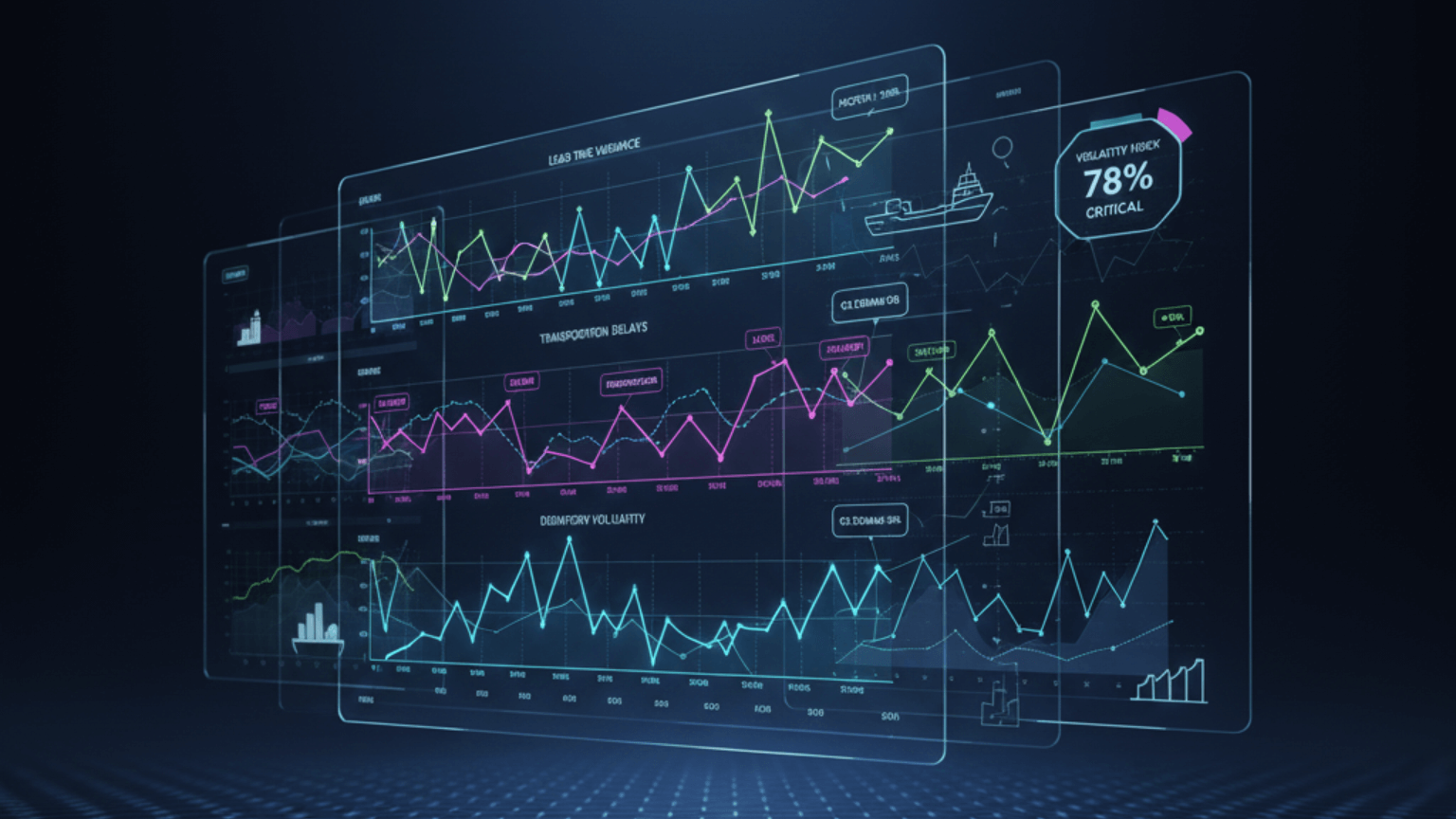
If there’s one metric that shapes almost every other cost in the supply chain, it’s forecast accuracy.
Research shows:
- Every 1% improvement in forecast accuracy reduces inventory by ~0.6–1% (Gartner).
- Companies in the top quartile of forecast accuracy enjoy up to 15% higher profit margins than competitors (McKinsey).
- 61% of companies say demand volatility is their #1 risk (Accenture).
And the consequences of poor forecasting are massive:
- Inventory levels increased 30–40% across industries since 2020 (BCG).
- $1.1 trillion in global working capital is tied up in excess inventory (The Hackett Group).
Retailers lose $1 trillion every year to stockouts — with 30–40% caused by preventable planning issues (NielsenIQ).
2. Inventory & Working Capital: The Price of Staying “Traditional”
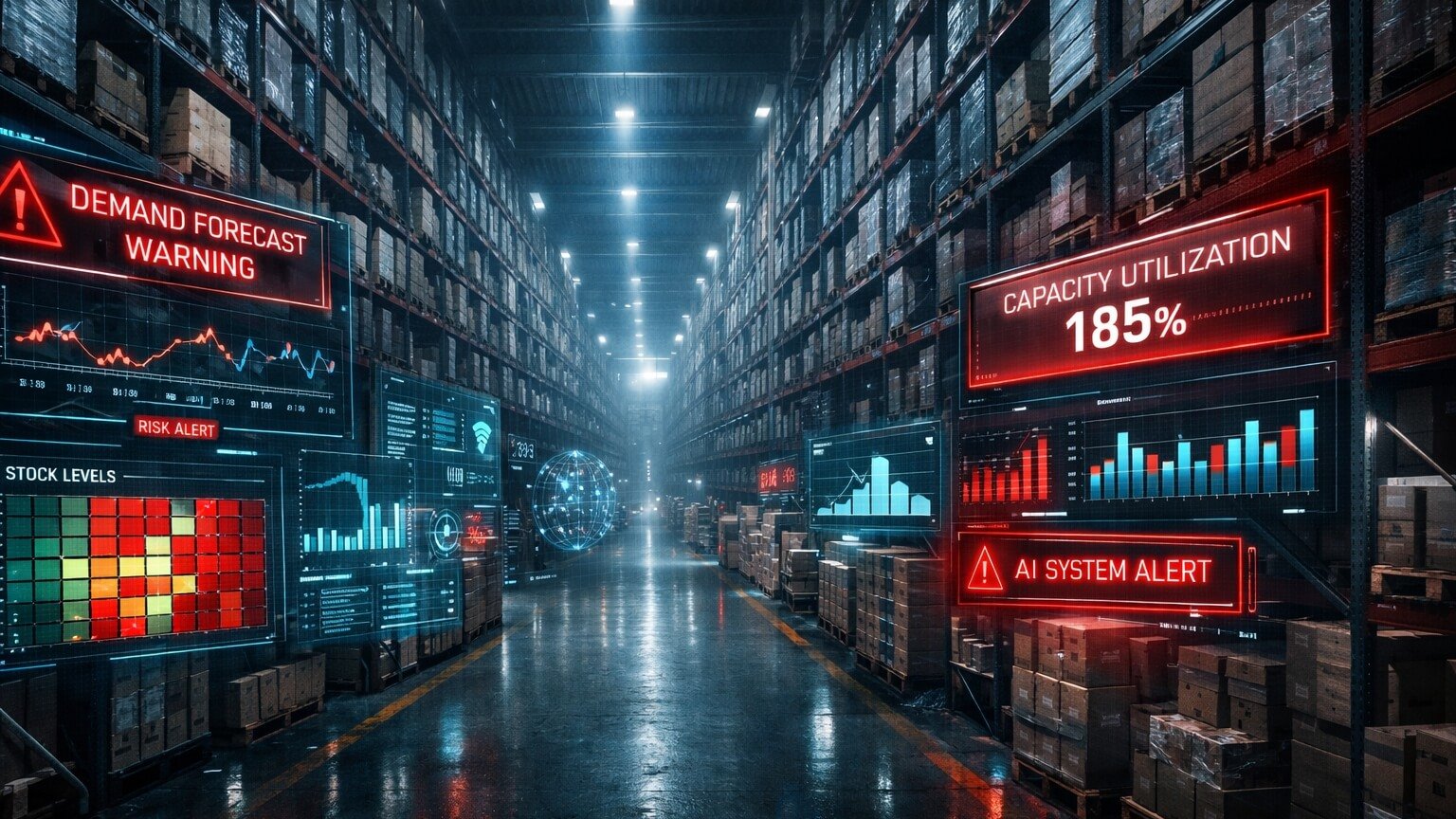
Across FMCG, pharma, automotive, CPG, retail and distribution, AI-enabled supply chains consistently outperform on working capital.
Industry transformation benchmarks show:These ranges line up with published benchmarks from McKinsey, Bain, Gartner, and BCG.
| Impact Area | Typical ROI |
| Inventory Reduction | 8–15% |
| Lost-sales reduction | 5–10% |
| Forecast accuracy improvement | 20–40% |
| Planner time saved | 40–60% |
| Logistics/overtime cost reduction | 10–20% |
| Vendor fill rate improvement | 3–7% |
| Revenue uplift | 2–5% |
3. Logistics & Execution: Where Hidden Margin Leakage Lives
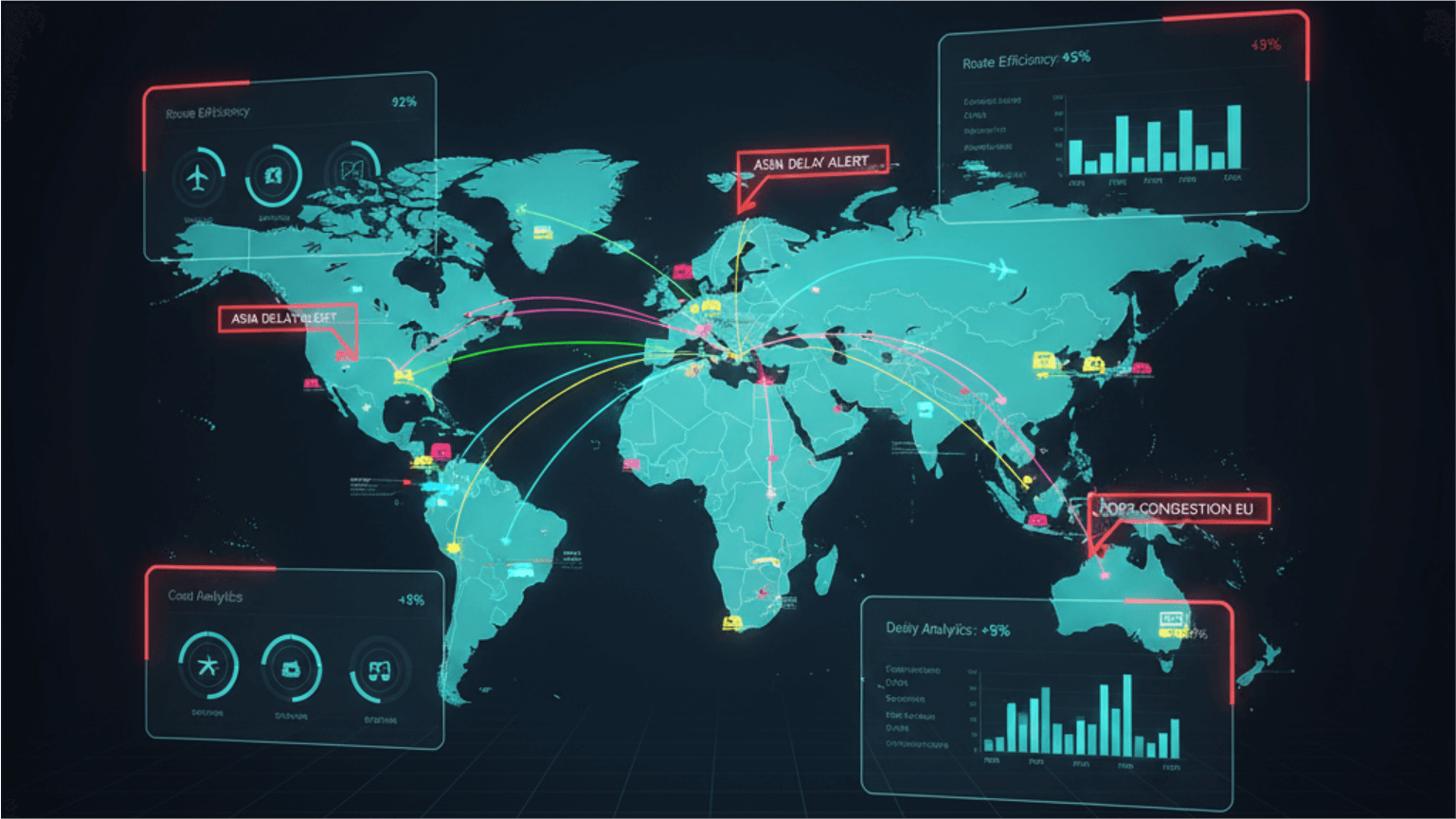
Even the best plan collapses if execution is unstable.
The data is clear:
- Average ETA deviation: 20–40% across mid-to-large fleets (FourKites, project44).
- Up to 50% of expedited shipments are preventable with better visibility (McKinsey).
- Real-time visibility leaders achieve:
- 10–20% lower logistics costs
- 30–50% faster reaction time
- 5–15% OTIF improvement
- 10–20% lower logistics costs
60–70% of disruptions escalate because exception handling is still manual (Gartner).
4. Decision Automation: The New Productivity Divide
The biggest differentiator emerging today isn’t software — it’s how companies make decisions.
Here’s the reality:
- Planners still spend 30–40% of their time gathering and cleaning data (Gartner).
- 70% of organizations still rely on spreadsheets for critical decisions (EY).
- Only 7% of supply chain leaders say they have end-to-end real-time visibility (McKinsey).
Companies pulling ahead are the ones that:
- Clean and unify operational data
- Automate repetitive decisions
- Use AI to flag risks earlier
- Create a closed loop between planning → execution → financial outcomes Within 12–24 months, these changes create permanent cost and agility advantages.
5. Why Timing Matters: The 12-Month Window
Every major consulting firm now agrees on one core trend:
Early adopters of AI-ready supply chains gain exponentially more benefit than late adopters.
Why?
- Data advantages compound over time
- Operational stability frees up teams from firefighting
- Financial visibility improves capital allocation
- AI models learn and widen the gap each quarter
In simple terms:
The next 12–18 months will create the cost leaders of the next decade.
Those who delay will be at risk.
The Shift Has Already Begun
The evidence is clear: supply chains that invest in data quality, automation, and AI are separating from those that continue to rely on manual, reactive processes. This divide isn’t forming years from now, it is forming quarter by quarter, in accuracy, cost, agility, and resilience.
The organizations moving today are not chasing trends. They are building the foundations that every competitive supply chain will need: clean data, connected systems, faster decisions, and real-time visibility. Those who wait will face a growing gap in performance, cost competitiveness, and customer service that becomes harder to close with every cycle.
The next 12 months represent a rare window — a chance to step ahead while the industry is still transitioning.
Where SpectraONE Fits

If your organization is exploring this shift, SpectraONE helps teams build AI-ready forecasting and execution through:
- Unifying and preparing operational data
- Improving forecast quality with AI-assisted planning
- Enabling predictive visibility across logistics
- Measuring financial impact at every stage
Teams can start with a low-risk pilot that benchmarks your current performance and quantifies the financial impact across planning, logistics, and working capital.
The goal isn’t technology adoption; it’s building the capabilities required for how tomorrow’s supply chains will function.
Written by Sravya Priya – Digital & Content Specialist working on AI-led supply chain ideas and turning complex data into practical insights for operations teams.