
Why SKU-Location Forecasting Matters

When you’ve stocked up on the latest must-have product, some areas fly off the shelves while others sit untouched. Has it happened to you also?
In the world of supply chain management, one costly misstep many businesses make is overlooking local demand variability. We often rely on broad forecasts that consider product categories or national trends, but what about the local patterns?
The common approach
Most of the teams follow the same “We’ll just adjust as we go.” But the reality is that how a product performs in one area can be drastically different from how it performs in another, and legacy tools (and spreadsheets) often miss that entirely.

Many businesses struggle with the unpredictability of local markets. If you’re tired of the guesswork and want a more reliable way to forecast and understand why SKU-location forecasting is essential for accuracy, agility, and margin protection, keep reading.
The Real Problem
If you stock the same SKU, say a new organic skincare product, across three distribution zones.
- Zone A sells out by Day 3.
- Zone B hits only 65% of expected sales.
- Zone C had a weather delay and demand shifted to a substitute SKU.
But your system only forecasted average demand based on national past sales. So, the inventory was distributed evenly, not intelligently. By the time adjustments were made, stockouts and excess had already eaten into margins.
Legacy Forecasting Falls Short at the Local Level
| Limitation | Result |
| Forecasts at the category or national level | Local demand gets ignored |
| No real-time location signal | Forecasts lag actual behavior |
| Overreliance on planner overrides | Manual work, bias, and delays |
| Static seasonality curves | Can’t react to local events (weather, local holidays, etc.) |
Use Case: Forecasting at the SKU-Location Level with SpectraONE
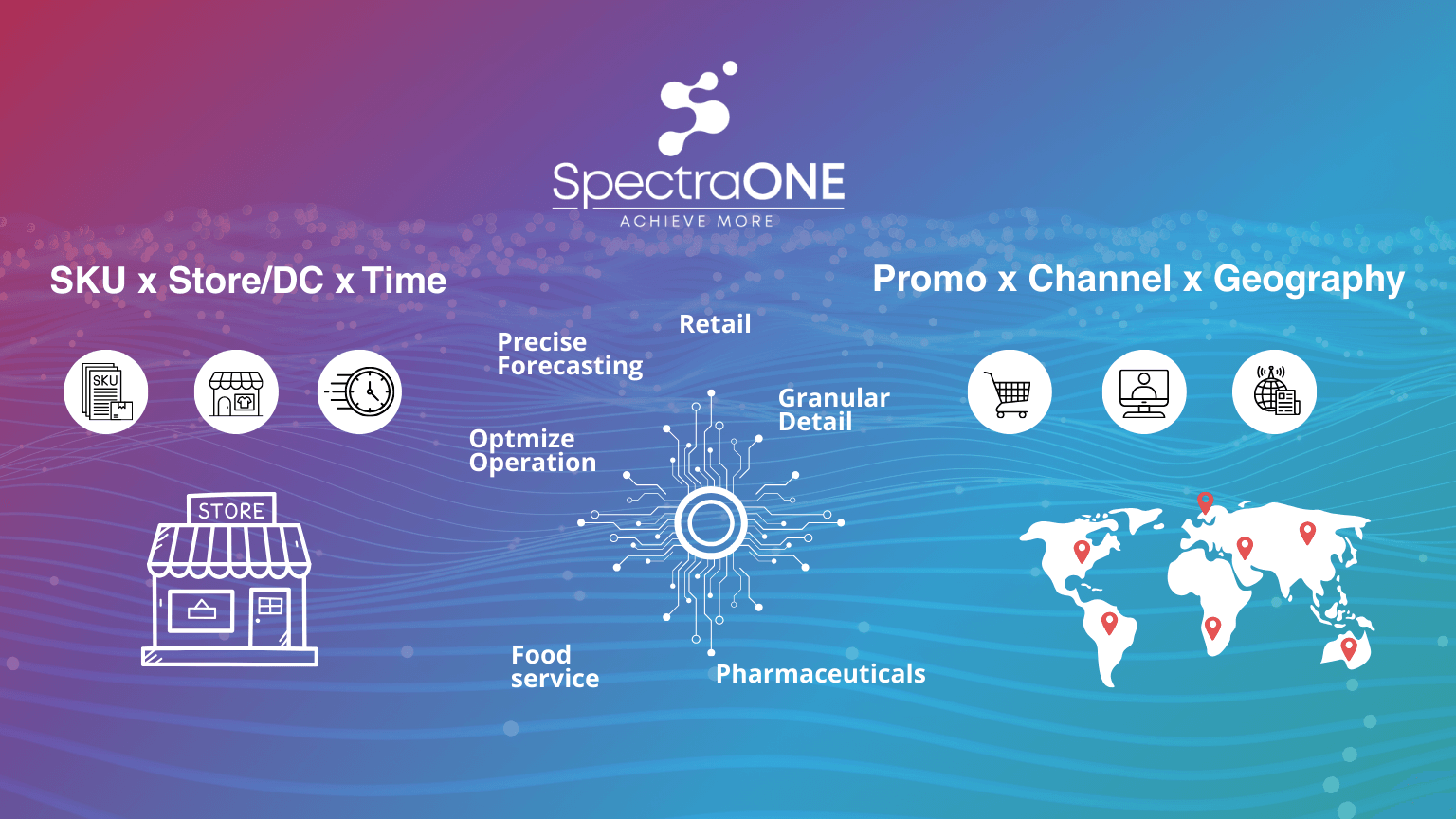
SpectraONE is meticulously designed to provide precise forecasting at an incredibly granular level, allowing users to break down forecasts into the following dimensions:
SKU x Store/DC x Time
Promo x Channel x Geography.
This level of detail is essential for sectors such as retail, food service, and pharmaceuticals, as well as other multi-node supply chains, enabling businesses to optimize operations and improve inventory management.
Here’s a Detailed Overview of How It Works:
Step 1: Ingest Transaction & External Data
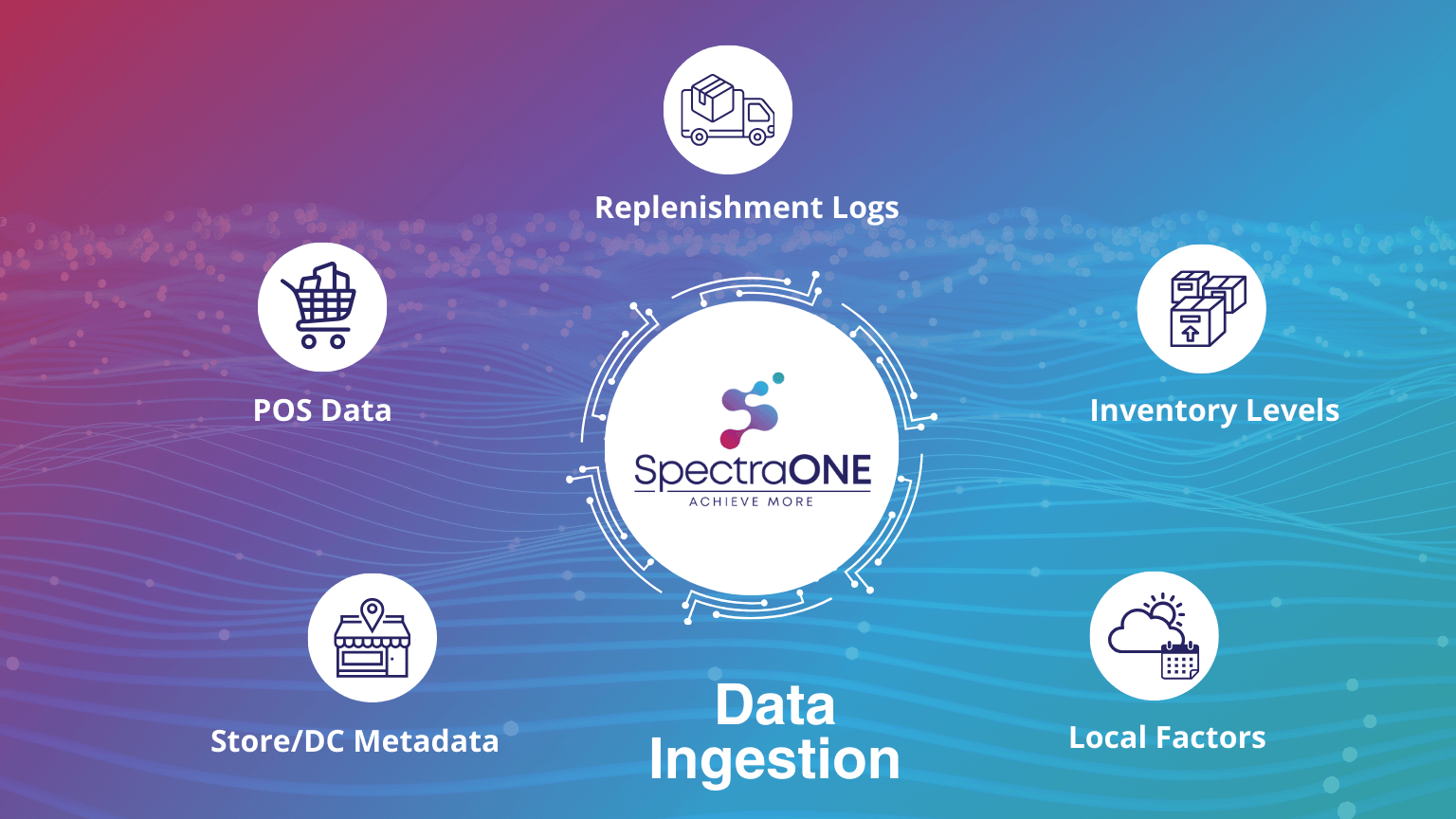
This step involves integrating various data sources through specialized adapters, enabling SpectraONE to efficiently pull in critical data, including:
Point of Sale (POS) Data: This provides real-time insights into product sales at individual locations, helping capture consumer purchasing patterns.
Replenishment Logs: These logs provide information on inventory restocking activities, which are vital for understanding inventory turnover and stock levels.
Inventory Levels: Ingesting current inventory statuses allows the system to assess stock availability and anticipate future demands.
Store/DC Metadata: Information about each store and distribution center, such as size, layout, and typical customer demographics, helps tailor the forecasts.
Local Factors: External factors that may affect sales, such as weather patterns, public holidays, community events, and seasonal trends, are also integrated to enhance forecast accuracy.
Step 2: Build SKU-Location Patterns
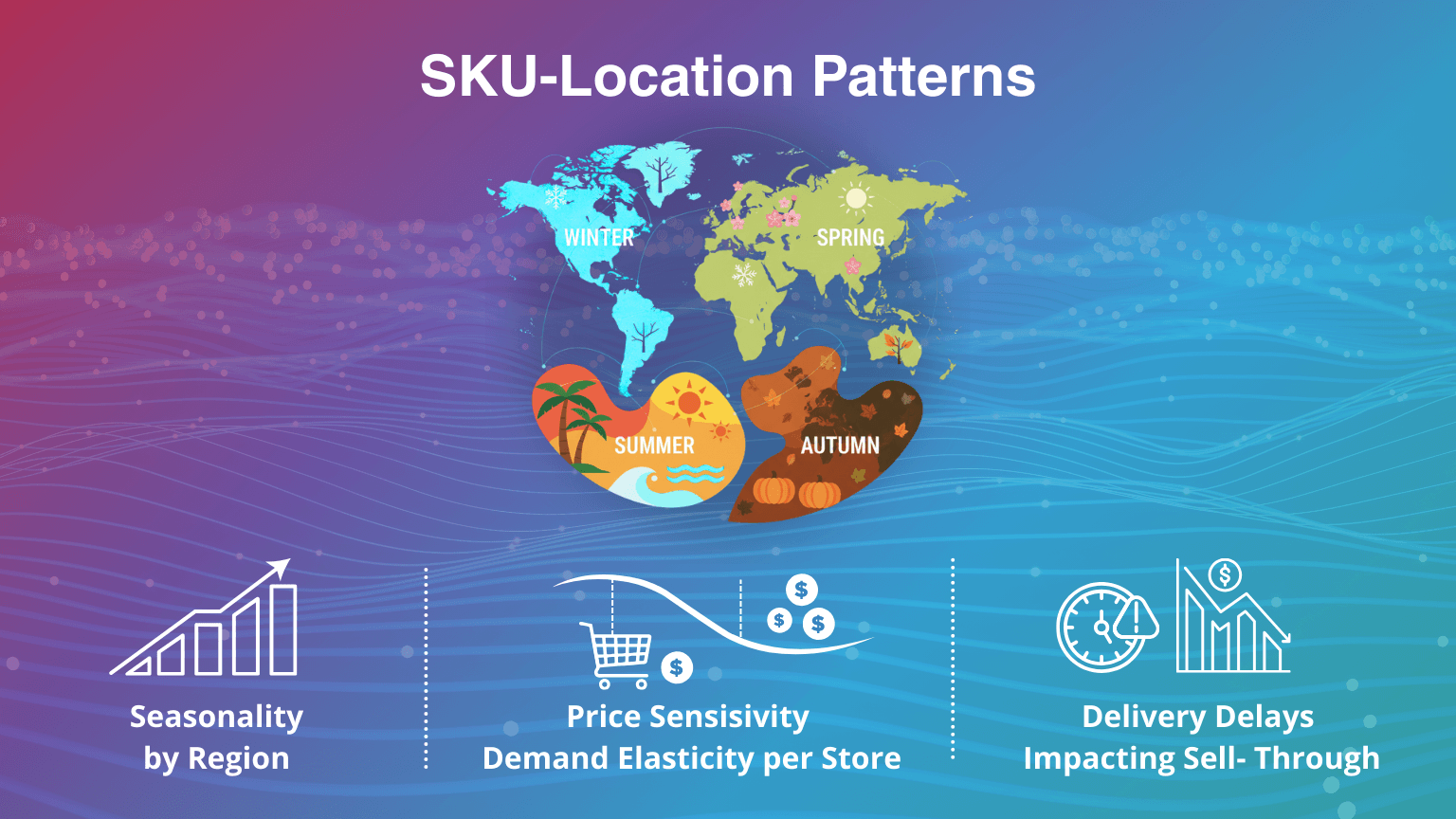
Instead of relying on broad national aggregates that may obscure local trends, SpectraONE analyzes data to identify:
Seasonality by Region: Understanding that different areas experience distinct seasonal trends allows for more accurate forecasting.
Demand Elasticity per Store: Recognizing how sensitive customers are to price changes at different locations enables fine-tuning of pricing strategies.
Delivery Delays Impacting Sell-Through: The system tracks delivery delays, ensuring potential impacts on sales are factored into forecasts.
Step 3: Forecast, Adjust & Rebalance
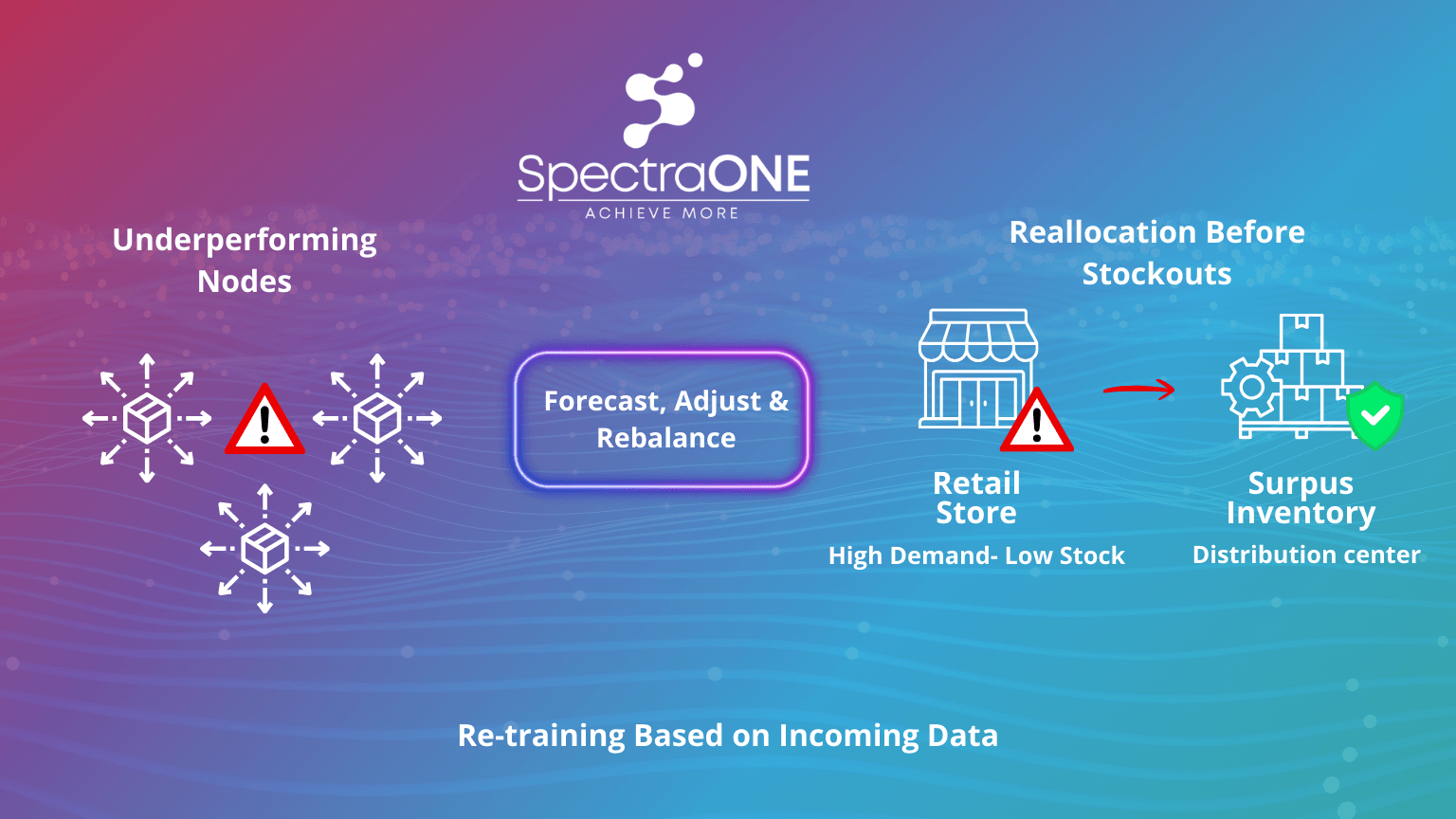
Once forecasting is complete, SpectraONE continuously monitors real-time performance metrics to ensure ongoing accuracy. This stage involves:
Flagging Underperforming Nodes: Identifying stores or distribution centers that are not meeting expected sales targets enables immediate strategic interventions.
Suggesting Reallocation Before Stockouts: The system proactively recommends inventory reallocations to prevent stockouts, ensuring that high-demand locations are adequately stocked.
Re-training Based on Incoming Data: As new data comes in, the forecasting model adapts and recalibrates, refining its accuracy and performance over time.
The Tech Behind It
SpectraONE’s forecasting capability is powered by:
- LLM-infused transformer models for context-rich, resolution-aware predictions
- Multi-echelon visibility across inventory nodes
- Location-aware agents that adapt to local variables, not just global ones
- Adapter-first data ingestion for flexible integration with POS, WMS, or ERP
KPI Impact from Pilot Benchmarks
| KPI | Target Delta |
| Stockouts | ↓ 20% |
| Forecast Accuracy | ↑ 15% |
| Rebalancing Time | ↓ 25% |
Quick Example: A national beauty retailer launches a limited-edition face serum across 150 stores.
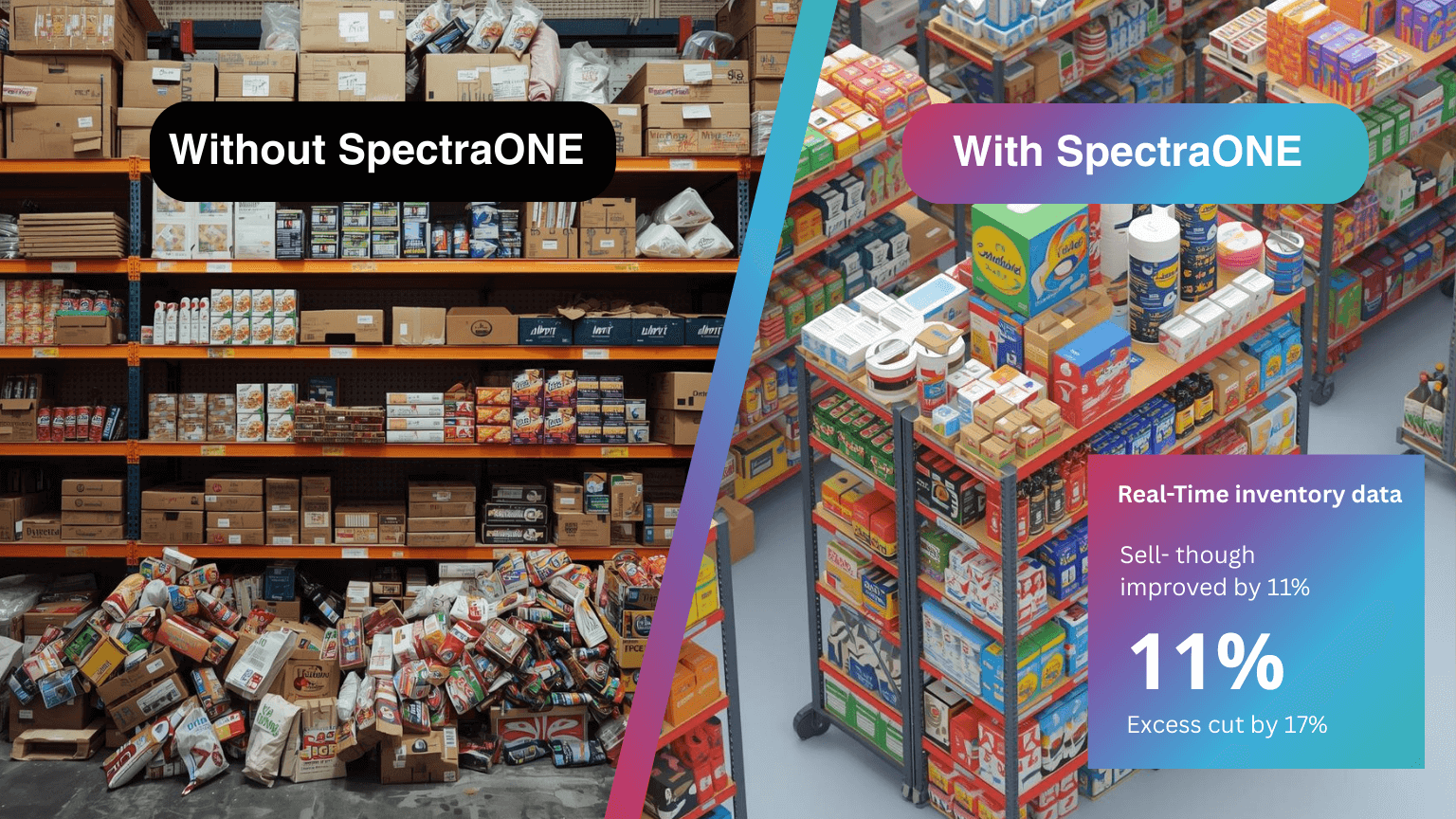
| Without SpectraONE | With SpectraONE |
| – Forecasts were made at a product level, not a store level. – Overstocks in low-traffic malls, – while high-traffic stores went out of stock on Day | – Forecast built at the SKU/store level – Metro stores received 2.3x allocation – Rural stores received adjusted volume – Real-time shelf performance triggered auto-pull from central DCs |
With SpectraONE, clients get a clear view of their business, allowing them to make smart choices that boost profits. They can stock the right products at the right times based on local demand, keeping customers happy and coming back for more.
Plus, with proactive inventory management, they avoid running out of popular items, which drives more sales and builds customer loyalty.