Why Multi-Feature Forecasting Matters in 2026
A forecast can be accurate on paper but still not useful in your daily work. If you’re in supply chain or demand planning, you’ve probably felt this frustration. You get a number, but not the reasons behind it. There’s no clear idea of what changed, why it happened, or if you can trust it.
Remember the last time demand spiked or dropped suddenly. Was it because of a promotion, a seasonal trend, an unexpected storm, or a social media campaign you know about later? Or did your tool just give you a number and nothing more?
Many traditional forecasting tools are outdated, acting as if it’s still 2016. They see demand as a simple trend and expect tomorrow to be just like yesterday. But 2026 brings new challenges, and demand now relies on more than just past numbers.
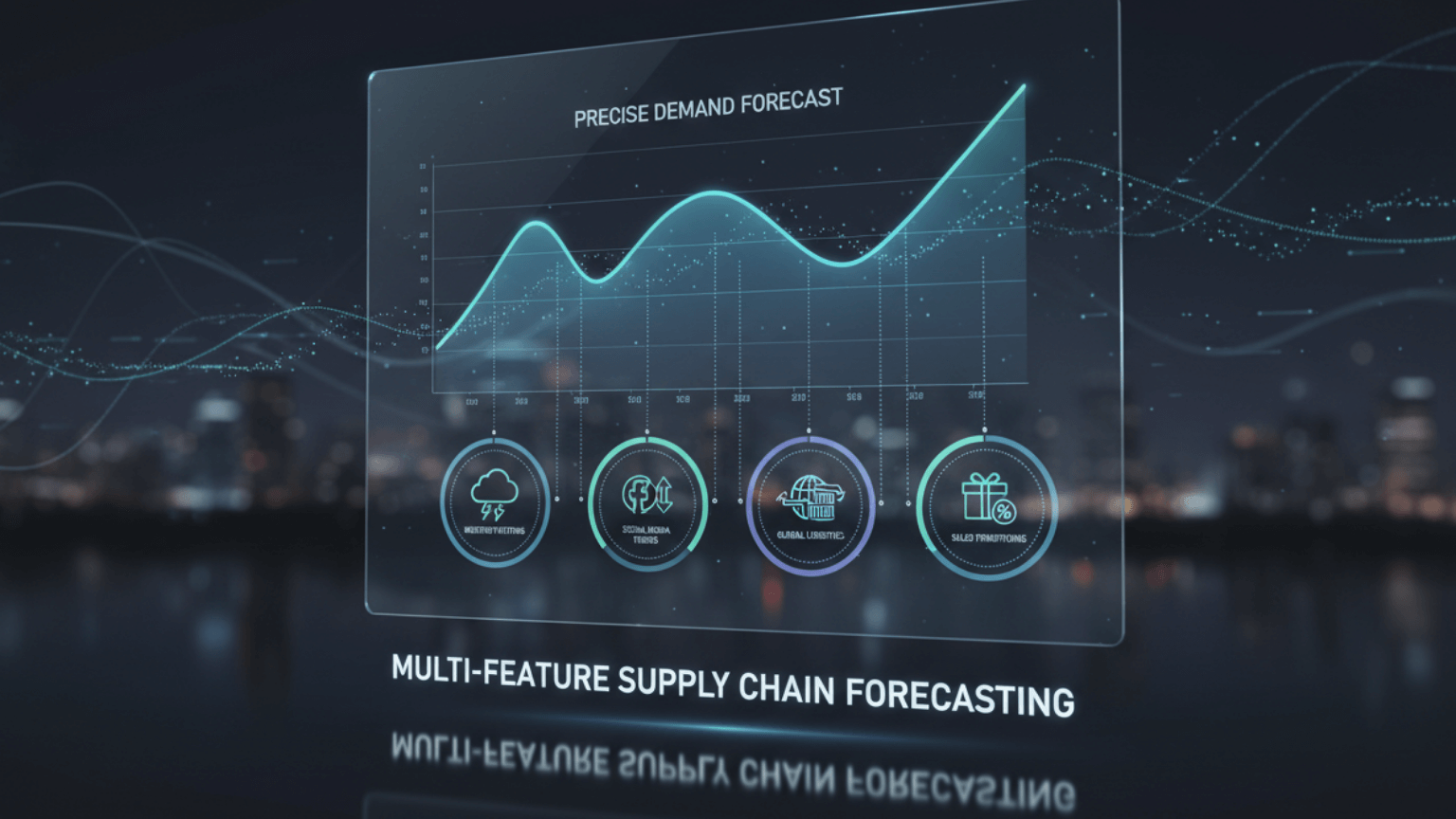
SpectraONE uses multi-feature forecasting, a smarter, more context-aware method that incorporates many real-world signals. This makes forecasts more accurate, easier to understand, and more trusted by the teams who rely on them.
What Is Multi-Feature Forecasting?
Multi-feature forecasting does much more than just look at sales history. Instead of only asking, “What happened last year?” it asks, “What’s really driving demand right now?”
It provides the forecasting engine with many relevant signals, such as product details, pricing, promotions, external factors, and supply chain events, to identify what really matters. It’s like moving from a single, blurry camera to a clear, multi-angle view of your business.
How This Plays Out in the Real World:
Retail – Are You Still Guessing Seasonal Demand?
When you plan demand for a seasonal drink, do you mainly use last year’s numbers and a few spreadsheets? Traditional tools stop there, but SpectraONE does more. It brings together weather forecasts, promotion calendars, and local holiday data with your sales history. It helps you predict more accurately when and where demand will rise, so you can stock the right products in the right stores at the right time, instead of reacting after shelves are empty.
Manufacturing – Still Fighting Last-Minute Shortages?
When you plan for component demand, do you only check past usage and hope suppliers deliver on time? Many tools stop there. SpectraONE goes further by checking lead-time changes, BOM constraints, and supplier OTIF (on-time in-full) performance. Your team can spot problems earlier, cut down on rush orders, avoid last-minute fixes, and keep production running smoothly.
Food & Beverage – Are You Finding Out About Waste Too Late?
If you only track expiry dates, you’re reacting to waste instead of preventing it. Many tools stop at “use by” dates. SpectraONE predicts spoilage risk earlier by using cold-chain data, dwell times, and promotion surges. Your team can act before products go bad by adjusting orders, reallocating stock, and protecting margins while still providing excellent service.
What Data Signals Does SpectraONE Actually Use?
SpectraONE’s models pull from multiple layers of signals across your business and beyond, including:
| Product & Inventory | SKU attributes, safety stock, locations |
| Time-Based Signals | Seasonality, holidays, launch cycles, and day-of-week patterns |
| Promotions & Pricing | Price changes, elasticity, historical uplift, and promo fatigue |
| External Data | Weather, inflation, macroeconomic indicators, and public events |
| Supply Chain Signals | Lead-time reliability, in-transit delays, carrier performance, and bottleneck locations |
| Customer Behavior | Channel sales, churn, reorder rates, and mix shifts across regions and channels |
| Operational Constraints | Capacity limits, MOQs, sourcing risk, and internal business rules your planners must live with every day. |
It’s not just about how well the model works. SpectraONE is built so planners and operations teams can quickly see why the forecast looks the way it does and, more importantly, what to do next.
Instead of just looking at a number and asking, “Can we trust this?”, your team can ask better questions like, “What’s driving this?” and “What should we do next?”
Why This Matters to Your Team in 2026
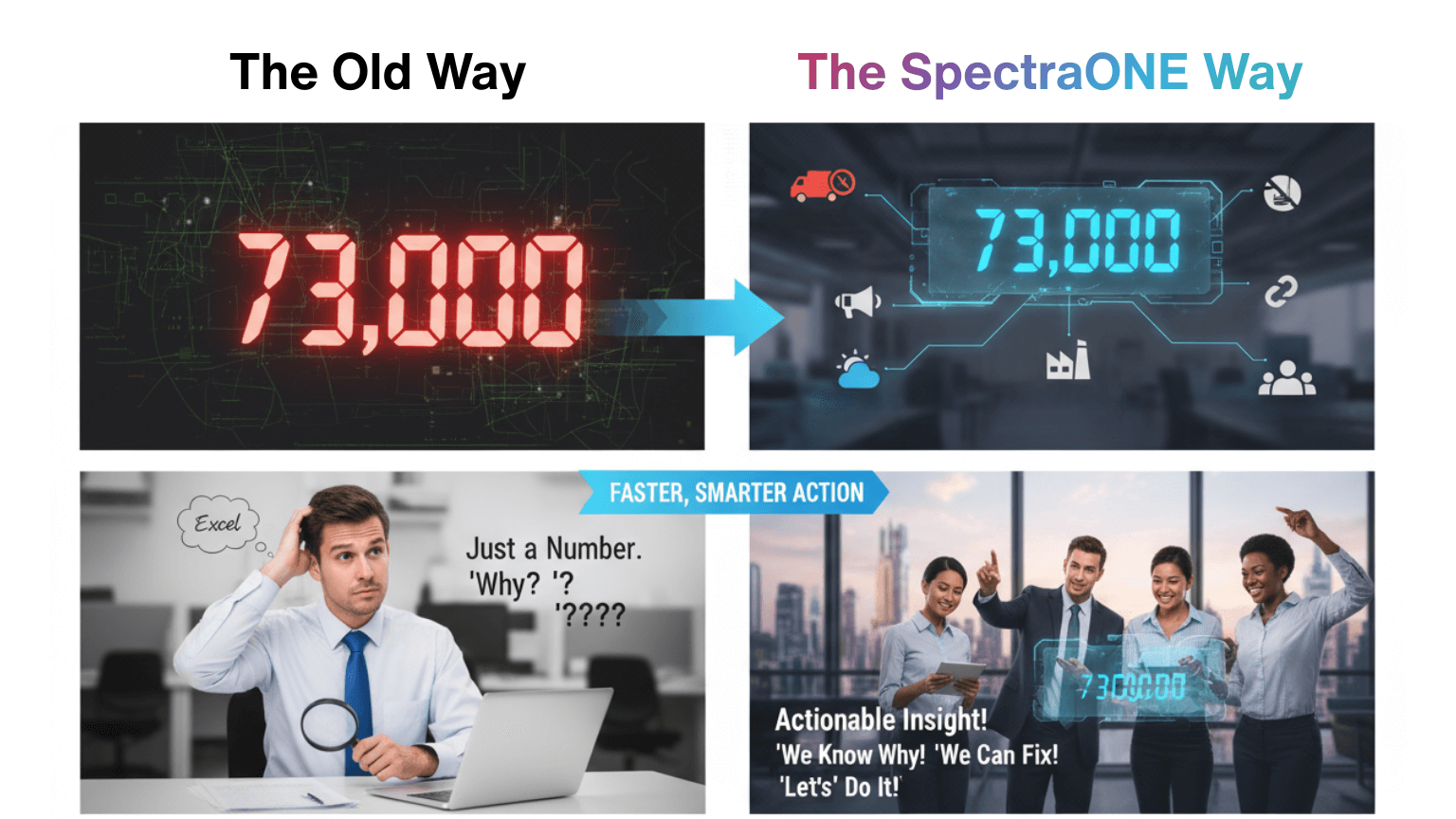
Most old systems still act like it’s 2016. They give you one number with little or no explanation. What happens then? Planners second-guess the system, copy data into Excel, create their own versions of the truth, or send analysts lots of “what if” questions.
With SpectraONE, you get more than just a prediction. You also get the story behind it. The model shows what’s driving the trend, like a delayed shipment, an upcoming promotion, unusual weather, a supplier issue, or a change in customer behavior. Your team doesn’t have to guess; they can act.
That is the difference between just having a number and gaining a real, valuable insight your team can act on right away.
The Tech Behind SpectraONE: LLMs and Transformer Models (Without the Black Box)
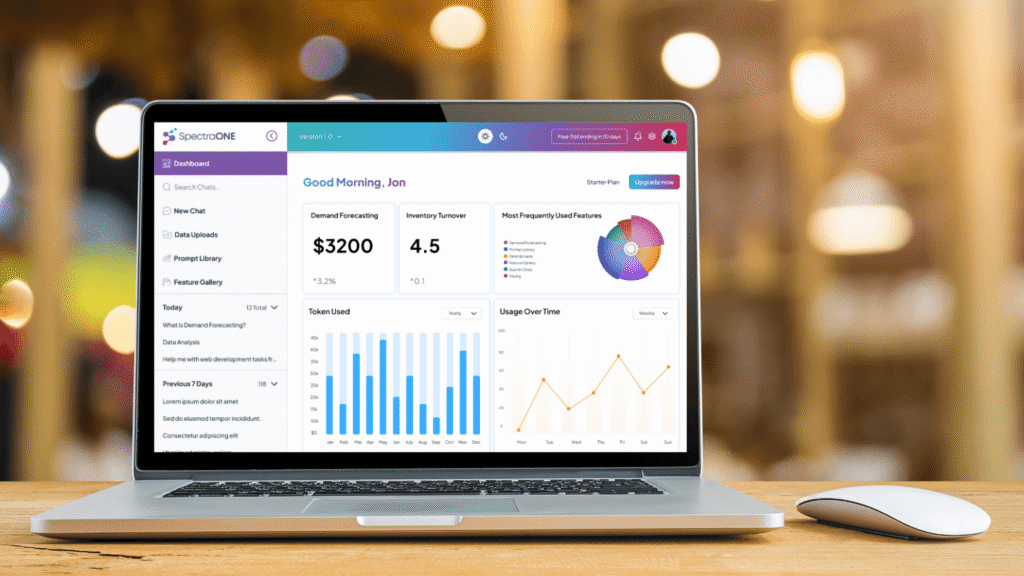
Behind the scenes, SpectraONE’s forecasting engine uses transformer-based models and LLMs. For your team, this means:
- It can detect patterns across many variables simultaneously, not just time and quantity, so you see links that traditional tools miss
- It explains results in clear, understandable language, so planners don’t need a data science degree to interpret the forecast.
- It adapts quickly when market conditions shift, so your planning process isn’t stuck with last quarter’s assumptions in a fast-moving 2026 market.
Unlike static statistical models or unclear “black box” AI, SpectraONE’s forecasts can be audited, explained, and traced back to real inputs. It helps you build trust with finance, leadership, and frontline teams.
What Your Team Really Needs Next

Multi-feature forecasting is more than just a buzzword. It changes how planning teams work, moving from relying on unclear, history-only tools to working with AI that understands context and explains its reasoning.
If your current process still depends on sales history, tribal knowledge, and spreadsheet workarounds, SpectraONE can help you shift to a more flexible, insight-driven planning approach that understands both your context and your data.
Planning like it’s 2016 won’t be enough for 2026. Teams that act now will gain better visibility, stronger operations, and more confidence across the business. The longer you wait, the bigger the gap gets.
If you want to see the difference in 30 days. You don’t have to change your whole planning process to find out if this works for you. That’s why we offer a focused 30-day pilot program.
In just one month, your planners can:
- Run SpectraONE forecasts in parallel with your current process.
- See how multi-feature forecasting performs on your real data.
- Understand which signals actually move the needle in your business.
- Experience what it’s like to get both a forecast and a clear explanation behind it.
Many teams are already using pilots like this to show the value internally and then scale up quickly. If you wait, you’re giving your competitors more time to learn, improve, and get ahead.